Haribol to All
Please accept my dandavat pranams
All Glories to Srila Gurudeva
By the mercy of Srila Gurudeva
and Gauranga,we have finalised
plans for our festival of devotion
in Kwa-Zulu Natal,starting from
Pietermaritzburg then moving to
the Durban area,Phoenix,Chatsworth
and Greytown.Also we have the great
fortune of confirming that Sripad
Ashram and Damodara Maharaja`s will
be preaching at these festival of devotion.
Please watch this space for more details
of venue`s and times.We will be distributing
many of Srila Gurudeva`s books and dvd`s
also many senior devotees will be coming
for 6 weeks to assist with book distribution
etc.We require lots of assistance so if
you are available and would like to take
this oppurtunity to engage in devotional
service please contact me.
Monday, August 31, 2009


Thursday, August 27, 2009
For Srimati Radharani`s divine appeareance day
Tridandisvami Sri Srimad Bhaktivedanta Narayana Gosvami Maharaja
SRI RADHASTAMI
[This year, 2009, Sri Radhastami is August 28th, in India. As usual, Srila Narayana Gosvami Maharaja is conducting the festivities throughout the day at Sri Kesavaji Gaudiya Matha in Mathura. In order that we can get you a class to read on this very day, we are sending one from a previous year. In the early morning of September 14, 2002 in order to commence the celebration of Sri Radhastami in the opulently decorated Sri Kesavaji Gaudiya Matha, Srila Narayana Maharaja requested the devotees to sing "Sri Krsna Virahe" by Srila Bhaktivinoda Thakura. After that he explained some of the verses as follows:]
sri krsna-virahe, radhikara dasa, ami to' sahite nari
yugala-milana, sukhera karana, jivana chadite pari
["I am absolutely unable to tolerate Sri Radhika's pitiable condition when She is suffering in separation from Sri Krsna, but I am fully prepared to immediately give up my life for the sake of Their happy reunion." (Verse 1)]
Only under the guidance of Srila Bhaktivinoda Thakura is it possible to render service to Srimati Radhika. In the mood of a maidservant of Srimati Radhika, Srila Bhaktivinoda Thakura has written that he cannot tolerate Radhika's condition during the time of Her separation from Krsna. And, for Their meeting together, he is readily prepared to easily give up his life.
radhka-carana, tyajiya amara, ksaneke pralaya hoya
radhikara tare, sata-bara mari, se duhkha amar soya
["If I were ever to renounce Radhika's lotus feet for even an instant, I would be totally devastated. For Her sake I will gladly tolerate the pain and agony of death hundreds of times." (Verse 2)]
Srila Bhaktivinoda Thakura is saying: "I can give up anything. I can even give up Krsna, but I cannot give up the lotus feet of Radhika, even for a moment. For the service of Radhika I am prepared to die hundreds and millions of times, but I could never tolerate giving up Her association for a second. When will that day come that I can render some service to Her lotus feet? How can I have attachment for this Radhika, and how can I attain the perfect service of Her lotus feet?
e heno radhara, carana yugale, paricarya pabo kabe
haha braja-jana, more doya kori, kabe vraja-vane laibe
["When will I be able to serve Radhika's two lotus feet? Alas, I beg you all, O residents of Vraja, please be merciful to me now. When will you take me into the forests of Vraja?" (Verse 3)]
vilasa manjari, ananga manjari, sri rupa manjari ara
amake tuliya, loho nija pade, deho more siddhi sara
["O Vilasa Manjari! O Ananga Manjari! O Rupa Manjari! Please lift me up and bring me close to your own lotus feet, thereby bestowing upon me the ultimate perfection." (Verse 4)]
Weeping bitterly, Srila Bhaktivinoda Thakura is praying, "O Vrajavasis, please be merciful to me! Place me in the service of the Divine Couple. Especially, please place me in the service of Radhika's lotus feet. When will that day come that Sri Vilasa Manjari and others will take me to Vraja? I long to render service."
[The devotees then sang Srila Gaura-Kisora dasa Babaji Maharaja's "Uddesye Racita Gita Boliya Pracalita," (The Song Glorifying the Life Goal of Srila Raghunatha dasa Gosvami)]
[The following is the first Bengali verse and the English translations of all the verses:]
Kothaya go premamyi radhe radhe
Radhe, radhe go, jaya radhe, radhe
Where is She who is full of prema? All glories to Sri Radha. (1)
O Radha! Please give me Your darsana and save my life. Your wretched beggar calls out to You, "Radhe, Radhe!" (2)
O Radha, You enjoy pleasure pastimes in the forest of Vrndavana, wherein You enchant the mind of Krsna. (3)
O Radha, You are the crest-jewel among Your eight principal sakhis. O Radha, daughter of Vrsabhanu Baba. (4)
Raghunatha dasa Gosvami was always calling out, "Radhe! Radhe!" (5)
…sometimes at Kesi Ghata, sometimes at Vamsi Vata. (6)
…sometimes in Nidhuvana, sometimes at Seva Kunja. (7)
…sometimes at Radha Kunda, sometimes at Syama Kunda. (8)
…sometimes at Kusuma Sarovara, sometimes at Giriraja Govardhana. (9)
…sometimes at Talavana, sometimes at Tamalvana. (10)
Raghunatha dasa wears simple cloth which appears to be dirty because he is always rolling on the earth crying out, "Radhe! Radhe!" (11)
Calling out "Radhe! Radhe," his eyes are bursting with a flood of tears. (12)
He wanders throughout the lanes of Vrndavana crying out, "Radhe! Radhe!" (13)
He knows nothing but Radha-Govinda throughout the day and night (56 dandas: 1 danda= 24 minutes). Radhe! Radhe! (14)
He takes rest for only 4 dandas (1 hr. 36 min.) At that time he receives darsana of Radha-Govinda in his dreams. Radhe! Radhe! (15)
[Srila Narayana Maharaja:] Srila Krsnadasa Kaviraja Gosvami has heard from Srila Svarupa Damodara, Srila Raya Ramananda, Srila Rupa Gosvami, and especially from Srila Raghunatha dasa Gosvami, and thus he is presenting this tattva. Srimati Radhika's name is Govinda-nandini (She who makes Sri Krsna happy), and there is nothing higher than this.
Srila Krsnadasa Kaviraja Gosvami has revealed some of the names of Radhika in his Caitanya-caritamrta Adi-lila chapter four. One of Her names is Govinda-nandini. Govinda is the controller of everything. He is the extreme limit of the conception of the Supreme Lord, Sri Krsna. He is full with unlimited opulence and sweetness. Who can give happiness to Him? Only one personality can do so - Krsna Himself in the form of Srimati Radhika.
She is Govinda-mohini. Krsna attracts all living entities, including animals, trees and creepers. He especially attracts all the Vraja gopis, but Radhika can attract Him. Krsna bewilders everyone in this world by His maya-sakti, and in the spiritual world He bewilders all by His beautiful form, qualities, and pastimes. He can bewilder everyone; yet Srimati Radhika can bewilder Him.
Radhika is Govinda-sarvasya. She is everything to Krsna. She is the be-all-and-end-all of Krsna; for Him, nothing remains.
Sri Radha is Sarva-kanta siramoni, the crown jewel of all Krsna's beloveds. All the gopis were searching for Krsna after His disappearance from the Rasa dance. When Her own svapaksa gopis (the gopis from Her own group) saw Her footprints along with Krsna's, they became very happy – knowing them to be Hers. However, when the other groups of gopis saw them, not knowing to whom they belonged, they could only understand that this particular gopi had served Krsna more than any other – and therefore He left the Rasa dance with Her alone.
Sri Radha Herself has become Candravali and all the other gopis. There is no other beloved of Krsna – only Srimati Radhika. She Herself has become all the Laksmis (Goddesses of Fortune), and all the queens of Dvaraka. If one thinks deeply about this, he will understand Her greatness. Sita-devi and all the Laksmis are manifestations of Radha, and she assumes these forms to fulfill Krsna's desires.
She is Krsna-mayi; She sees Krsna everywhere – inside and outside of Herself. Wherever Her mind or senses go, it is only for and about Krsna. When She sees a tamal tree She thinks, "Oh, there is Krsna." Her name is Radhika because She fulfills all the desires of Krsna and because He Himself worships Her. An example of His worshipping Her is when He took Her to a solitary place after leaving the Rasa dance, at which time even the vipaksa-gopis (rival party) also confirm this. Radhika is Para-devata, just as Krsna is: She is the most worshipable of all. Moreover, She is worshiped by Krsna Himself. Is she not therefore worshipable by everyone?
Once Radhika asked Vrnda-devi, "Where are you coming from?" Vrnda-devi replied, "I'm coming from Radha-kunda. I saw Krsna there." Radharani asked, "What was He doing?" Vrnda-devi replied that He was dancing. Radha then asked, "Oh, who was His dancing teacher?" Vrnda-devi told Her, Your reflection, Radhika, which He sees in every tree.
Whatever prema exists in this world comes from Radhika. She is the mother of everyone because she nourishes everyone by giving them prema. Krsna is the principle Deity of all jivas, and Radhika is also. This is confirmed in the Brahma Samhita:
ananda-cinmaya-rasa-pratibhavitabhis
tabhir ya eva nija-rupataya kalabhih
goloka eva nivasaty akhilatma-bhuto
govindam adi-purusam tam aham bhajami
["I worship Govinda, the primeval Lord, who resides in His own realm, Goloka, with Radha, who resembles His own spiritual figure and who embodies the ecstatic potency (hladini). Their companions are Her confidantes, who embody extensions of Her bodily form and who are imbued and permeated with ever-blissful spiritual rasa."]
Sri Radhika is Sarva-Laksmi-mayi, which means that all the various gopis emanate from Her, and She is therefore the predominating deity of all the sakhis. As many beloveds as there are, She is their controlling deity.
She is Kanti, which means that during Rasa-lila, only She could fulfill all the desires of Sri Krsna. There were hundreds of millions of gopis dancing, but when Radhika left, the Rasa dance stopped. Krsna appears as Mahaprabhu in order to taste all of Radhika's loving moods; He cannot do so in Vraja-lila.
What are Krsna's thoughts when He is in Mathura and Dvaraka and feeling separation from Radhika? He prays to Her, "O most worshipful Radha! My mind always remains with You. I'm always anxious for the dust of Your lotus feet. Somehow, in some form, I stay in Vrndavana. O Srimati Radhika, I am roaming in those forests, playing on My flute, only in search for You. O Radhika, I go to the Yamuna, not to take bath, but only to meet with You. Otherwise there is no need to go there. I sit on the bank of Yamuna only to meet with You and serve You.
"I stopped grazing cows, and I stopped all other activities. Seeing Your beauty I became so eager; My eyes moved here and there and My mind was restless. I used to wait underneath a kadamba tree, thinking, 'When will She come by this way?' I am meditating upon Your qualities, and upon Your beauty which is like the auspicious svati-naksatra (constellation). The skylark (cakora bird) won't drink any other water besides the water coming from the clouds at the time of the svati-constellation. Similarly, I am like a cakora bird, and Your beauty is like rain falling during that constellation. I am eagerly waiting for You, to have Your darsana. Your beauty and qualities steal My heart. I don't want those qualities to steal My heart, but I forget everything else in My separation from You."
Hearing this, Radhika replied, "O Prananatha, lord of My life's breath, I am Your eternal servant and You are My life and soul, the only love in My life. I surrender Myself unto Your lotus feet. You may love Me or neglect Me, in Your life or by Your mind. You can leave Me and thus bring Me suffering. Whatever You desire, Your happiness is My happiness and Your life is My life. I don't want anything other than Your happiness in my life. As You realize My happiness and sorrows, so I can realize Yours. You feel happiness by seeing Me, but by seeing You I become millions of times more happy. There is no comparison to My happiness in these worlds. I am happy only by seeing Your happiness. I am always blissful because I have no concept of the happiness of others; I only desire Your happiness. I want to see Your happiness from morning to night, and night to morning.
"By seeing Me You become happy, and therefore I decorate Myself in many ways with srngara (ornaments) and alankara (decorations). I do this for You only; I do this because by seeing Me with all these ornaments and decorations You feel great happiness. I dedicate Myself unto Your lotus feet only to increase Your satisfaction and fulfill Your desires. I become so happy when You say to Me, 'You are My beloved, My mistress, My life and soul.' No one can understand the happiness I feel; there is no comparison to it in this world.
"When You say to Me, 'O Swaminiji, O Pranesvari Radhike, O My kanta,' My heart becomes overjoyed, because You are happy when You taste the words Radha-Pranesvari, etc. I feel shy to hear this, and yet I am also very happy. Externally I feel shy, but internally I am extremely happy."
Then Krsna said to Radhika, "You are the abode of matchless love. O Vrsabhanu-nandini, (daughter of Vrsabhanu Maharaja), You are the abode of all rasas, and what am I? I am always moving from one forest to another to graze cows. I'm foolish and irreligious. Other than to herd cows, I have no intelligence at all. I don't know the rules and regulations of love, and only You can teach Me these principles. I am always running after cows and playing hide and seek and other games like a village boy, whereas You are the river of prema. I'm just like terribly hot sand in the summer and You, on the other hand, are the river of love. How can there be any comparison between Yourself and Myself? When You give Me the darsana of Your love, I immediately become happy –there is no comparison to my happiness. When You bestow Your mercy and look towards Me, I become indebted to You." Krsna also told the gopis during rasa-lila: "I have no qualification. I am only a beggar of Your love."
na paraye 'ham niravadya-samyujam
sva-sadhu-krtyam vibudhayusapi vah
ya mabhajan durjara-geha-srnkhalah
samvrscya tad vah pratiyatu sadhuna
["I am not able to repay My debt for your spotless service, even within a lifetime of Brahma. Your connection with Me is beyond reproach. You have Me, cutting off all domestic ties, which are difficult to break. Therefore please let your own glorious deeds be your compensation." (Srimad-Bhagavatam 10.32.22)]
Now He confirmed this, as He told Sri Radha, "I am so indebted to You. How can I become free from this debt? Please be merciful; You are the abode of mercy. Only You can give Me love and fulfill My desires."
Hearing this, Srimati Radhika became shy and replied, "O Syamasundara, O You whose eyes are like lotus petals, O You who are the son of the king of Vraja. You steal My heart. To meet with You I shall give up all the rules and regulations of society. I will leave My in-laws house, I will give up all consideration of shyness, respect from others, religion, and irreligion. I want to come to You and keep You as My own. I want to keep You, even for a moment, but I am only a village girl. I have no quality at all and I am not beautiful. You, on the other hand, are extremely qualified and beautiful, and You are the ornament of Your dynasty. There is no rasa in me. I have no idea about rasa, whereas You are the abode of rasa. You are the ocean of mercy, so please bestow Your mercy on Me. This is My desire."
Without the mercy of Srila Rupa Gosvamipada and Srila Raghunatha dasa Gosvami, no one would have been able to write about these topics. The conception that Radhika is the center of all is exclusively for those in our Gaudiya Sampradaya. We have the speciality that "Krsna is feeling separation from Radhika." No other acaryas can write about all the truths present herein.
Srila Gaura-Kisora dasa Babaji Maharaja is glorifying and praying to Srila Raghunatha dasa Gosvami in this kirtana called "Uddesye Racita Gita Boliya Pracalita." He says there that Raghunatha dasa Gosvami was always roaming, sometimes in Nidhuvana and sometimes in Vamsivata, and calling out, "Radhe! Radhe!"
Gaura premanande.
.
--
If you do not want to receive any more newsletters, this link
To update your preferences and to unsubscribe visit this link
Forward a Message to Someone this link
SRI RADHASTAMI
[This year, 2009, Sri Radhastami is August 28th, in India. As usual, Srila Narayana Gosvami Maharaja is conducting the festivities throughout the day at Sri Kesavaji Gaudiya Matha in Mathura. In order that we can get you a class to read on this very day, we are sending one from a previous year. In the early morning of September 14, 2002 in order to commence the celebration of Sri Radhastami in the opulently decorated Sri Kesavaji Gaudiya Matha, Srila Narayana Maharaja requested the devotees to sing "Sri Krsna Virahe" by Srila Bhaktivinoda Thakura. After that he explained some of the verses as follows:]
sri krsna-virahe, radhikara dasa, ami to' sahite nari
yugala-milana, sukhera karana, jivana chadite pari
["I am absolutely unable to tolerate Sri Radhika's pitiable condition when She is suffering in separation from Sri Krsna, but I am fully prepared to immediately give up my life for the sake of Their happy reunion." (Verse 1)]
Only under the guidance of Srila Bhaktivinoda Thakura is it possible to render service to Srimati Radhika. In the mood of a maidservant of Srimati Radhika, Srila Bhaktivinoda Thakura has written that he cannot tolerate Radhika's condition during the time of Her separation from Krsna. And, for Their meeting together, he is readily prepared to easily give up his life.
radhka-carana, tyajiya amara, ksaneke pralaya hoya
radhikara tare, sata-bara mari, se duhkha amar soya
["If I were ever to renounce Radhika's lotus feet for even an instant, I would be totally devastated. For Her sake I will gladly tolerate the pain and agony of death hundreds of times." (Verse 2)]
Srila Bhaktivinoda Thakura is saying: "I can give up anything. I can even give up Krsna, but I cannot give up the lotus feet of Radhika, even for a moment. For the service of Radhika I am prepared to die hundreds and millions of times, but I could never tolerate giving up Her association for a second. When will that day come that I can render some service to Her lotus feet? How can I have attachment for this Radhika, and how can I attain the perfect service of Her lotus feet?
e heno radhara, carana yugale, paricarya pabo kabe
haha braja-jana, more doya kori, kabe vraja-vane laibe
["When will I be able to serve Radhika's two lotus feet? Alas, I beg you all, O residents of Vraja, please be merciful to me now. When will you take me into the forests of Vraja?" (Verse 3)]
vilasa manjari, ananga manjari, sri rupa manjari ara
amake tuliya, loho nija pade, deho more siddhi sara
["O Vilasa Manjari! O Ananga Manjari! O Rupa Manjari! Please lift me up and bring me close to your own lotus feet, thereby bestowing upon me the ultimate perfection." (Verse 4)]
Weeping bitterly, Srila Bhaktivinoda Thakura is praying, "O Vrajavasis, please be merciful to me! Place me in the service of the Divine Couple. Especially, please place me in the service of Radhika's lotus feet. When will that day come that Sri Vilasa Manjari and others will take me to Vraja? I long to render service."
[The devotees then sang Srila Gaura-Kisora dasa Babaji Maharaja's "Uddesye Racita Gita Boliya Pracalita," (The Song Glorifying the Life Goal of Srila Raghunatha dasa Gosvami)]
[The following is the first Bengali verse and the English translations of all the verses:]
Kothaya go premamyi radhe radhe
Radhe, radhe go, jaya radhe, radhe
Where is She who is full of prema? All glories to Sri Radha. (1)
O Radha! Please give me Your darsana and save my life. Your wretched beggar calls out to You, "Radhe, Radhe!" (2)
O Radha, You enjoy pleasure pastimes in the forest of Vrndavana, wherein You enchant the mind of Krsna. (3)
O Radha, You are the crest-jewel among Your eight principal sakhis. O Radha, daughter of Vrsabhanu Baba. (4)
Raghunatha dasa Gosvami was always calling out, "Radhe! Radhe!" (5)
…sometimes at Kesi Ghata, sometimes at Vamsi Vata. (6)
…sometimes in Nidhuvana, sometimes at Seva Kunja. (7)
…sometimes at Radha Kunda, sometimes at Syama Kunda. (8)
…sometimes at Kusuma Sarovara, sometimes at Giriraja Govardhana. (9)
…sometimes at Talavana, sometimes at Tamalvana. (10)
Raghunatha dasa wears simple cloth which appears to be dirty because he is always rolling on the earth crying out, "Radhe! Radhe!" (11)
Calling out "Radhe! Radhe," his eyes are bursting with a flood of tears. (12)
He wanders throughout the lanes of Vrndavana crying out, "Radhe! Radhe!" (13)
He knows nothing but Radha-Govinda throughout the day and night (56 dandas: 1 danda= 24 minutes). Radhe! Radhe! (14)
He takes rest for only 4 dandas (1 hr. 36 min.) At that time he receives darsana of Radha-Govinda in his dreams. Radhe! Radhe! (15)
[Srila Narayana Maharaja:] Srila Krsnadasa Kaviraja Gosvami has heard from Srila Svarupa Damodara, Srila Raya Ramananda, Srila Rupa Gosvami, and especially from Srila Raghunatha dasa Gosvami, and thus he is presenting this tattva. Srimati Radhika's name is Govinda-nandini (She who makes Sri Krsna happy), and there is nothing higher than this.
Srila Krsnadasa Kaviraja Gosvami has revealed some of the names of Radhika in his Caitanya-caritamrta Adi-lila chapter four. One of Her names is Govinda-nandini. Govinda is the controller of everything. He is the extreme limit of the conception of the Supreme Lord, Sri Krsna. He is full with unlimited opulence and sweetness. Who can give happiness to Him? Only one personality can do so - Krsna Himself in the form of Srimati Radhika.
She is Govinda-mohini. Krsna attracts all living entities, including animals, trees and creepers. He especially attracts all the Vraja gopis, but Radhika can attract Him. Krsna bewilders everyone in this world by His maya-sakti, and in the spiritual world He bewilders all by His beautiful form, qualities, and pastimes. He can bewilder everyone; yet Srimati Radhika can bewilder Him.
Radhika is Govinda-sarvasya. She is everything to Krsna. She is the be-all-and-end-all of Krsna; for Him, nothing remains.
Sri Radha is Sarva-kanta siramoni, the crown jewel of all Krsna's beloveds. All the gopis were searching for Krsna after His disappearance from the Rasa dance. When Her own svapaksa gopis (the gopis from Her own group) saw Her footprints along with Krsna's, they became very happy – knowing them to be Hers. However, when the other groups of gopis saw them, not knowing to whom they belonged, they could only understand that this particular gopi had served Krsna more than any other – and therefore He left the Rasa dance with Her alone.
Sri Radha Herself has become Candravali and all the other gopis. There is no other beloved of Krsna – only Srimati Radhika. She Herself has become all the Laksmis (Goddesses of Fortune), and all the queens of Dvaraka. If one thinks deeply about this, he will understand Her greatness. Sita-devi and all the Laksmis are manifestations of Radha, and she assumes these forms to fulfill Krsna's desires.
She is Krsna-mayi; She sees Krsna everywhere – inside and outside of Herself. Wherever Her mind or senses go, it is only for and about Krsna. When She sees a tamal tree She thinks, "Oh, there is Krsna." Her name is Radhika because She fulfills all the desires of Krsna and because He Himself worships Her. An example of His worshipping Her is when He took Her to a solitary place after leaving the Rasa dance, at which time even the vipaksa-gopis (rival party) also confirm this. Radhika is Para-devata, just as Krsna is: She is the most worshipable of all. Moreover, She is worshiped by Krsna Himself. Is she not therefore worshipable by everyone?
Once Radhika asked Vrnda-devi, "Where are you coming from?" Vrnda-devi replied, "I'm coming from Radha-kunda. I saw Krsna there." Radharani asked, "What was He doing?" Vrnda-devi replied that He was dancing. Radha then asked, "Oh, who was His dancing teacher?" Vrnda-devi told Her, Your reflection, Radhika, which He sees in every tree.
Whatever prema exists in this world comes from Radhika. She is the mother of everyone because she nourishes everyone by giving them prema. Krsna is the principle Deity of all jivas, and Radhika is also. This is confirmed in the Brahma Samhita:
ananda-cinmaya-rasa-pratibhavitabhis
tabhir ya eva nija-rupataya kalabhih
goloka eva nivasaty akhilatma-bhuto
govindam adi-purusam tam aham bhajami
["I worship Govinda, the primeval Lord, who resides in His own realm, Goloka, with Radha, who resembles His own spiritual figure and who embodies the ecstatic potency (hladini). Their companions are Her confidantes, who embody extensions of Her bodily form and who are imbued and permeated with ever-blissful spiritual rasa."]
Sri Radhika is Sarva-Laksmi-mayi, which means that all the various gopis emanate from Her, and She is therefore the predominating deity of all the sakhis. As many beloveds as there are, She is their controlling deity.
She is Kanti, which means that during Rasa-lila, only She could fulfill all the desires of Sri Krsna. There were hundreds of millions of gopis dancing, but when Radhika left, the Rasa dance stopped. Krsna appears as Mahaprabhu in order to taste all of Radhika's loving moods; He cannot do so in Vraja-lila.
What are Krsna's thoughts when He is in Mathura and Dvaraka and feeling separation from Radhika? He prays to Her, "O most worshipful Radha! My mind always remains with You. I'm always anxious for the dust of Your lotus feet. Somehow, in some form, I stay in Vrndavana. O Srimati Radhika, I am roaming in those forests, playing on My flute, only in search for You. O Radhika, I go to the Yamuna, not to take bath, but only to meet with You. Otherwise there is no need to go there. I sit on the bank of Yamuna only to meet with You and serve You.
"I stopped grazing cows, and I stopped all other activities. Seeing Your beauty I became so eager; My eyes moved here and there and My mind was restless. I used to wait underneath a kadamba tree, thinking, 'When will She come by this way?' I am meditating upon Your qualities, and upon Your beauty which is like the auspicious svati-naksatra (constellation). The skylark (cakora bird) won't drink any other water besides the water coming from the clouds at the time of the svati-constellation. Similarly, I am like a cakora bird, and Your beauty is like rain falling during that constellation. I am eagerly waiting for You, to have Your darsana. Your beauty and qualities steal My heart. I don't want those qualities to steal My heart, but I forget everything else in My separation from You."
Hearing this, Radhika replied, "O Prananatha, lord of My life's breath, I am Your eternal servant and You are My life and soul, the only love in My life. I surrender Myself unto Your lotus feet. You may love Me or neglect Me, in Your life or by Your mind. You can leave Me and thus bring Me suffering. Whatever You desire, Your happiness is My happiness and Your life is My life. I don't want anything other than Your happiness in my life. As You realize My happiness and sorrows, so I can realize Yours. You feel happiness by seeing Me, but by seeing You I become millions of times more happy. There is no comparison to My happiness in these worlds. I am happy only by seeing Your happiness. I am always blissful because I have no concept of the happiness of others; I only desire Your happiness. I want to see Your happiness from morning to night, and night to morning.
"By seeing Me You become happy, and therefore I decorate Myself in many ways with srngara (ornaments) and alankara (decorations). I do this for You only; I do this because by seeing Me with all these ornaments and decorations You feel great happiness. I dedicate Myself unto Your lotus feet only to increase Your satisfaction and fulfill Your desires. I become so happy when You say to Me, 'You are My beloved, My mistress, My life and soul.' No one can understand the happiness I feel; there is no comparison to it in this world.
"When You say to Me, 'O Swaminiji, O Pranesvari Radhike, O My kanta,' My heart becomes overjoyed, because You are happy when You taste the words Radha-Pranesvari, etc. I feel shy to hear this, and yet I am also very happy. Externally I feel shy, but internally I am extremely happy."
Then Krsna said to Radhika, "You are the abode of matchless love. O Vrsabhanu-nandini, (daughter of Vrsabhanu Maharaja), You are the abode of all rasas, and what am I? I am always moving from one forest to another to graze cows. I'm foolish and irreligious. Other than to herd cows, I have no intelligence at all. I don't know the rules and regulations of love, and only You can teach Me these principles. I am always running after cows and playing hide and seek and other games like a village boy, whereas You are the river of prema. I'm just like terribly hot sand in the summer and You, on the other hand, are the river of love. How can there be any comparison between Yourself and Myself? When You give Me the darsana of Your love, I immediately become happy –there is no comparison to my happiness. When You bestow Your mercy and look towards Me, I become indebted to You." Krsna also told the gopis during rasa-lila: "I have no qualification. I am only a beggar of Your love."
na paraye 'ham niravadya-samyujam
sva-sadhu-krtyam vibudhayusapi vah
ya mabhajan durjara-geha-srnkhalah
samvrscya tad vah pratiyatu sadhuna
["I am not able to repay My debt for your spotless service, even within a lifetime of Brahma. Your connection with Me is beyond reproach. You have Me, cutting off all domestic ties, which are difficult to break. Therefore please let your own glorious deeds be your compensation." (Srimad-Bhagavatam 10.32.22)]
Now He confirmed this, as He told Sri Radha, "I am so indebted to You. How can I become free from this debt? Please be merciful; You are the abode of mercy. Only You can give Me love and fulfill My desires."
Hearing this, Srimati Radhika became shy and replied, "O Syamasundara, O You whose eyes are like lotus petals, O You who are the son of the king of Vraja. You steal My heart. To meet with You I shall give up all the rules and regulations of society. I will leave My in-laws house, I will give up all consideration of shyness, respect from others, religion, and irreligion. I want to come to You and keep You as My own. I want to keep You, even for a moment, but I am only a village girl. I have no quality at all and I am not beautiful. You, on the other hand, are extremely qualified and beautiful, and You are the ornament of Your dynasty. There is no rasa in me. I have no idea about rasa, whereas You are the abode of rasa. You are the ocean of mercy, so please bestow Your mercy on Me. This is My desire."
Without the mercy of Srila Rupa Gosvamipada and Srila Raghunatha dasa Gosvami, no one would have been able to write about these topics. The conception that Radhika is the center of all is exclusively for those in our Gaudiya Sampradaya. We have the speciality that "Krsna is feeling separation from Radhika." No other acaryas can write about all the truths present herein.
Srila Gaura-Kisora dasa Babaji Maharaja is glorifying and praying to Srila Raghunatha dasa Gosvami in this kirtana called "Uddesye Racita Gita Boliya Pracalita." He says there that Raghunatha dasa Gosvami was always roaming, sometimes in Nidhuvana and sometimes in Vamsivata, and calling out, "Radhe! Radhe!"
Gaura premanande.
.
--
If you do not want to receive any more newsletters, this link
To update your preferences and to unsubscribe visit this link
Forward a Message to Someone this link
Wednesday, August 26, 2009
Lalitha -Devi`s appeareance Day
Tridandisvami Sri Srimad Bhaktivedanta Narayana Maharaja
LALITA-DEVI'S APPEARANCE DAY
[This year, 2009, Srimati Lalita-devi’s appearance day is on August 27 (in India), one day before Radhastami. Four years agos, Srila Narayana Maharaja and the assembled devotees observed the appearance day of Sri Radha's most intimate sakhi, Srimati Lalita-devi on September 10. The following is a transcription of the class given in her glorification, and it explains her significance in our personal lives:]
Lalita-devi was born in the village of Karehla, and later on her father brought her to Uccagaon, the place of her pastimes (lila-sthali). There are still many evidences of her pastimes here, like a rock containing the imprints of her lotus feet and some small utensils she used when she and the other sakhis fed Krsna there. When the sun-rays fall on the imprints of those pots and plates, they glitter and shine. All of Srimati Radhika’s sakhis used to play with Krsna and Lalita in Uccagaon, and there are many places there where you can see their footprints to this day.
On the hill there is a slippery rock showing a specific pastime that was enacted in a marriage arena. There, the gopis arranged a special kind of marriage between Lalita and Krsna. This should not be misunderstood as a real marriage, but rather a play marriage, like the marriage that was once enacted between Srimati Radhika and Krsna. This is technically known as Gandharva marriage.
In that pastime, Krsna had been sitting beside Lalita, and the sakhis began to play mischievously. Visakha and some of the other sakhis tied Sri Lalita's veil to Krsna's pitambara (yellow shawl). Then suddenly, on the indication of Srimati Radhika, Rangadevi and other sakhis began to sing wedding songs while Tungavidya and others uttered wedding mantras, and the remaining sakhis showered flowers on Sri Krsna and Lalita.
When Lalita noticed that something tricky was being done to her, she tried to run away, but because her garments were tied to Krsna's pitambara, she could not do so. All the sakhis then surrounded the couple and married them. Even today, one can see the indication of the slide on the hill, as well as the markings of alta (red lac) from the gopis’ feet. Although this pastime took place 5000 years ago, you can still visualize it with your own eyes.
Lalita is 27 days elder than Radharani. [According to the tithi calculation, Lalita-devi's appearance day falls on the day before Srimati Radhika's appearance day.] She generally has the same loving mood towards both Radha and Krsna, yet she is more inclined towards Srimati Radhika.
The following is the Sanskrit song called Sri Lalita-astakam, along with its translation, and I will further explain each verse. This Lalita-astakam was composed by Srila Rupa Gosvami:
radha-mukunda-pada-sambhava-gharma-bindu
nirmanchanopakarani-krta-deha-laksam
uttunga-sauhrda-visesa-vasat pragalbham
devim gunaih sulalitam lalitam namami
[I offer my obeisance unto the outspoken Sri Lalita-devi, who is charmingly endowed with many beautiful, sweet qualities (sulalita). She has natural expertise in all arts (lalita), and thus her service self-manifests. She wipes away the glittering drops of perspiration which appear upon the lotus feet of Sri Radha and Madhava when They meet. She is perpetually immersed in the most elevated mellow of sauhrda-rasa, or undivided absorption in fulfilling the heart's desire of her intimate friend Srimati Radhika. (Sri Lalitastakam, verse 1)]
There are four types of sakhis: svapaksa, vipaksa, tatastha and suhrt. Svapaksa means those sakhis who are totally favorably disposed towards Srimati Radhika. Vipaksa means those gopis who are totally favorably disposed towards Candravali and opposed to Radhika. Tatastha means those who are neutral towards Srimati Radhika and more favorably disposed towards Candravali. Suhrt means those who are more favorably disposed towards Srimati Radhika and neutral towards Candravali. Suhrt gopis never do anything unfavorable towards Srimati Radhika.
Lalita-devi and Visakha-devi are examples of gopis who are svapaksa to Srimati Radhika, Candravali is vipaksa, Bhadra is tatastha, and Syamala is suhrt.
The mood of Lalita is that she is always trying to favorably serve the pastimes of Radha and Krsna; she always tries to please Them. She engages in millions upon millions of endeavors to please Them. When Radha and Krsna meet and engage in amorous pastimes, Lalita wipes away the droplets of perspiration on Their lotus feet. This means that she is engaged day and night in the service of Their sweet pastimes.
There are two types of services in madhurya-rasa (conjugal rasa). One is in the mood of the manjaris and the other in the mood of the sakhis. Lalita always serves in the mood of a sakhi. One of her qualities is that she has some controlling mentality. She can command both Radha and Krsna, but at the same time she is friendly disposed towards both of Them. She is always immersed in the ocean of love. She is very beautiful and very sweet, but at the same time very sober and composed. Her heart is so sweet that she attracts the heart of all others, but at the same time she is pragalbha, which means she can speak harsh words, and can thus control both Radha and Krsna.
raka-sudha-kirana-mandala-kanti-dandi
vaktra-sriyam cakita-caru-camuru-netram
radha-prasadhana-vidhana-kala-prasiddham
devim gunaih sulalitam lalitam namami
[I offer pranama unto Sri Lalita-devi whose beautiful face mocks the brilliance of the full moon, whose eyes are ever-restless like those of a startled doe, who is famous for her extraordinary expertise in the art of dressing Srimati Radhika, and who is the treasure-house of unlimited feminine qualities. (Sri Lalitastakam, verse 2)]
This verse begins by describing Srimati Lalita-devi's beauty. She is so beautiful that her beauty surpasses the combined beauty of millions of moons, and her eyes are said to be so restless that they can defeat the restlessness of the eyes of a female deer. Her specific quality is that she is very expert in applying make-up, and especially in arranging the hair decoration of Srimati Radhika. Although all the eight principle sakhis are very famous in putting on the bodily decorations and applying the make-up of Srimati Radhika, Lalita and Visakha are the most expert. Moreover, of these two, Lalita is considered the most proficient.
The pastime of decorating Srimati Radhika by Lalita and the other sakhis is described in "Govinda-lilamrta", written by Srila Krsnadasa Kaviraja Gosvami, and in "Krsna-bhavanamrta," written by Srila Visvanatha Cakravarti Thakura. Those who want to serve Radha and Krsna in the mood of a manjari should seriously take help from these scriptures. Sadhakas (devotional practitioners) can find pastimes such as the above-mentioned in those books, and they can try to be absorbed in them at the time of their devotional practices.
With reference to the verse above, Lalita and the other sakhis tell Srimati Radhika, "When you go to meet with Krsna, this is how You should behave with Him." They want Sri Krsna to be totally under the spell of Srimati Radhika.
While they are applying kajal (black eyeliner), they remind Srimati Radhika or Her previous pastimes with Krsna. For example, once, when She was going out to meet Krsna, She forgot to put kajal on one of Her eyes, and Krsna Himself put it on upon Her arrival. Similar pastimes are brought to the attention of Srimati Radhika at the time of putting on Her make-up, and in that way Her mood of bringing pleasure to Krsna is enhanced. When the gopis put the tilaka mark on Her forehead, they recite the kama-yantra, which still further inspires Srimati Radhika in the mood of Her service to Krsna.
All these pastimes are arranged by Lalita-devi, and therefore she is described as the fountainhead of various wonderful qualities.
lasyollasad-bhujaga-satru-patatra-citra
pattamsukabharana-kanculikancitangim
gorocana-ruci-vigarhana-gaurimanam
devim gunaih sulalitam lalitam namami
[I offer pranama unto Sri Lalita-devi whose body is adorned with a splendid sari as brilliant as the multi-colored tail-feathers of an ecstatically dancing peacock, whose breast is covered with an exceedingly attractive blouse (kanculi), whose hair part is decorated with shimmering red vermilion, and who wears various necklaces and other jeweled ornaments. Her golden complexion defeats that of even gorocana, the bright golden pigment that comes when rain-water during the svati-naksatra constellation hits the head of a qualified cow, and she possesses innumerable good qualities. (Sri Lalitastakam, verse 3)]
This verse gives a similarity with a peacock. When the rainy season comes, the peacock becomes very happy. He has been especially gifted by God to have beautiful colors on his feathers, and he expresses his happiness on seeing the clouds by spreading his wings. In the same way, Srimati Lalita-devi's dresses are so beautifully ornamented and colored that they express the mood of a peacock showing his happiness by spreading his wings. The color of her sari, various kinds of necklaces and all her ornaments brilliantly glitter, and all this glittering combined with the luster of her own body give a profound impression.
The word gorocana is also mentioned in this verse. In that connection there is a particular constellation called svati-naksatra. When rain water hits the hoof of a cow at that time, it becomes yellow, like the color of turmeric. This very special yellow color of gorocana defeats even the shimmer of gold, and the substance gorocana is also considered very costly. This is the impression Lalita-devi gives when she is serving Srimati Radhika with all her paraphernalia, ornaments and beauty.
dhurte vrajendra-tanaye tanu susthu-vamyam
ma daksina bhava kalankini laghavaya
radhe giram srnu hitam iti siksayantim
devim gunaih sulalitam lalitam namami
[I offer pranama unto Sri Lalita-devi, the charming treasure-house of all good qualities, who instructs Srimati Radhika in this way: "O Kalankini (unchaste one)! Radhe! Listen to my good instructions which are favorable for you! Vrajendra-nandana is very crafty (dhurta). Don't display Your mood of gentle submission (daksina bhava) to Him; instead, in all circumstances be contrary." (Sri Lalitastakam, verse 4)]
radham abhi vraja-pateh krtam atmajena
kutam manag api vilokya vilohitaksim
vag-bhangibhis tam acirena vilajjayantim
devim gunaih sulalitam namami
[I offer pranama unto the abode of all good qualities, the supremely charming Sri Lalita-devi, who, upon hearing Sri Krsna speak even a few sly words to Srimati Radhika, immediately becomes furious and shames Krsna with her biting, sarcastic remarks, "You are so truthful and simple-hearted, and such a chaste lover!" (Sri Lalitastakam, verse 5)]
Srimati Radhika is controlled by the extreme love of Lalita-sakhi. When She is with Lalita-sakhi, Lalita can even chastise Her: "When Krsna comes, You should remain very unsubmissive and enter a sulky mood." Radhika may reply, "What can I do? As soon as I see Krsna in the distance, My sulky mood goes away. I cannot maintain it." Then with a raised finger, Lalita says, "Don't give up your unsubmissive mood. You should chastise Krsna, for He has so many bad qualities. He is crooked and unchaste. He is a cheater. He will come to You early in the morning – and what will He do? He will hold onto Your feet and beg forgiveness. But don't believe anything He says. Don't become submissive. Instead, You should chastise Him!"
Sakhis are of two types and two moods: (1) daksina – right wing or submissive. This is called ghrta-sneha (like ghee), and it is a quality of Candravali's group. (2) vamya – contrary or unsubmissive. This is called madhu-sneha (like honey), and it is a quality of Radhika's group. [Ghee is wholesome, but without much taste, whereas honey is wholesome and also sweet]
Radhika's mood is called vamya (left-wing, contrary, or unsubmissive) and Candravali's mood is called daksina (right-wing, or submissive). Only those gopis in the mood of vamya can completely control Krsna. The two groups, that is, Radhika's group and Candravali's group, do not appreciate each other. Candravali criticizes Srimati Radhika and Her group, saying, "How can they dare to do maan (be in a sulky mood) towards Krsna? He is so sweet and lovely!" Srimati Radhika and Her group think, "Why does Candravali become so submissive towards Krsna!?" Srimati Radhika says, "One must apply a weapon to control Krsna. Why doesn't Candravali control Him like us? How can she serve Him if she is not like us?" Thus, both groups cannot appreciate each other's moods.
Lalita is the siksa-guru of all the gopis in Radhika's group, and also of Radhika Herself. Srila Rupa Gosvami writes: Lalita-devi sometimes chastises Radhika, saying, "Oh Kalankini, Oh unchaste one, [She will be called unchaste by Her in-laws, and for that reason She may try to be contrary, but Lalita-devi is telling Her here that ho matter what others say, She should still be contrary to Krsna.] don't become submissive to Krsna."
In this song, Srila Rupa Gosvami repeatedly offers his prostrated obeisances to Srimati Lalita-devi. If Sri Krsna approaches Srimati Radhika and uses some clever cheating words, Lalita-devi cannot tolerate it. In nisanta-lila, Srimati Radhika has been waiting all night for Krsna to come, and yet He doesn't come. He finally comes very early in the morning, with signs on His divine body that He has been with other gopis. Lalita-devi tells Him, "Don't come here. We don't want Your service. Where is Your beloved? You should go to her." His eyes are very red and other symptoms are there. Lalita then chastises Him, saying, "Yes, I know You, Krsna. You are very chaste, simple and honest." By her sharp and harsh words, she makes Krsna ashamed and causes Him to be shy. This is described in "Sri Krsna-bhavanamrta".
Krsna sometimes challenges the gopis in the forest: "Why have you come here? Don't you know I am Vrajendra, the King of Vrndavana? By picking flowers here, you are destroying My Vrndavana!"
At that time Lalita-devi says, "We know what kind of 'protector' You are. Actually you have never planted one seed or watered one tree. Instead, with Your hundreds of thousands of cows, it is You who destroys Vrndavana. We are the real owners of Vrndavana. We have planted every seed and watered every tree."
Krsna then says, "Don't you know who I am? I am a very religious person and I have never told a lie."
Then Srimati Lalita-devi says, "Yes, we know what type of religious person You are. We heard that when You were only seven days old, You killed a woman named Putana, who came as a mother to You. And which house in Vrndavana have You not stolen from? Are You the same religious person who stole all the clothing of the gopis? Are You the same religious person who performed rasa-lila with all the married gopis of Vrndavana?" Krsna then becomes ashamed.
vatsalya-vrnda-vasatim pasupala-rajnyah
sakhyanusiksana-kalasu gurum sakhinam
radha-balavaraja-jivita-nirvisesam
devim gunaih sulalitam lalitam namami
[I offer pranama unto the supremely charming Sri Lalita-devi, who possesses all divine qualities; who is also the recipient of Yasoda-devi's parental affection; the guru of all the sakhis, instructing them in the art of friendship; and the very life of both Srimati Radhika and the younger brother of Baladeva. (Sri Lalitastakam, verse 6)]
Without the presence of vatsalya-rasa (parental love), the glories of madhurya-rasa (conjugal love) do not manifest. One example occurs when Srimati Radhika goes with all Her sakhis to Nandagaon to cook. Mother Yasoda is there, but there is no disturbance. When Srimati Radhika goes to Nanda-bhavana with Lalita and the asta-sakhis (Radhika's eight most intimate friends), Yasoda-devi exhibits intense parental love towards Her – not less than the parental love she has towards her son Krsna. She also shows great affection to all the other sakhis and manjaris, because of their relation with Her.
All the asta-sakhis have so many excellent qualities, and therefore Srila Rupa Gosvami writes, "Of all the gopis, the asta-sakhis are the topmost." For example, Srimati Tungavidya-devi can speak with all types of birds and animals. She understands their language and can communicate with them. What can be greater than performing services to Srimati Radhika under the guidance of Lalita and Visakha and the other asta-sakhis? Lalita and Visakha are the siksa-gurus of all the gopis in the group of Srimati Radhika.
Lalita-devi's life and soul is Srimati Radhika and Krsna. Srila Rupa Gosvami prays, "I offer pranama again and again unto Srimati Lalita-devi."
yam kam api vraja-kule vrsabhanu-jayah
preksya sva-paksa-padavim anurudhyamanam
sadyas tad-ista-ghatanena krtarthayantim
devim gunaih sulalitam lalitam namami
["I offer pranama unto the supremely charming Sri Lalita-devi, the treasure house of all good qualities. Upon seeing any young maiden anywhere in Vraja and discerning that she is inclined towards her priya-sakhi Srimati Radhika, Lalita immediately tells Radha that She must accept this person in Her own party (svapaksa). Radha obeys Lalita, who thus fulfills that maiden's desires." (Sri Lalitastakam, verse 7)]
Lalita has many charming qualities. What is Her greatest quality – Her quality that is most favorable for the sadhakas of this world? If she sees in Vrndavana any gopi, or anyone who has even a slight touch of a scent of desire to serve Srimati Radhika, she immediately fulfills that gopi's desire and gives her the unlimited wealth of the service of Srimati Radhika's lotus feet. If one has a one-pointed desire to perform service to Srimati Radhika under the direct guidance of Srimati Lalita-devi, and furthermore under the shelter of Sri Rupa Manjari, that devotee may know that Lalita-devi's shelter is the only path by which one can achieve this.
radha-vrajendra-suta-sangama-ranga-caryam
varyam viniscitavatim akhilotsavebhyah
tam gokula-priya-sakhi-nikuramba-mukhyam
devim gunaih sulalitam lalitam namami
[I offer pranama unto Sri Lalita-devi, the embodiment of all divine virtues and the foremost of all the favorite sakhis of Gokula. Her primary task is providing pleasure for Sri Radha-Govinda by arranging Their meetings – this delightful seva surpasses the enjoyment of all the best festivals combined together. (Sri Lalitastakam, verse 8)]
Without the mercy of Lalita-devi, Giriraja or Yamuna, it is not possible to enter rasa-lila. The first and greatest is Srimati Lalita-devi herself, the second is Giriraja Govardhana and the third is Yamuna or Visakha-devi.
Lalita is the same age as Srimati Radhika, or she is twenty-seven days older. [It may happen one way in one yuga (millennium) and one way in another.] Like Radhika, Lalita also has all the qualities of being a yuthesvari – able to control her own group of subservient gopis. Why is she qualified to be a yuthesvari? If Bhadra, Syamala or Candravali can become yuthesvaris, then what to speak of Lalita-devi? However, despite being the same age as Radhika and having the qualification of a yuthesvari, still, the only goal of her life is to serve Srimati Radhika and to facilitate the meeting of Sri Sri Radha and Krsna. Her only happiness is the meeting of Radha and Krsna, and to achieve that goal, she never considers any amount of discomfort or suffering.
Sri Raghunatha dasa Gosvami prays,
padabjayos tava vina vara-dasyam eva
nanyat kadapi samaye kila devi yace
sakhyaya te mama namo 'stu namo 'stu nityam
dasyaya te mama raso 'stu raso 'stu satyam
[O Goddess! I shall never pray to You for anything but the excellent service of Your lotus feet. I offer my constant obeisances unto the idea of becoming Your friend, but I truly relish the idea of becoming Your maidservant. (Vilap-kusumanjali text 16)]
"Oh, I offer my obeisances millions of times to the position of a sakhi of Srimati Radhika. But my only real desire, birth after birth, is to attain the service of Srimati Radhika in the mood of a manjari. I have no desire to become equal to Radhika, like the sakhis."
Srila Raghunatha dasa Gosvami also prays, "I will never leave the feet of Radhika to go to Krsna. Even if Krsna goes to Dvaraka and calls me there, I will not go. However, if out of some madness Radhika has somehow gone to Dvaraka, I will fly even faster than Garuda to serve Her there." (Svaniyama dasakam, verses 3 and 4)
nandann amuni lalita-guna-lalitani
padyani yah pathati nirmala-drstir astau
pritya vikarsati janam nija-vrnda-madhye
tam kirtida-pati-kulojjvala-kalpa-valli
[If a person with a cheerful and pure heart recites this astakam in praise of Lalita-devi, he will be affectionately brought into Srimati Radhika's own group of sakhis. Lalita-devi is superbly ornamented with beauty, grace and charm, and, along with Srimati Radhika, is the effulgent wish-fulfilling creeper (kalpa-valli) of Vrsabhanu Maharaja's family that winds around the kalpa-vrksa of Krsna. (Sri Lalitastakam, verse 9)]
In conclusion, Srimati Lalita-devi is the wish-fulfilling tree of the prema-seva (service in love) of Sri Sri Radha and Krsna. Whoever chants this Lalita-astakam will make Radha and Krsna happy. Moreover, Lalita-devi herself will be happy, and all our desires will be fulfilled.
LALITA-DEVI'S APPEARANCE DAY
[This year, 2009, Srimati Lalita-devi’s appearance day is on August 27 (in India), one day before Radhastami. Four years agos, Srila Narayana Maharaja and the assembled devotees observed the appearance day of Sri Radha's most intimate sakhi, Srimati Lalita-devi on September 10. The following is a transcription of the class given in her glorification, and it explains her significance in our personal lives:]
Lalita-devi was born in the village of Karehla, and later on her father brought her to Uccagaon, the place of her pastimes (lila-sthali). There are still many evidences of her pastimes here, like a rock containing the imprints of her lotus feet and some small utensils she used when she and the other sakhis fed Krsna there. When the sun-rays fall on the imprints of those pots and plates, they glitter and shine. All of Srimati Radhika’s sakhis used to play with Krsna and Lalita in Uccagaon, and there are many places there where you can see their footprints to this day.
On the hill there is a slippery rock showing a specific pastime that was enacted in a marriage arena. There, the gopis arranged a special kind of marriage between Lalita and Krsna. This should not be misunderstood as a real marriage, but rather a play marriage, like the marriage that was once enacted between Srimati Radhika and Krsna. This is technically known as Gandharva marriage.
In that pastime, Krsna had been sitting beside Lalita, and the sakhis began to play mischievously. Visakha and some of the other sakhis tied Sri Lalita's veil to Krsna's pitambara (yellow shawl). Then suddenly, on the indication of Srimati Radhika, Rangadevi and other sakhis began to sing wedding songs while Tungavidya and others uttered wedding mantras, and the remaining sakhis showered flowers on Sri Krsna and Lalita.
When Lalita noticed that something tricky was being done to her, she tried to run away, but because her garments were tied to Krsna's pitambara, she could not do so. All the sakhis then surrounded the couple and married them. Even today, one can see the indication of the slide on the hill, as well as the markings of alta (red lac) from the gopis’ feet. Although this pastime took place 5000 years ago, you can still visualize it with your own eyes.
Lalita is 27 days elder than Radharani. [According to the tithi calculation, Lalita-devi's appearance day falls on the day before Srimati Radhika's appearance day.] She generally has the same loving mood towards both Radha and Krsna, yet she is more inclined towards Srimati Radhika.
The following is the Sanskrit song called Sri Lalita-astakam, along with its translation, and I will further explain each verse. This Lalita-astakam was composed by Srila Rupa Gosvami:
radha-mukunda-pada-sambhava-gharma-bindu
nirmanchanopakarani-krta-deha-laksam
uttunga-sauhrda-visesa-vasat pragalbham
devim gunaih sulalitam lalitam namami
[I offer my obeisance unto the outspoken Sri Lalita-devi, who is charmingly endowed with many beautiful, sweet qualities (sulalita). She has natural expertise in all arts (lalita), and thus her service self-manifests. She wipes away the glittering drops of perspiration which appear upon the lotus feet of Sri Radha and Madhava when They meet. She is perpetually immersed in the most elevated mellow of sauhrda-rasa, or undivided absorption in fulfilling the heart's desire of her intimate friend Srimati Radhika. (Sri Lalitastakam, verse 1)]
There are four types of sakhis: svapaksa, vipaksa, tatastha and suhrt. Svapaksa means those sakhis who are totally favorably disposed towards Srimati Radhika. Vipaksa means those gopis who are totally favorably disposed towards Candravali and opposed to Radhika. Tatastha means those who are neutral towards Srimati Radhika and more favorably disposed towards Candravali. Suhrt means those who are more favorably disposed towards Srimati Radhika and neutral towards Candravali. Suhrt gopis never do anything unfavorable towards Srimati Radhika.
Lalita-devi and Visakha-devi are examples of gopis who are svapaksa to Srimati Radhika, Candravali is vipaksa, Bhadra is tatastha, and Syamala is suhrt.
The mood of Lalita is that she is always trying to favorably serve the pastimes of Radha and Krsna; she always tries to please Them. She engages in millions upon millions of endeavors to please Them. When Radha and Krsna meet and engage in amorous pastimes, Lalita wipes away the droplets of perspiration on Their lotus feet. This means that she is engaged day and night in the service of Their sweet pastimes.
There are two types of services in madhurya-rasa (conjugal rasa). One is in the mood of the manjaris and the other in the mood of the sakhis. Lalita always serves in the mood of a sakhi. One of her qualities is that she has some controlling mentality. She can command both Radha and Krsna, but at the same time she is friendly disposed towards both of Them. She is always immersed in the ocean of love. She is very beautiful and very sweet, but at the same time very sober and composed. Her heart is so sweet that she attracts the heart of all others, but at the same time she is pragalbha, which means she can speak harsh words, and can thus control both Radha and Krsna.
raka-sudha-kirana-mandala-kanti-dandi
vaktra-sriyam cakita-caru-camuru-netram
radha-prasadhana-vidhana-kala-prasiddham
devim gunaih sulalitam lalitam namami
[I offer pranama unto Sri Lalita-devi whose beautiful face mocks the brilliance of the full moon, whose eyes are ever-restless like those of a startled doe, who is famous for her extraordinary expertise in the art of dressing Srimati Radhika, and who is the treasure-house of unlimited feminine qualities. (Sri Lalitastakam, verse 2)]
This verse begins by describing Srimati Lalita-devi's beauty. She is so beautiful that her beauty surpasses the combined beauty of millions of moons, and her eyes are said to be so restless that they can defeat the restlessness of the eyes of a female deer. Her specific quality is that she is very expert in applying make-up, and especially in arranging the hair decoration of Srimati Radhika. Although all the eight principle sakhis are very famous in putting on the bodily decorations and applying the make-up of Srimati Radhika, Lalita and Visakha are the most expert. Moreover, of these two, Lalita is considered the most proficient.
The pastime of decorating Srimati Radhika by Lalita and the other sakhis is described in "Govinda-lilamrta", written by Srila Krsnadasa Kaviraja Gosvami, and in "Krsna-bhavanamrta," written by Srila Visvanatha Cakravarti Thakura. Those who want to serve Radha and Krsna in the mood of a manjari should seriously take help from these scriptures. Sadhakas (devotional practitioners) can find pastimes such as the above-mentioned in those books, and they can try to be absorbed in them at the time of their devotional practices.
With reference to the verse above, Lalita and the other sakhis tell Srimati Radhika, "When you go to meet with Krsna, this is how You should behave with Him." They want Sri Krsna to be totally under the spell of Srimati Radhika.
While they are applying kajal (black eyeliner), they remind Srimati Radhika or Her previous pastimes with Krsna. For example, once, when She was going out to meet Krsna, She forgot to put kajal on one of Her eyes, and Krsna Himself put it on upon Her arrival. Similar pastimes are brought to the attention of Srimati Radhika at the time of putting on Her make-up, and in that way Her mood of bringing pleasure to Krsna is enhanced. When the gopis put the tilaka mark on Her forehead, they recite the kama-yantra, which still further inspires Srimati Radhika in the mood of Her service to Krsna.
All these pastimes are arranged by Lalita-devi, and therefore she is described as the fountainhead of various wonderful qualities.
lasyollasad-bhujaga-satru-patatra-citra
pattamsukabharana-kanculikancitangim
gorocana-ruci-vigarhana-gaurimanam
devim gunaih sulalitam lalitam namami
[I offer pranama unto Sri Lalita-devi whose body is adorned with a splendid sari as brilliant as the multi-colored tail-feathers of an ecstatically dancing peacock, whose breast is covered with an exceedingly attractive blouse (kanculi), whose hair part is decorated with shimmering red vermilion, and who wears various necklaces and other jeweled ornaments. Her golden complexion defeats that of even gorocana, the bright golden pigment that comes when rain-water during the svati-naksatra constellation hits the head of a qualified cow, and she possesses innumerable good qualities. (Sri Lalitastakam, verse 3)]
This verse gives a similarity with a peacock. When the rainy season comes, the peacock becomes very happy. He has been especially gifted by God to have beautiful colors on his feathers, and he expresses his happiness on seeing the clouds by spreading his wings. In the same way, Srimati Lalita-devi's dresses are so beautifully ornamented and colored that they express the mood of a peacock showing his happiness by spreading his wings. The color of her sari, various kinds of necklaces and all her ornaments brilliantly glitter, and all this glittering combined with the luster of her own body give a profound impression.
The word gorocana is also mentioned in this verse. In that connection there is a particular constellation called svati-naksatra. When rain water hits the hoof of a cow at that time, it becomes yellow, like the color of turmeric. This very special yellow color of gorocana defeats even the shimmer of gold, and the substance gorocana is also considered very costly. This is the impression Lalita-devi gives when she is serving Srimati Radhika with all her paraphernalia, ornaments and beauty.
dhurte vrajendra-tanaye tanu susthu-vamyam
ma daksina bhava kalankini laghavaya
radhe giram srnu hitam iti siksayantim
devim gunaih sulalitam lalitam namami
[I offer pranama unto Sri Lalita-devi, the charming treasure-house of all good qualities, who instructs Srimati Radhika in this way: "O Kalankini (unchaste one)! Radhe! Listen to my good instructions which are favorable for you! Vrajendra-nandana is very crafty (dhurta). Don't display Your mood of gentle submission (daksina bhava) to Him; instead, in all circumstances be contrary." (Sri Lalitastakam, verse 4)]
radham abhi vraja-pateh krtam atmajena
kutam manag api vilokya vilohitaksim
vag-bhangibhis tam acirena vilajjayantim
devim gunaih sulalitam namami
[I offer pranama unto the abode of all good qualities, the supremely charming Sri Lalita-devi, who, upon hearing Sri Krsna speak even a few sly words to Srimati Radhika, immediately becomes furious and shames Krsna with her biting, sarcastic remarks, "You are so truthful and simple-hearted, and such a chaste lover!" (Sri Lalitastakam, verse 5)]
Srimati Radhika is controlled by the extreme love of Lalita-sakhi. When She is with Lalita-sakhi, Lalita can even chastise Her: "When Krsna comes, You should remain very unsubmissive and enter a sulky mood." Radhika may reply, "What can I do? As soon as I see Krsna in the distance, My sulky mood goes away. I cannot maintain it." Then with a raised finger, Lalita says, "Don't give up your unsubmissive mood. You should chastise Krsna, for He has so many bad qualities. He is crooked and unchaste. He is a cheater. He will come to You early in the morning – and what will He do? He will hold onto Your feet and beg forgiveness. But don't believe anything He says. Don't become submissive. Instead, You should chastise Him!"
Sakhis are of two types and two moods: (1) daksina – right wing or submissive. This is called ghrta-sneha (like ghee), and it is a quality of Candravali's group. (2) vamya – contrary or unsubmissive. This is called madhu-sneha (like honey), and it is a quality of Radhika's group. [Ghee is wholesome, but without much taste, whereas honey is wholesome and also sweet]
Radhika's mood is called vamya (left-wing, contrary, or unsubmissive) and Candravali's mood is called daksina (right-wing, or submissive). Only those gopis in the mood of vamya can completely control Krsna. The two groups, that is, Radhika's group and Candravali's group, do not appreciate each other. Candravali criticizes Srimati Radhika and Her group, saying, "How can they dare to do maan (be in a sulky mood) towards Krsna? He is so sweet and lovely!" Srimati Radhika and Her group think, "Why does Candravali become so submissive towards Krsna!?" Srimati Radhika says, "One must apply a weapon to control Krsna. Why doesn't Candravali control Him like us? How can she serve Him if she is not like us?" Thus, both groups cannot appreciate each other's moods.
Lalita is the siksa-guru of all the gopis in Radhika's group, and also of Radhika Herself. Srila Rupa Gosvami writes: Lalita-devi sometimes chastises Radhika, saying, "Oh Kalankini, Oh unchaste one, [She will be called unchaste by Her in-laws, and for that reason She may try to be contrary, but Lalita-devi is telling Her here that ho matter what others say, She should still be contrary to Krsna.] don't become submissive to Krsna."
In this song, Srila Rupa Gosvami repeatedly offers his prostrated obeisances to Srimati Lalita-devi. If Sri Krsna approaches Srimati Radhika and uses some clever cheating words, Lalita-devi cannot tolerate it. In nisanta-lila, Srimati Radhika has been waiting all night for Krsna to come, and yet He doesn't come. He finally comes very early in the morning, with signs on His divine body that He has been with other gopis. Lalita-devi tells Him, "Don't come here. We don't want Your service. Where is Your beloved? You should go to her." His eyes are very red and other symptoms are there. Lalita then chastises Him, saying, "Yes, I know You, Krsna. You are very chaste, simple and honest." By her sharp and harsh words, she makes Krsna ashamed and causes Him to be shy. This is described in "Sri Krsna-bhavanamrta".
Krsna sometimes challenges the gopis in the forest: "Why have you come here? Don't you know I am Vrajendra, the King of Vrndavana? By picking flowers here, you are destroying My Vrndavana!"
At that time Lalita-devi says, "We know what kind of 'protector' You are. Actually you have never planted one seed or watered one tree. Instead, with Your hundreds of thousands of cows, it is You who destroys Vrndavana. We are the real owners of Vrndavana. We have planted every seed and watered every tree."
Krsna then says, "Don't you know who I am? I am a very religious person and I have never told a lie."
Then Srimati Lalita-devi says, "Yes, we know what type of religious person You are. We heard that when You were only seven days old, You killed a woman named Putana, who came as a mother to You. And which house in Vrndavana have You not stolen from? Are You the same religious person who stole all the clothing of the gopis? Are You the same religious person who performed rasa-lila with all the married gopis of Vrndavana?" Krsna then becomes ashamed.
vatsalya-vrnda-vasatim pasupala-rajnyah
sakhyanusiksana-kalasu gurum sakhinam
radha-balavaraja-jivita-nirvisesam
devim gunaih sulalitam lalitam namami
[I offer pranama unto the supremely charming Sri Lalita-devi, who possesses all divine qualities; who is also the recipient of Yasoda-devi's parental affection; the guru of all the sakhis, instructing them in the art of friendship; and the very life of both Srimati Radhika and the younger brother of Baladeva. (Sri Lalitastakam, verse 6)]
Without the presence of vatsalya-rasa (parental love), the glories of madhurya-rasa (conjugal love) do not manifest. One example occurs when Srimati Radhika goes with all Her sakhis to Nandagaon to cook. Mother Yasoda is there, but there is no disturbance. When Srimati Radhika goes to Nanda-bhavana with Lalita and the asta-sakhis (Radhika's eight most intimate friends), Yasoda-devi exhibits intense parental love towards Her – not less than the parental love she has towards her son Krsna. She also shows great affection to all the other sakhis and manjaris, because of their relation with Her.
All the asta-sakhis have so many excellent qualities, and therefore Srila Rupa Gosvami writes, "Of all the gopis, the asta-sakhis are the topmost." For example, Srimati Tungavidya-devi can speak with all types of birds and animals. She understands their language and can communicate with them. What can be greater than performing services to Srimati Radhika under the guidance of Lalita and Visakha and the other asta-sakhis? Lalita and Visakha are the siksa-gurus of all the gopis in the group of Srimati Radhika.
Lalita-devi's life and soul is Srimati Radhika and Krsna. Srila Rupa Gosvami prays, "I offer pranama again and again unto Srimati Lalita-devi."
yam kam api vraja-kule vrsabhanu-jayah
preksya sva-paksa-padavim anurudhyamanam
sadyas tad-ista-ghatanena krtarthayantim
devim gunaih sulalitam lalitam namami
["I offer pranama unto the supremely charming Sri Lalita-devi, the treasure house of all good qualities. Upon seeing any young maiden anywhere in Vraja and discerning that she is inclined towards her priya-sakhi Srimati Radhika, Lalita immediately tells Radha that She must accept this person in Her own party (svapaksa). Radha obeys Lalita, who thus fulfills that maiden's desires." (Sri Lalitastakam, verse 7)]
Lalita has many charming qualities. What is Her greatest quality – Her quality that is most favorable for the sadhakas of this world? If she sees in Vrndavana any gopi, or anyone who has even a slight touch of a scent of desire to serve Srimati Radhika, she immediately fulfills that gopi's desire and gives her the unlimited wealth of the service of Srimati Radhika's lotus feet. If one has a one-pointed desire to perform service to Srimati Radhika under the direct guidance of Srimati Lalita-devi, and furthermore under the shelter of Sri Rupa Manjari, that devotee may know that Lalita-devi's shelter is the only path by which one can achieve this.
radha-vrajendra-suta-sangama-ranga-caryam
varyam viniscitavatim akhilotsavebhyah
tam gokula-priya-sakhi-nikuramba-mukhyam
devim gunaih sulalitam lalitam namami
[I offer pranama unto Sri Lalita-devi, the embodiment of all divine virtues and the foremost of all the favorite sakhis of Gokula. Her primary task is providing pleasure for Sri Radha-Govinda by arranging Their meetings – this delightful seva surpasses the enjoyment of all the best festivals combined together. (Sri Lalitastakam, verse 8)]
Without the mercy of Lalita-devi, Giriraja or Yamuna, it is not possible to enter rasa-lila. The first and greatest is Srimati Lalita-devi herself, the second is Giriraja Govardhana and the third is Yamuna or Visakha-devi.
Lalita is the same age as Srimati Radhika, or she is twenty-seven days older. [It may happen one way in one yuga (millennium) and one way in another.] Like Radhika, Lalita also has all the qualities of being a yuthesvari – able to control her own group of subservient gopis. Why is she qualified to be a yuthesvari? If Bhadra, Syamala or Candravali can become yuthesvaris, then what to speak of Lalita-devi? However, despite being the same age as Radhika and having the qualification of a yuthesvari, still, the only goal of her life is to serve Srimati Radhika and to facilitate the meeting of Sri Sri Radha and Krsna. Her only happiness is the meeting of Radha and Krsna, and to achieve that goal, she never considers any amount of discomfort or suffering.
Sri Raghunatha dasa Gosvami prays,
padabjayos tava vina vara-dasyam eva
nanyat kadapi samaye kila devi yace
sakhyaya te mama namo 'stu namo 'stu nityam
dasyaya te mama raso 'stu raso 'stu satyam
[O Goddess! I shall never pray to You for anything but the excellent service of Your lotus feet. I offer my constant obeisances unto the idea of becoming Your friend, but I truly relish the idea of becoming Your maidservant. (Vilap-kusumanjali text 16)]
"Oh, I offer my obeisances millions of times to the position of a sakhi of Srimati Radhika. But my only real desire, birth after birth, is to attain the service of Srimati Radhika in the mood of a manjari. I have no desire to become equal to Radhika, like the sakhis."
Srila Raghunatha dasa Gosvami also prays, "I will never leave the feet of Radhika to go to Krsna. Even if Krsna goes to Dvaraka and calls me there, I will not go. However, if out of some madness Radhika has somehow gone to Dvaraka, I will fly even faster than Garuda to serve Her there." (Svaniyama dasakam, verses 3 and 4)
nandann amuni lalita-guna-lalitani
padyani yah pathati nirmala-drstir astau
pritya vikarsati janam nija-vrnda-madhye
tam kirtida-pati-kulojjvala-kalpa-valli
[If a person with a cheerful and pure heart recites this astakam in praise of Lalita-devi, he will be affectionately brought into Srimati Radhika's own group of sakhis. Lalita-devi is superbly ornamented with beauty, grace and charm, and, along with Srimati Radhika, is the effulgent wish-fulfilling creeper (kalpa-valli) of Vrsabhanu Maharaja's family that winds around the kalpa-vrksa of Krsna. (Sri Lalitastakam, verse 9)]
In conclusion, Srimati Lalita-devi is the wish-fulfilling tree of the prema-seva (service in love) of Sri Sri Radha and Krsna. Whoever chants this Lalita-astakam will make Radha and Krsna happy. Moreover, Lalita-devi herself will be happy, and all our desires will be fulfilled.
Thank you all
Haribol All
Please accept my dandavat pranams
All Glories to Srila Narayana Maharaja Gurudeva
On behalf of Srila Narayana Maharaja`a
sanga here in South Africa,i would like
thank all that have written to meand pledging
your support for Srila Gurudeva`s historic
visit here to South Africa.I receive so many
emails from devotees and many first time readers
of this blog enquiring about Srila Gurudeva
and wanting to meet with Srila Gurudeva.
Many also want more articles on Srila Gurudeva`s
travels and more specially about his visit to South
Africa.So here goes, Srila Gurudeva Bhaktivedanta
Narayana Goswami Maharaja ,is scheduled to arrive
in South Africa on the 3rd January 2010 and the first
programme will be held in Pietermaritzburg "The city
of choice" for Srila Gurudeva`s preaching activities.
There will be a 2 day programme at the Truro Hall
on Bombay road.The programmes commence at 17h00
till 20h00.There will be free prasadam and also
there will be a civic reception for Srila Gurudeva
by some of the leaders in the community of Pietermaritzburg
and the surrounding area`s.All are welcome to come and take
Darshan of our Beloved Srila Gurudeva and hear his sweet
Hari Katha.
Then on the 7th and 8th January the festival will
move to Durban venue still has to be confirmed
i will post confirmation once it becomes available.
Then Srila Gurudeva travels to Johannesburg
and then leaves for Brazil for his Vyasa Puja.
Srila Gurudeva returns on the 24th January 2010
and then Johannesburg will have the great fortune
of Hearing from Srila Gurudeva.Those dates are
not confirmed i`ll keep you informed.
I`ll write more on Srila Gurudeva and keep
you all informed,feel free to ontact me for
any info.We have a wide selection of Srila
Gurudeva`s books including the latest printed
book Gopi Gita which will be available to the
public in 2 weeks time.
Please accept my dandavat pranams
All Glories to Srila Narayana Maharaja Gurudeva
On behalf of Srila Narayana Maharaja`a
sanga here in South Africa,i would like
thank all that have written to meand pledging
your support for Srila Gurudeva`s historic
visit here to South Africa.I receive so many
emails from devotees and many first time readers
of this blog enquiring about Srila Gurudeva
and wanting to meet with Srila Gurudeva.
Many also want more articles on Srila Gurudeva`s
travels and more specially about his visit to South
Africa.So here goes, Srila Gurudeva Bhaktivedanta
Narayana Goswami Maharaja ,is scheduled to arrive
in South Africa on the 3rd January 2010 and the first
programme will be held in Pietermaritzburg "The city
of choice" for Srila Gurudeva`s preaching activities.
There will be a 2 day programme at the Truro Hall
on Bombay road.The programmes commence at 17h00
till 20h00.There will be free prasadam and also
there will be a civic reception for Srila Gurudeva
by some of the leaders in the community of Pietermaritzburg
and the surrounding area`s.All are welcome to come and take
Darshan of our Beloved Srila Gurudeva and hear his sweet
Hari Katha.
Then on the 7th and 8th January the festival will
move to Durban venue still has to be confirmed
i will post confirmation once it becomes available.
Then Srila Gurudeva travels to Johannesburg
and then leaves for Brazil for his Vyasa Puja.
Srila Gurudeva returns on the 24th January 2010
and then Johannesburg will have the great fortune
of Hearing from Srila Gurudeva.Those dates are
not confirmed i`ll keep you informed.
I`ll write more on Srila Gurudeva and keep
you all informed,feel free to ontact me for
any info.We have a wide selection of Srila
Gurudeva`s books including the latest printed
book Gopi Gita which will be available to the
public in 2 weeks time.
No control over Freedom,A morning walk converstaion by Srila Narayana Maharaja with his discples and followers
No Control Over Freedom
Tuesday, 25 August 2009
Srila Bhaktivedanta Narayana Gosvami Maharaja
A Morning Walk Conversation
Venice, Italy: June 9, 2009
[Srila Narayana Gosvami Maharaja:] The topic of Sri Raya Ramananda’s conversation with Sri Caitanya Mahaprabhu is very high, very high. It is very difficult to even touch by one’s intelligence. The first part is not difficult to understand. It is the second part that is difficult – the part from which Raya Ramananda begins to discuss pure bhakti, then bhakti-rasa, then sakhya, (friendship) vatsalya, (parental love) madhurya (conjugal love) and sumadhura, (Srimati Radhika’s service mood), and then the process to obtain that most exalted love. It is so high; it is the most elevated chapter in Sri Caitanya-caritamrta. This manifestation of Sri Caitanya Mahaprabhu – rasaraja-mahabhava – this is not told even in Krsna-lila. In Krsna’s pastimes we read about Radha and Krsna, but not about this.
Any questions?
[Devotee:] Srila Gurudeva, you said that an aspiring devotee who is reading Bhagavad-gita and starts chanting the maha-mantra mostly chants nama-aparadha (offensive chanting), and sometimes nama-abhasa (chanting in the clearing stage). My question is this: When we go on nagara-sankirtana, so many people hear the maha-mantra. They don’t know any rules or regulations and they chant without faith and without offenses (asraddha nama-abhasa). You said when the aspiring devotee chanting is in the bodily conception of life, his chanting is nama-aparadha. But those new people, who are innocent, who don’t know anything, what kind of chanting and hearing are they doing?
[Srila Narayana Gosvami Maharaja:] Even nama-aparadha is not ordinary, it is high-class. Nama-aparadha is of so many of kinds and gradations, not only one kind; for example one of the varieties is vaishnava-aparadha. Actually, it is very good that one is chanting nama-aparadha. That will bring one to nama-abhasa, nama-abhasa will bring one to suddha-nama, (pure chanting of the holy name, wherein Krsna is revealed as non-different from His name) and that will bring one to a still better stage, prema-bhakti.
[Suddhadvaiti Maharaja:] In “Brahmana and Vaisnava”, a book by Srila Bhaktisiddhanta Sarasvati Thakura, it is written that when the jiva falls down from the tatastha region, he first becomes Lord Brahma in one of the universes. He becomes one Lord Brahma.
[Srila Narayana Gosvami Maharaja:] If hundreds of millions of jivas are coming from the tatastha realm to this world at the same time, will they all become Brahma?
[Suddhadvaiti Maharaja:] They will become Brahma, but not in the same universe. They will be Brahmas in different universes. It is written in that book by Bhaktisiddhanta Sarasvati Thakura.
[Madhava Maharaja:] I read the entire book a few months ago, and I never saw that statement there.
[Suddhadvaiti Maharaja:] I have the paper in my…
[Srila Narayana Gosvami Maharaja:] I doubt that it is there.
[Suddhadvaiti Maharaja:] My question is this: When we go walking, we see billions of blades of grass. How did those blades of grass come from a high position to that lowly position as grass?
[Srila Narayana Gosvami Maharaja:] It is by their free will.
[Suddhadvaiti Maharaja:] What kind of karma makes one fall down from the human form all the way down there?
[Srila Narayana Gosvami Maharaja:] The analogy is given of a very small seed. If that seed is thrown on the edge of a sword’s blade, it will immediately fall on one side or the other. It will not remain on the blade’s edge.
Even without the fruit of karma, it will go here or there. Similarly, even without being subjected to enjoying or suffering the fruit of one’s past activities, because the jiva’s nature is to be tatastha (marginal), he must always choose this or that. He must go from the tatastha realm.
[Ashrama Maharaja:] But where is the free will? It seems like there is no free will. The jivas are going either here or there.
[Srila Narayana Gosvami Maharaja:] Krsna has given them independence, free will, whether they are in the realm of tatastha-sakti or once they become conditioned souls. That independence must always be with them. Even when they become liberated, that tatastha-bhava (the mood of the marginal living being, with the free will to choose) will be present within them.
[Ashrama Maharaja:] But when he hits that demarcation, or that sharp edge of the blade, going this way or that way…
[Srila Narayana Gosvami Maharaja:] In all situations the jiva has his natural, intrinsic marginal nature, and this is also true when he is in Goloka Vrndavana. However, there in Goloka Vrndavana, Yogamaya, always protects him; so he never falls to this world from there.
Krsna never interferes with his freedom. Wherever he wants to go, he can go.
[Suddhadvaiti Maharaja:] The human form is a platform on which one performs karma. How does one fall from human life all the way down to being a blade of grass?
[Srila Narayana Gosvami Maharaja:] Freedom has so many possibilities. Someone may think, “I will be grass.” You cannot control his freedom. One may think, “I will be a mountain,” or “I will be river,” or “I will be human,” or “I will be a tiger.” There is no control over his freedom.
[Ramanatha dasa:] Gurudeva, when we’re out distributing books or preaching, sometimes we meet people who say, “Yes, we know about reincarnation. I want to be a dog in my next life,” or “I want to be a cat,” or “I want to be a tiger.”
[Srila Narayana Gosvami Maharaja:] They want that? Well, what can we do?
[Suddhadvaiti Maharaja:] Who would want to be a blade of grass?
[Madhava Maharaja and others:] Uddhava.
[Srila Narayana Gosvami Maharaja:] Why would he not want to be a blade of grass? In that way Krsna will walk by him and the gopis will walk by him. In this way he would be bathed by the dust of their lotus feet.
[Devotee:] One little question, Gurudeva. I heard that one can go to Vaikuntha by chanting namabhasa. Is this true?
[Srila Narayana Gosvami Maharaja:] At first Ajamila chanted nama-abhasa, and by that chanting a platform was created to ready for him for going to Vaikuntha. Then his gurus, the four Visnu-dutas, taught him about suddha-nama. Later on, by his chanting of suddha-nama, he actually went to Vaikuntha.
[Srauti Maharaja:] At the time of the jiva’s choosing which way to turn, he may look left and right. What does he see exactly?
[Srila Narayana Gosvami Maharaja:] He sees in this world that all are enjoying sense gratification – like some of our brahmacaris sometimes think, “Oh, sense gratification is very, very good. It is greater than Krsna’s service. There is nothing of value in Krsna’s service.”
[Sajjana Maharaja:] Sometimes it is said that the jiva falls to this world by chance, and sometimes it is said that the jivas’ fall is his own fault. Which is correct?
[Srila Narayana Gosvami Maharaja:] Try to understand that both are the same.
[Devotee:] Gurudeva, does the jiva wear clothing?”
[Srila Narayana Gosvami Maharaja:] Krsna is ‘smaller than the smallest,’ [*See Endnote 1] but still He has form. In the same way, although, by one’s transcendental nature one is infinitesimal [1/10,000 the tip of a hair particle] but he has a very good form. He can be like a mountain, or he can be in a blade of grass, smaller than an ant.
And certainly he wears clothing. Is Krsna naked?
[Devotee:] No.
[Srila Narayana Gosvami Maharaja:] Is Radha naked?
[Devotee:] No.
[Srila Narayana Gosvami Maharaja:] They wear clothing, certainly; and in the same way, the jiva wears clothing.
[*ENDNOTE 1: He is smaller than the smallest. The living entity is one ten-thousandth part of the tip of a hair, but the Lord is so inconceivably small that He enters into the heart of this particle. Therefore He is called smaller than the smallest. As the Supreme, He can enter into the atom and into the heart of the smallest and control him as the Supersoul. Although so small, He is still all-pervading and is maintaining everything. By Him all these planetary systems are sustained. We often wonder how these big planets are floating in the air. It is stated here that the Supreme Lord, by His inconceivable energy, is sustaining all these big planets and systems of galaxies. The word acintya ("inconceivable") is very significant in this connection. God's energy is beyond our conception, beyond our thinking jurisdiction, and is therefore called inconceivable (acintya). Who can argue this point? He pervades this material world and yet is beyond it. We cannot comprehend even this material world, which is insignificant compared to the spiritual world—so how can we comprehend what is beyond? (Bhagavad-gita, 8.9, Purport)]
--
Next >
Last Updated on Tuesday, 25 August 2009
Tuesday, 25 August 2009
Srila Bhaktivedanta Narayana Gosvami Maharaja
A Morning Walk Conversation
Venice, Italy: June 9, 2009
[Srila Narayana Gosvami Maharaja:] The topic of Sri Raya Ramananda’s conversation with Sri Caitanya Mahaprabhu is very high, very high. It is very difficult to even touch by one’s intelligence. The first part is not difficult to understand. It is the second part that is difficult – the part from which Raya Ramananda begins to discuss pure bhakti, then bhakti-rasa, then sakhya, (friendship) vatsalya, (parental love) madhurya (conjugal love) and sumadhura, (Srimati Radhika’s service mood), and then the process to obtain that most exalted love. It is so high; it is the most elevated chapter in Sri Caitanya-caritamrta. This manifestation of Sri Caitanya Mahaprabhu – rasaraja-mahabhava – this is not told even in Krsna-lila. In Krsna’s pastimes we read about Radha and Krsna, but not about this.
Any questions?
[Devotee:] Srila Gurudeva, you said that an aspiring devotee who is reading Bhagavad-gita and starts chanting the maha-mantra mostly chants nama-aparadha (offensive chanting), and sometimes nama-abhasa (chanting in the clearing stage). My question is this: When we go on nagara-sankirtana, so many people hear the maha-mantra. They don’t know any rules or regulations and they chant without faith and without offenses (asraddha nama-abhasa). You said when the aspiring devotee chanting is in the bodily conception of life, his chanting is nama-aparadha. But those new people, who are innocent, who don’t know anything, what kind of chanting and hearing are they doing?
[Srila Narayana Gosvami Maharaja:] Even nama-aparadha is not ordinary, it is high-class. Nama-aparadha is of so many of kinds and gradations, not only one kind; for example one of the varieties is vaishnava-aparadha. Actually, it is very good that one is chanting nama-aparadha. That will bring one to nama-abhasa, nama-abhasa will bring one to suddha-nama, (pure chanting of the holy name, wherein Krsna is revealed as non-different from His name) and that will bring one to a still better stage, prema-bhakti.
[Suddhadvaiti Maharaja:] In “Brahmana and Vaisnava”, a book by Srila Bhaktisiddhanta Sarasvati Thakura, it is written that when the jiva falls down from the tatastha region, he first becomes Lord Brahma in one of the universes. He becomes one Lord Brahma.
[Srila Narayana Gosvami Maharaja:] If hundreds of millions of jivas are coming from the tatastha realm to this world at the same time, will they all become Brahma?
[Suddhadvaiti Maharaja:] They will become Brahma, but not in the same universe. They will be Brahmas in different universes. It is written in that book by Bhaktisiddhanta Sarasvati Thakura.
[Madhava Maharaja:] I read the entire book a few months ago, and I never saw that statement there.
[Suddhadvaiti Maharaja:] I have the paper in my…
[Srila Narayana Gosvami Maharaja:] I doubt that it is there.
[Suddhadvaiti Maharaja:] My question is this: When we go walking, we see billions of blades of grass. How did those blades of grass come from a high position to that lowly position as grass?
[Srila Narayana Gosvami Maharaja:] It is by their free will.
[Suddhadvaiti Maharaja:] What kind of karma makes one fall down from the human form all the way down there?
[Srila Narayana Gosvami Maharaja:] The analogy is given of a very small seed. If that seed is thrown on the edge of a sword’s blade, it will immediately fall on one side or the other. It will not remain on the blade’s edge.
Even without the fruit of karma, it will go here or there. Similarly, even without being subjected to enjoying or suffering the fruit of one’s past activities, because the jiva’s nature is to be tatastha (marginal), he must always choose this or that. He must go from the tatastha realm.
[Ashrama Maharaja:] But where is the free will? It seems like there is no free will. The jivas are going either here or there.
[Srila Narayana Gosvami Maharaja:] Krsna has given them independence, free will, whether they are in the realm of tatastha-sakti or once they become conditioned souls. That independence must always be with them. Even when they become liberated, that tatastha-bhava (the mood of the marginal living being, with the free will to choose) will be present within them.
[Ashrama Maharaja:] But when he hits that demarcation, or that sharp edge of the blade, going this way or that way…
[Srila Narayana Gosvami Maharaja:] In all situations the jiva has his natural, intrinsic marginal nature, and this is also true when he is in Goloka Vrndavana. However, there in Goloka Vrndavana, Yogamaya, always protects him; so he never falls to this world from there.
Krsna never interferes with his freedom. Wherever he wants to go, he can go.
[Suddhadvaiti Maharaja:] The human form is a platform on which one performs karma. How does one fall from human life all the way down to being a blade of grass?
[Srila Narayana Gosvami Maharaja:] Freedom has so many possibilities. Someone may think, “I will be grass.” You cannot control his freedom. One may think, “I will be a mountain,” or “I will be river,” or “I will be human,” or “I will be a tiger.” There is no control over his freedom.
[Ramanatha dasa:] Gurudeva, when we’re out distributing books or preaching, sometimes we meet people who say, “Yes, we know about reincarnation. I want to be a dog in my next life,” or “I want to be a cat,” or “I want to be a tiger.”
[Srila Narayana Gosvami Maharaja:] They want that? Well, what can we do?
[Suddhadvaiti Maharaja:] Who would want to be a blade of grass?
[Madhava Maharaja and others:] Uddhava.
[Srila Narayana Gosvami Maharaja:] Why would he not want to be a blade of grass? In that way Krsna will walk by him and the gopis will walk by him. In this way he would be bathed by the dust of their lotus feet.
[Devotee:] One little question, Gurudeva. I heard that one can go to Vaikuntha by chanting namabhasa. Is this true?
[Srila Narayana Gosvami Maharaja:] At first Ajamila chanted nama-abhasa, and by that chanting a platform was created to ready for him for going to Vaikuntha. Then his gurus, the four Visnu-dutas, taught him about suddha-nama. Later on, by his chanting of suddha-nama, he actually went to Vaikuntha.
[Srauti Maharaja:] At the time of the jiva’s choosing which way to turn, he may look left and right. What does he see exactly?
[Srila Narayana Gosvami Maharaja:] He sees in this world that all are enjoying sense gratification – like some of our brahmacaris sometimes think, “Oh, sense gratification is very, very good. It is greater than Krsna’s service. There is nothing of value in Krsna’s service.”
[Sajjana Maharaja:] Sometimes it is said that the jiva falls to this world by chance, and sometimes it is said that the jivas’ fall is his own fault. Which is correct?
[Srila Narayana Gosvami Maharaja:] Try to understand that both are the same.
[Devotee:] Gurudeva, does the jiva wear clothing?”
[Srila Narayana Gosvami Maharaja:] Krsna is ‘smaller than the smallest,’ [*See Endnote 1] but still He has form. In the same way, although, by one’s transcendental nature one is infinitesimal [1/10,000 the tip of a hair particle] but he has a very good form. He can be like a mountain, or he can be in a blade of grass, smaller than an ant.
And certainly he wears clothing. Is Krsna naked?
[Devotee:] No.
[Srila Narayana Gosvami Maharaja:] Is Radha naked?
[Devotee:] No.
[Srila Narayana Gosvami Maharaja:] They wear clothing, certainly; and in the same way, the jiva wears clothing.
[*ENDNOTE 1: He is smaller than the smallest. The living entity is one ten-thousandth part of the tip of a hair, but the Lord is so inconceivably small that He enters into the heart of this particle. Therefore He is called smaller than the smallest. As the Supreme, He can enter into the atom and into the heart of the smallest and control him as the Supersoul. Although so small, He is still all-pervading and is maintaining everything. By Him all these planetary systems are sustained. We often wonder how these big planets are floating in the air. It is stated here that the Supreme Lord, by His inconceivable energy, is sustaining all these big planets and systems of galaxies. The word acintya ("inconceivable") is very significant in this connection. God's energy is beyond our conception, beyond our thinking jurisdiction, and is therefore called inconceivable (acintya). Who can argue this point? He pervades this material world and yet is beyond it. We cannot comprehend even this material world, which is insignificant compared to the spiritual world—so how can we comprehend what is beyond? (Bhagavad-gita, 8.9, Purport)]
--
Next >
Last Updated on Tuesday, 25 August 2009
Friday, August 21, 2009
An article by Sripad Bhagavat Maharaja
skip to main | skip to sidebar
Uncle Bhagavat Maharaja
Thursday, August 20, 2009
Celebrating Unity and Diversity in Gaudiya Vaishnavism
These are my thoughts on my Birthday
I started my first world preaching tour in November of 2008 in Alachua Florida. It has been a great tour. I have been to Florida, Texas, California, Hong Kong, Malaysia for Srila Narayan Maharaja’s Vyasa Puja, India for Gour Purnima, Bangalore, Vrndavana, Italy, England, France, Italy again for Srila Narayan Maharaja’s European festival, and back to Hong Kong and I am now in Mumbai. Some of the highlights for me on this tour are that I have been able to participate in festivals, kirtans, and classes, with various different Gaudiya Vaishnava associations including ISKCON.
In Malaysia the devotees from Srila Narayan Maharajas sangha in Johur Baru made a Sobha Yatra festival where they carried their deities of Lord Jagannatha, Lord Baladeva and Lady Subhadra on one cart. They invited the ISKCON center to come with their full size Srila Prabhupada Murti for the other cart with a picture of Srila Narayan Maharaja. We went all around the neighborhood with the carts and a Chinese Dragon team because it was close to or on the day of the Chinese New year. It was so colorful and exciting and the people from all cultures in Malaysia came out on to the streets and greeted us, gave gifts, performed aratik, and in general had a wonderful time in spite of the rain. Both parties were completely happy and we celebrated our unity and diversity as two branches of the same Gaudiya Vaishnava family.
In Mayapura I got the opportunity to glorify my dear God Brother Srila Gour Govinda Maharaja on His Disappearance day in the Gour Govinda Ashram that is in Sridham Mayapura. I sang Guru puja and talked for over and hour on the pastimes and glories of the Great Saint that I was so fortunately allowed to live with in an intimate way for over 3 years in India.
In Vrndavana I sang the morning Guru Puja for Srila Prabhupada and gave a Bhagavad Gita Class that night. I honored my Srila Prabhupada alone in His temple Guru Puja and glorified the purports of His Bhagavad Gita As It Is that evening in the class.
In London at the Bhaktivedanta Manor my old friend Ananta Shakti Prabhu arranged a plate of Mahaprasad from the noon aratik I attended and I caught up with old friends like Krpa Moya Prabhu whom I shared lunch with, Tattvavit Prabhu and others. In Soho Street I had a nice Lunch at the Govinda’s Restaurant and went upstairs where they asked me to lead the singing for the noon aratik. I led a good old fashioned Hare Krishna Kirtan changing the tune only twice in half an hour. All were happy especially me.
In Rome I stayed at Srila Bhakti Vaibhava Puri Maharajas Temple with his disciples. Srila Prabhupada told myself and Srila Gaura Govinda Maharaja in 1977 to preach together with His Godbrother Srila Puri Maharaja and we did. I went to Berhampur and did programs with him and he came to Bhubaneshwara and did programs with us. He was a great friend of Srila Prabhupada’s and I was honored to stay in his temple with his disciples. I was asked to lead the morning mangal aratik and the Gurupuja and give class. This temple sang different songs then we sing in Srila Narayana Mahrajas sanga or that are sung in ISKCON for Mangal Aratik. I sang their songs and they allowed me to glorify Srila Narayana Maharaja there during the Guru Puja which was performed in front of Srila Prabhupada’s Murti and Srila Bhakti Vaibhava Puri Maharaja’s picture both on their own vyasasanas. They added a picture of Srila Narayana Maharaja and so after I sang Sri Guru Carana Padma I sang the pranam mantras and glories of Srila Prabhupada, Srila Bhakti Vai Bhava Puri Maharaja, and Srila Narayana Maharaja as well.
In Hong Kong one independently wealthy lady sponsored a Rathayatra parade and festival in a theater on Rathayatra day. She invited the Ritviks, ISKCON and Srila Narayan Maharaja’s Sanga. Narasimha Maharaja from ISKCON led the kirtana for part of the procession and then I led the kirtana after that at the request of Chandra Shekara Prabhu the GBC for ISKOCN in Hong Kong. At the Theater Narasimha Maharaja and me shared lunch prepared by one of Srila Narayan Maharaja’s disciples and caught up on old times from London and Calcutta. During the program the ISKCON and Ritvik devotees spoke and then the GBC for ISKCON, Chandra Shekar Prabhu, spoke beautifully about the pastimes of Sri Caitanya Mahaprabhu and the inner meanings of the Rathayatra pastimes in very clear and simple to digest way for the entire audience. Nanda Prabhu who is the local Temple president here for Srila Narayan Maharja’s sanga spoke in Chinese at the end and then gave the microphone to me. I spoke about how Srila Prabhupada was responsible for spreading the glories of Rathayatra all over the world and I spoke of the glories of Sriman Jayananda Prabhu who assisted Srila Prabhupada in this pastime. Then I was asked to lead the concluding Kiratan which everyone joined in together.
Presently in Mumbai I am staying at the ISKCON JUHU Temple by the grace of my old God Brother Bhima Prabhu who is the zonal secretary. This place is especially dear to me because I had most of my association with Srila Prabhupada here in this temple as it was being developed. I have been giving classes leading kirtans and having a wonderful time. The devotees here all have a very enthusiastic service attitude which is both refreshing and enlivening.
Whichever temple I go to I try to honor the particular way in which the founder acharya of that branch of our Gaudiya Vaishnava sampradaya has established the worship. I do not try to impose anything from another branch of the Sampradaya because each branch has their own flavor and so I honor that flavor and savor the rasa or taste that it provides me. After all Variety is the spice of life. To me this is the beauty of our Sampradaya it has so many variations on a theme and we can celebrate the unity of our Gaudiya Vaishnava Family while honoring the diversity which it manifests. We can read in the Caitanya Caritamrta how the devotees from Bengal were different from the devotees in Orissa and both were glorified and glorious!
When I was at Srila Bhakti vai Bhava Puri Maharajas Temple I was asked by his disciples what they should do now after the departure of their Guru Maharaja. I advised them to take shelter of and siksha from the Sannyasis that their Guru Maharaja had appointed to be his successors. I said you can take siksha from any sadhu but you should continue in the mood of your Guru Maharaja and take shelter of the successors he specifically appointed. A devotee from an ISKCON Temple asked about a situation where there were many devotees in the Temple who could not decided who to take initiation from. He asked me about whether they should look outside ISKCON to take initiation. I told him that there were many qualified persons in ISKCON who can give Hari Nam and Diksha. I named a few and told them to take diksha and siksha from them and that they could also take siksha from any other sadhu they were attracted to. Siksha is just as powerful as diksha and can be very valuable for the advancement of our spiritual life. Srila Bhakti Vinode Thakura took diksha from Bipin Bihari Goswami but He accepted siksha from Jagannatha Das Babaji who he revered equally to his diksha guru.
I believe that Srila Narayan Maharaja, Srila Prabhupada, Srila Saraswati Thakura, Srila Bhaktivinode Thakura, and Srila Narottama Das Thakura all share this sentiment celebrating the unity and diversity of Gaudiya Vaishnavism. Unfortunately not all of their followers do and as a result there is some unnecessary friction when there need be none at all. This is not the first time that there has been so many groups of Gaudiya Vaishnavas separated from each other over misunderstandings and a failure to celebrate their unity in their diversity. During the time of Srila Narottam Das Thakura there were several branches arguing over what was the real siddhanta and legacy of Sri Caitanya Mahaprabhu. Some were rejecting Lord Nityananda but accepting Lord Caitanya. Others were saying that Narahari was part of the Pancha Tattva not Srivas Thakura. Other misconceptions about siddhanta were also manifesting. The result was disputes, disagreements, and disunity. Srila Narottam Das Thakura wanted to resolve this and unify the Gaudiya Vaishnavas so that Lord Caitanya Mahaprabhu’s mission could be spread unrestrictedly and unlimitedly. He called for a meeting of all the Vaishnavas in Kheturi to discuss everything and do kirtan together. At the commencement of the festival Srila Narottam Das Thakura led a beautiful Hari Nama Sankirtana which was performed in great ecstasy by him and all of the devotees. When he did this Hari Nama Sankirtana although the members of the Pancha Tattava had already departed this world they began to manifest themselves in front of all the Vaishnavas by dancing and chanting in ecstasy. You can imagine what Jhanavi Mata and Birbhadra, the wife and son of Lord Nityananda felt like when they saw him. When Acyutananda saw his father Advaita Acarya and others saw their siksha and diksha Gurus in the different members of the Pancha Tattva. The festival was a complete success as it united all of the Gaudiya Vaishnavas in purpose and siddhanta and established the Caitanya Caritamrta and its siddhanta as the most authorized biography of Sri Caitanya Mahaprabhu. Unfortunately things gradually dissolved and it fell upon the shoulders of Srila Bhaktivinode Thakura to both resurrect and again establish the unified siddhanta of the Gaudiya Vaishnavas.
Srila Bhaktivinoda Thakura had firm faith that the prediction of Lord Sri Caitanya Mahaprabhu would come to fruition.
Prithvi-parjanta jata ache desa-grama
sarvatra sancara hoibek mora nama.
“My name will be preached in all the countries
and towns that exist throughout the world”
To accomplish this Srila Bhaktivinoda Thakura engaged himself tirelessly praying, writing, preaching, and organizing Hari Nam Sankirtan and other preaching activities.
One of his most important efforts in this regard was finding the original holy birthplace of Sri Caitanya Mahaprabhu. Srila Bhaktivinoda Thakura would make this a rallying point for both the various Gaudiya Vaishnava’s of his day and for the future Sankirtan missions from all over the world. Srila Bhaktivinoda Thakura remembered that Narottam Das Thakura had organized the Kheturi festival 450 years ago to unify all the followers of Sri Caitanya Mahaprabhu. With this idea in mind Srila Bhaktivinoda Thakura brought together all the followers of Lord Sri Caitanya Mahaprabhu at the Lords birthplace on Gaura Purnima March 21, 1895. On that day He installed the deities of Lord Sri Caitanya and his consort Srimati Vishnupriya with a ceremony and sankirtan festival at the site of the newly constructed temple. There were thousands of devotees of Lord Caitanya at this festival from all the various Gaudiya Vaisnava groups and many of the devotees remarked that such a gathering had not taken place in 450 years since Srila Narottam Das Thakur’s famous Kheturi festival. Srila Bhaktivinoda Thakura had now brought them all together to remind them that their real purpose was to co-operatively preach the mission of Sri Caitanya Mahaprabhu and spread the Hari Nam Sankirtan movement of the Lord all over the world.
The next year 1896 Srila Bhaktivinoda Thakura would begin planting the seeds of preaching in the western world by responding to the entreaties of the famous poet Ralph Waldo Emerson who had opined that he could not read the Thakur’s Sri Krishna Samhita in Sanskrit. Srila Bhaktivinoda Thakura would send the newly completed Sri Gauranga-lila-smarana-stotram. This book contained 104 Sanskrit verses but was prefaced by an introduction written in the English language called Sri Caitanya Mahaprabhu: His Life and Precepts. This introduction was a summary of the Sanskrit verses explaining in concise and nectarine terms the life and teachings of Sri Caitanya Mahaprabhu as found in the Sri Caitanya-Bhagavata and Sri Caitanya Caritamrta. It was sent to Universities and intellectuals in different parts of the world with the conviction that this English introduction was something that Westerners could read and benefit from. One of the institutions that received the book was McGill University in Montreal, Canada.
Having now begun the preaching of Sri Caitanya Mahaprabhu’s mission in the western world Srila Bhaktivinoda Thakura continued praying for the day when this preaching would make such an impact that it would develop into a world wide movement that would eventually embrace and liberate everyone in the world. These prayers of Srila Bhaktivinoda Thakura were actually predictions of his in which he had boldly unfolded the following vision of the future in an article published in Sajjana-Tosani more than ten years earlier in 1885. It appears as follows:
“Lord Caitanya did not advent Himself to liberate only a few men of India. Rather, His main objective was to emancipate all living entities of all countries throughout the entire universe and preach the Eternal Religion. Lord Caitanya says in the Caitanya-Bhagavata: “In every town, country, and village, My name will be sung”. There is no doubt that this unquestionable order will come to pass… Very soon the unparalleled path of Harinama-sankirtan will be propagated all over the world. Already we are seeing the symptoms…(Srila Bhaktivinoda Thakura goes on to talk about the Salvation Army band marching through the streets of the western world as the first strains of sankirtan in the west) the article continues: Oh for that day when the fortunate English, French, Russian, German, and American people will take up banners, mrdangas, and kartalas and raise kirtana through their streets and towns. When will that day come? Oh for the day when the fair skinned men from their side will raise up the chanting of ‘jaya sacinandana, jaya sacinandana, kijaya’ and join with the Bengali devotees. When will that day be?”
Srila Bhaktivinode Thakura continued with his prediction “On such a day they will say, “Our dear Brothers, we have taken shelter of the ocean of Lord Caitanya’s Love; kindly embrace us”. Some will say that this has already happened but if you read the rest of the prediction you will see that it may have happened on the surface but it has not taken place deep within our hearts and souls. Srila Bhaktivinoda Thakura continues “that day will witness the holy transcendental ecstasy of the Vaisnava dharma to be the only dharma, and all sects and religions will flow like rivers into the ocean of Vaisnava dharma. Oh when will that day come?” In another place he repeats the same prediction a little differently: “Oh when will that day come, when pure and transcendental Vaisnava prema will be the only religion of all souls and all tiny sectarian religions will meet in the unlimited and universal religion of Vaishnavism as rivers merge into the great ocean? O when will that day come?
Another prediction by Srila Bhaktivinode Thakura on the future unity of all of the world’s religions is given in Sri Caitanya Mahaprabhu: His Life and Precepts, pages 68-69 as follows:
“The dharma preached by Caitanya Mahaprabhu is universal and not exclusive … The principle of kirtan as the future church of the world invites all classes of men, without distinction of caste or clan, to the highest cultivation of the spirit. This church, it appears, will spread worldwide and replace all sectarian churches, which exclude outsiders from the precincts of the mosque, church, or temple.”
Srila Bhaktisiddhanta Saraswati Thakura once wrote the following statement in an article titled “THAKURA BHAKTIVINODA” which announces with absolute conviction the unquestioned manifestation of the final prophesy just mentioned, while admonishing those who would not participate in it’s fulfillment.
“Thakura Bhaktivinoda has predicted the consummation of religious unity of the world by the appearance of the only universal church which bears the eternal designation of the Brahma Sampradaya. He has given mankind the blessed assurance that all Theistic churches will shortly merge in the one eternal spiritual community by the grace of the Supreme Lord Shree Krishna Chaitanya. The spiritual community is not circumscribed by the conditions of time and space, race and nationality. Mankind had been looking forward to this far-off Divine Event through the Long Ages. Thakura Bhaktivinoda has made the conception available in its practicable spiritual form to the open minded empiricist who is prepared to undergo the process of enlightenment. The key stone of the Arch has been laid which will afford the needed shelter to all awakened animation under its ample encircling arms. Those who would thoughtlessly allow their hollow pride of race, pseudo-knowledge or pseudo-virtue to stand in the way of this long hoped for consummation, would have to thank only themselves for not being incorporated in the spiritual society of all pure souls.”
On the last day of His manifest pastimes on this planet Srila Bhaktisiddhanta Saraswati Thakura said many things. The following statement was one of them:
“The stream which flows from Srila Bhaktivinoda Thakura will never be dammed up. Remember this and vow to double your efforts to fulfill Srila Bhaktivinoda Thakur's desires.”
When my Srila Prabhupada was asked about Srila Bhaktivinoda Thakura’s statement that “He had not finished His work” Srila Prabhupada replied: “Then let us finish it, He is Vaishnava, He is all powerful, He could have done, but He left it for us to finish, so we should finish it.”
Unfortunately there are many devotees from the different sangas who do not share this vision of unity and diversity. They insist that their particular Guru or institution is the only authorized avenue for spiritual advancement. Due to their hollow pride of race, pseudo-knowledge or pseudo-virtue and insecurities and weaknesses in their own practice of Bhakti they can only feel good about themselves when they criticize others as being less fortunate because they do not have the association of their particular Gurudeva or Institution.
This attitude does not finish the work of Srila Bhaktivinode Thakura it obstructs it. We the disciples of Srila A.C. Bhaktivedanta Swami Prabhupada have a responsibility to fulfill the order of our spiritual master and finish the work that Srila Bhaktivinode Thakura started. To bring about the fulfillment of the prophecy that all the Gaudiya Vaishnavas will embrace in Vaishnava Prema creating a Vaishnava Dharma that is so attractive it will cause all of the other religions of the world to flow into it like the rivers into the ocean. Our failure to do so will place us in the category of those who would thoughtlessly let heir hollow pride get in the way of the consummation of the society for all pure souls and hence we will forfeit having any place in it.
Some may say that we need another Srila Narottam Das Thakura or Srila Bhaktivinode Thakura to make this manifest. However I feel that we already have the order from Srila Prabhupada if we work together to fulfill the order it will happen. We the disciples of Srila Prabhupada have been empowered by HIM to make this manifest by HIS order. Just like everything else that Srila Prabhupada accomplished He did so by empowering his disciples. Srila Prabhupada Himself was empowered to fulfill the order of his Guru Maharaja long after His Guru Maharaja departed form this manifest plane. Now it is up to us to build a consensus amongst all of the Gaudiya Vaishnavas to fulfill this prophesy. And what will happen if we do not do it?
Once my Srila Prabhupada wrote a letter saying that “Lord Caitanya Mahaprabhu predicted that in every town and village my name will be heard” “Now” my Srila Prabhupada said: “I have started this world wide mission and some of you are helping me so you will also get some credit”, “however even if all of you were to leave me tomorrow still it would happen only some one else would get the credit.” “God said it would happen therefore it must happen.”
So how much more definitely are the predictions of the pure devotee of the Lord fulfilled by the Lord? Based on Tattva Siddhanta I believe with absolute certainty that Srila Bhaktivinoda’s predictions must be fulfilled. However who will get the credit? Srila Prabhupada has made all of the arrangements. He has placed His disciples everywhere. They are serving in or connected to just about every Gaudiya Sanga. Srila Prabhupada’s books are influencing everyone. The present Acharya’s of two different Gaudiya Matha’s started with and still study Srila Prabhupada’s books on a regular basis. Acharya’s and vaishnavas in all of the other Gaudiya Matha’s read Srila Prabhupada’s books. He has given us the order and he has made all of the arrangements. He has spread his influence everywhere and we need only take up the order with the same conviction and determination and patience and humility and love that He himself displayed as he fulfilled the order of His Guru Maharaja.
Can we become humble enough to celebrate the unity and diversity of Gaudiya Vaishnavism and see all the sangas as different limbs of Lord Caitanya’s body and embrace each other in Vaishnava Prema and by doing so create the Vaishnava dharma that will be so attractive to the whole world that all will enter into it? Will we go down in history as the generation that passed up the greatest golden opportunity to fulfill this order of Srila Prabhupada, to fulfill these prophesies of Srila Bhaktivinode Thakura? Or will future generations mark this point in time as the beginning of a new era in Gaudiya Vaishnava history which was inspired by the tireless, humble, patient, loving, efforts of the disciples of Srila A.C. Bhaktivedanta Swami Prabhupada to fulfill His order and these prophesies of Srila Bhaktivinode Thakura? Will the future generations remember us as the ones who failed to fulfill the order of Srila Prabhupada and kept everyone apart or the ones who built the consensus that brought everyone together to fulfill the prophecy of Srila Bhaktivinode Thakura?
I ask all of you who are Srila Prabhupada’s disciples and followers, how do YOU want to be remembered in the annals of Gaudiya Vaishnava History? This prophecy will be fulfilled! Will we, as Srila Prabhupada’s disciples let this opportunity pass to another generation to fulfill? Or will we follow in the footsteps of our Guru Maharaja and fulfill the order?
HISTORY IS CALLING! ARE WE LISTENING?
Posted by Uncle Bhagavat Maharaja at 9:12 AM
Labels: bhakti bhakti bhakti Caitanya chaitanya krishna krsna radha sankirtan Srila Gurudeva Srila Narayan Maharaja Srila Prabhupada yoga hari Nama
0 comments:
Post a Comment
Older Post Home
Subscribe to: Post Comments (Atom) Followers
Blog Archive
▼ 2009 (8)
▼ August (1)
Celebrating Unity and Diversity in Gaudiya Vaishna...
► May (7)
The Festival in WalesThe HARI NAMA SANKIRTAN MIRACLE!!!ENGLAND with all thy faults I love theeIzmir Turkey Hari Nama SankirtanaAnkara Turkey ProgramI set up Blog Page and First Preaching in TurkeyFirst Entry
About Me
Uncle Bhagavat Maharaja
View my complete profile
Uncle Bhagavat Maharaja
Thursday, August 20, 2009
Celebrating Unity and Diversity in Gaudiya Vaishnavism
These are my thoughts on my Birthday
I started my first world preaching tour in November of 2008 in Alachua Florida. It has been a great tour. I have been to Florida, Texas, California, Hong Kong, Malaysia for Srila Narayan Maharaja’s Vyasa Puja, India for Gour Purnima, Bangalore, Vrndavana, Italy, England, France, Italy again for Srila Narayan Maharaja’s European festival, and back to Hong Kong and I am now in Mumbai. Some of the highlights for me on this tour are that I have been able to participate in festivals, kirtans, and classes, with various different Gaudiya Vaishnava associations including ISKCON.
In Malaysia the devotees from Srila Narayan Maharajas sangha in Johur Baru made a Sobha Yatra festival where they carried their deities of Lord Jagannatha, Lord Baladeva and Lady Subhadra on one cart. They invited the ISKCON center to come with their full size Srila Prabhupada Murti for the other cart with a picture of Srila Narayan Maharaja. We went all around the neighborhood with the carts and a Chinese Dragon team because it was close to or on the day of the Chinese New year. It was so colorful and exciting and the people from all cultures in Malaysia came out on to the streets and greeted us, gave gifts, performed aratik, and in general had a wonderful time in spite of the rain. Both parties were completely happy and we celebrated our unity and diversity as two branches of the same Gaudiya Vaishnava family.
In Mayapura I got the opportunity to glorify my dear God Brother Srila Gour Govinda Maharaja on His Disappearance day in the Gour Govinda Ashram that is in Sridham Mayapura. I sang Guru puja and talked for over and hour on the pastimes and glories of the Great Saint that I was so fortunately allowed to live with in an intimate way for over 3 years in India.
In Vrndavana I sang the morning Guru Puja for Srila Prabhupada and gave a Bhagavad Gita Class that night. I honored my Srila Prabhupada alone in His temple Guru Puja and glorified the purports of His Bhagavad Gita As It Is that evening in the class.
In London at the Bhaktivedanta Manor my old friend Ananta Shakti Prabhu arranged a plate of Mahaprasad from the noon aratik I attended and I caught up with old friends like Krpa Moya Prabhu whom I shared lunch with, Tattvavit Prabhu and others. In Soho Street I had a nice Lunch at the Govinda’s Restaurant and went upstairs where they asked me to lead the singing for the noon aratik. I led a good old fashioned Hare Krishna Kirtan changing the tune only twice in half an hour. All were happy especially me.
In Rome I stayed at Srila Bhakti Vaibhava Puri Maharajas Temple with his disciples. Srila Prabhupada told myself and Srila Gaura Govinda Maharaja in 1977 to preach together with His Godbrother Srila Puri Maharaja and we did. I went to Berhampur and did programs with him and he came to Bhubaneshwara and did programs with us. He was a great friend of Srila Prabhupada’s and I was honored to stay in his temple with his disciples. I was asked to lead the morning mangal aratik and the Gurupuja and give class. This temple sang different songs then we sing in Srila Narayana Mahrajas sanga or that are sung in ISKCON for Mangal Aratik. I sang their songs and they allowed me to glorify Srila Narayana Maharaja there during the Guru Puja which was performed in front of Srila Prabhupada’s Murti and Srila Bhakti Vaibhava Puri Maharaja’s picture both on their own vyasasanas. They added a picture of Srila Narayana Maharaja and so after I sang Sri Guru Carana Padma I sang the pranam mantras and glories of Srila Prabhupada, Srila Bhakti Vai Bhava Puri Maharaja, and Srila Narayana Maharaja as well.
In Hong Kong one independently wealthy lady sponsored a Rathayatra parade and festival in a theater on Rathayatra day. She invited the Ritviks, ISKCON and Srila Narayan Maharaja’s Sanga. Narasimha Maharaja from ISKCON led the kirtana for part of the procession and then I led the kirtana after that at the request of Chandra Shekara Prabhu the GBC for ISKOCN in Hong Kong. At the Theater Narasimha Maharaja and me shared lunch prepared by one of Srila Narayan Maharaja’s disciples and caught up on old times from London and Calcutta. During the program the ISKCON and Ritvik devotees spoke and then the GBC for ISKCON, Chandra Shekar Prabhu, spoke beautifully about the pastimes of Sri Caitanya Mahaprabhu and the inner meanings of the Rathayatra pastimes in very clear and simple to digest way for the entire audience. Nanda Prabhu who is the local Temple president here for Srila Narayan Maharja’s sanga spoke in Chinese at the end and then gave the microphone to me. I spoke about how Srila Prabhupada was responsible for spreading the glories of Rathayatra all over the world and I spoke of the glories of Sriman Jayananda Prabhu who assisted Srila Prabhupada in this pastime. Then I was asked to lead the concluding Kiratan which everyone joined in together.
Presently in Mumbai I am staying at the ISKCON JUHU Temple by the grace of my old God Brother Bhima Prabhu who is the zonal secretary. This place is especially dear to me because I had most of my association with Srila Prabhupada here in this temple as it was being developed. I have been giving classes leading kirtans and having a wonderful time. The devotees here all have a very enthusiastic service attitude which is both refreshing and enlivening.
Whichever temple I go to I try to honor the particular way in which the founder acharya of that branch of our Gaudiya Vaishnava sampradaya has established the worship. I do not try to impose anything from another branch of the Sampradaya because each branch has their own flavor and so I honor that flavor and savor the rasa or taste that it provides me. After all Variety is the spice of life. To me this is the beauty of our Sampradaya it has so many variations on a theme and we can celebrate the unity of our Gaudiya Vaishnava Family while honoring the diversity which it manifests. We can read in the Caitanya Caritamrta how the devotees from Bengal were different from the devotees in Orissa and both were glorified and glorious!
When I was at Srila Bhakti vai Bhava Puri Maharajas Temple I was asked by his disciples what they should do now after the departure of their Guru Maharaja. I advised them to take shelter of and siksha from the Sannyasis that their Guru Maharaja had appointed to be his successors. I said you can take siksha from any sadhu but you should continue in the mood of your Guru Maharaja and take shelter of the successors he specifically appointed. A devotee from an ISKCON Temple asked about a situation where there were many devotees in the Temple who could not decided who to take initiation from. He asked me about whether they should look outside ISKCON to take initiation. I told him that there were many qualified persons in ISKCON who can give Hari Nam and Diksha. I named a few and told them to take diksha and siksha from them and that they could also take siksha from any other sadhu they were attracted to. Siksha is just as powerful as diksha and can be very valuable for the advancement of our spiritual life. Srila Bhakti Vinode Thakura took diksha from Bipin Bihari Goswami but He accepted siksha from Jagannatha Das Babaji who he revered equally to his diksha guru.
I believe that Srila Narayan Maharaja, Srila Prabhupada, Srila Saraswati Thakura, Srila Bhaktivinode Thakura, and Srila Narottama Das Thakura all share this sentiment celebrating the unity and diversity of Gaudiya Vaishnavism. Unfortunately not all of their followers do and as a result there is some unnecessary friction when there need be none at all. This is not the first time that there has been so many groups of Gaudiya Vaishnavas separated from each other over misunderstandings and a failure to celebrate their unity in their diversity. During the time of Srila Narottam Das Thakura there were several branches arguing over what was the real siddhanta and legacy of Sri Caitanya Mahaprabhu. Some were rejecting Lord Nityananda but accepting Lord Caitanya. Others were saying that Narahari was part of the Pancha Tattva not Srivas Thakura. Other misconceptions about siddhanta were also manifesting. The result was disputes, disagreements, and disunity. Srila Narottam Das Thakura wanted to resolve this and unify the Gaudiya Vaishnavas so that Lord Caitanya Mahaprabhu’s mission could be spread unrestrictedly and unlimitedly. He called for a meeting of all the Vaishnavas in Kheturi to discuss everything and do kirtan together. At the commencement of the festival Srila Narottam Das Thakura led a beautiful Hari Nama Sankirtana which was performed in great ecstasy by him and all of the devotees. When he did this Hari Nama Sankirtana although the members of the Pancha Tattava had already departed this world they began to manifest themselves in front of all the Vaishnavas by dancing and chanting in ecstasy. You can imagine what Jhanavi Mata and Birbhadra, the wife and son of Lord Nityananda felt like when they saw him. When Acyutananda saw his father Advaita Acarya and others saw their siksha and diksha Gurus in the different members of the Pancha Tattva. The festival was a complete success as it united all of the Gaudiya Vaishnavas in purpose and siddhanta and established the Caitanya Caritamrta and its siddhanta as the most authorized biography of Sri Caitanya Mahaprabhu. Unfortunately things gradually dissolved and it fell upon the shoulders of Srila Bhaktivinode Thakura to both resurrect and again establish the unified siddhanta of the Gaudiya Vaishnavas.
Srila Bhaktivinoda Thakura had firm faith that the prediction of Lord Sri Caitanya Mahaprabhu would come to fruition.
Prithvi-parjanta jata ache desa-grama
sarvatra sancara hoibek mora nama.
“My name will be preached in all the countries
and towns that exist throughout the world”
To accomplish this Srila Bhaktivinoda Thakura engaged himself tirelessly praying, writing, preaching, and organizing Hari Nam Sankirtan and other preaching activities.
One of his most important efforts in this regard was finding the original holy birthplace of Sri Caitanya Mahaprabhu. Srila Bhaktivinoda Thakura would make this a rallying point for both the various Gaudiya Vaishnava’s of his day and for the future Sankirtan missions from all over the world. Srila Bhaktivinoda Thakura remembered that Narottam Das Thakura had organized the Kheturi festival 450 years ago to unify all the followers of Sri Caitanya Mahaprabhu. With this idea in mind Srila Bhaktivinoda Thakura brought together all the followers of Lord Sri Caitanya Mahaprabhu at the Lords birthplace on Gaura Purnima March 21, 1895. On that day He installed the deities of Lord Sri Caitanya and his consort Srimati Vishnupriya with a ceremony and sankirtan festival at the site of the newly constructed temple. There were thousands of devotees of Lord Caitanya at this festival from all the various Gaudiya Vaisnava groups and many of the devotees remarked that such a gathering had not taken place in 450 years since Srila Narottam Das Thakur’s famous Kheturi festival. Srila Bhaktivinoda Thakura had now brought them all together to remind them that their real purpose was to co-operatively preach the mission of Sri Caitanya Mahaprabhu and spread the Hari Nam Sankirtan movement of the Lord all over the world.
The next year 1896 Srila Bhaktivinoda Thakura would begin planting the seeds of preaching in the western world by responding to the entreaties of the famous poet Ralph Waldo Emerson who had opined that he could not read the Thakur’s Sri Krishna Samhita in Sanskrit. Srila Bhaktivinoda Thakura would send the newly completed Sri Gauranga-lila-smarana-stotram. This book contained 104 Sanskrit verses but was prefaced by an introduction written in the English language called Sri Caitanya Mahaprabhu: His Life and Precepts. This introduction was a summary of the Sanskrit verses explaining in concise and nectarine terms the life and teachings of Sri Caitanya Mahaprabhu as found in the Sri Caitanya-Bhagavata and Sri Caitanya Caritamrta. It was sent to Universities and intellectuals in different parts of the world with the conviction that this English introduction was something that Westerners could read and benefit from. One of the institutions that received the book was McGill University in Montreal, Canada.
Having now begun the preaching of Sri Caitanya Mahaprabhu’s mission in the western world Srila Bhaktivinoda Thakura continued praying for the day when this preaching would make such an impact that it would develop into a world wide movement that would eventually embrace and liberate everyone in the world. These prayers of Srila Bhaktivinoda Thakura were actually predictions of his in which he had boldly unfolded the following vision of the future in an article published in Sajjana-Tosani more than ten years earlier in 1885. It appears as follows:
“Lord Caitanya did not advent Himself to liberate only a few men of India. Rather, His main objective was to emancipate all living entities of all countries throughout the entire universe and preach the Eternal Religion. Lord Caitanya says in the Caitanya-Bhagavata: “In every town, country, and village, My name will be sung”. There is no doubt that this unquestionable order will come to pass… Very soon the unparalleled path of Harinama-sankirtan will be propagated all over the world. Already we are seeing the symptoms…(Srila Bhaktivinoda Thakura goes on to talk about the Salvation Army band marching through the streets of the western world as the first strains of sankirtan in the west) the article continues: Oh for that day when the fortunate English, French, Russian, German, and American people will take up banners, mrdangas, and kartalas and raise kirtana through their streets and towns. When will that day come? Oh for the day when the fair skinned men from their side will raise up the chanting of ‘jaya sacinandana, jaya sacinandana, kijaya’ and join with the Bengali devotees. When will that day be?”
Srila Bhaktivinode Thakura continued with his prediction “On such a day they will say, “Our dear Brothers, we have taken shelter of the ocean of Lord Caitanya’s Love; kindly embrace us”. Some will say that this has already happened but if you read the rest of the prediction you will see that it may have happened on the surface but it has not taken place deep within our hearts and souls. Srila Bhaktivinoda Thakura continues “that day will witness the holy transcendental ecstasy of the Vaisnava dharma to be the only dharma, and all sects and religions will flow like rivers into the ocean of Vaisnava dharma. Oh when will that day come?” In another place he repeats the same prediction a little differently: “Oh when will that day come, when pure and transcendental Vaisnava prema will be the only religion of all souls and all tiny sectarian religions will meet in the unlimited and universal religion of Vaishnavism as rivers merge into the great ocean? O when will that day come?
Another prediction by Srila Bhaktivinode Thakura on the future unity of all of the world’s religions is given in Sri Caitanya Mahaprabhu: His Life and Precepts, pages 68-69 as follows:
“The dharma preached by Caitanya Mahaprabhu is universal and not exclusive … The principle of kirtan as the future church of the world invites all classes of men, without distinction of caste or clan, to the highest cultivation of the spirit. This church, it appears, will spread worldwide and replace all sectarian churches, which exclude outsiders from the precincts of the mosque, church, or temple.”
Srila Bhaktisiddhanta Saraswati Thakura once wrote the following statement in an article titled “THAKURA BHAKTIVINODA” which announces with absolute conviction the unquestioned manifestation of the final prophesy just mentioned, while admonishing those who would not participate in it’s fulfillment.
“Thakura Bhaktivinoda has predicted the consummation of religious unity of the world by the appearance of the only universal church which bears the eternal designation of the Brahma Sampradaya. He has given mankind the blessed assurance that all Theistic churches will shortly merge in the one eternal spiritual community by the grace of the Supreme Lord Shree Krishna Chaitanya. The spiritual community is not circumscribed by the conditions of time and space, race and nationality. Mankind had been looking forward to this far-off Divine Event through the Long Ages. Thakura Bhaktivinoda has made the conception available in its practicable spiritual form to the open minded empiricist who is prepared to undergo the process of enlightenment. The key stone of the Arch has been laid which will afford the needed shelter to all awakened animation under its ample encircling arms. Those who would thoughtlessly allow their hollow pride of race, pseudo-knowledge or pseudo-virtue to stand in the way of this long hoped for consummation, would have to thank only themselves for not being incorporated in the spiritual society of all pure souls.”
On the last day of His manifest pastimes on this planet Srila Bhaktisiddhanta Saraswati Thakura said many things. The following statement was one of them:
“The stream which flows from Srila Bhaktivinoda Thakura will never be dammed up. Remember this and vow to double your efforts to fulfill Srila Bhaktivinoda Thakur's desires.”
When my Srila Prabhupada was asked about Srila Bhaktivinoda Thakura’s statement that “He had not finished His work” Srila Prabhupada replied: “Then let us finish it, He is Vaishnava, He is all powerful, He could have done, but He left it for us to finish, so we should finish it.”
Unfortunately there are many devotees from the different sangas who do not share this vision of unity and diversity. They insist that their particular Guru or institution is the only authorized avenue for spiritual advancement. Due to their hollow pride of race, pseudo-knowledge or pseudo-virtue and insecurities and weaknesses in their own practice of Bhakti they can only feel good about themselves when they criticize others as being less fortunate because they do not have the association of their particular Gurudeva or Institution.
This attitude does not finish the work of Srila Bhaktivinode Thakura it obstructs it. We the disciples of Srila A.C. Bhaktivedanta Swami Prabhupada have a responsibility to fulfill the order of our spiritual master and finish the work that Srila Bhaktivinode Thakura started. To bring about the fulfillment of the prophecy that all the Gaudiya Vaishnavas will embrace in Vaishnava Prema creating a Vaishnava Dharma that is so attractive it will cause all of the other religions of the world to flow into it like the rivers into the ocean. Our failure to do so will place us in the category of those who would thoughtlessly let heir hollow pride get in the way of the consummation of the society for all pure souls and hence we will forfeit having any place in it.
Some may say that we need another Srila Narottam Das Thakura or Srila Bhaktivinode Thakura to make this manifest. However I feel that we already have the order from Srila Prabhupada if we work together to fulfill the order it will happen. We the disciples of Srila Prabhupada have been empowered by HIM to make this manifest by HIS order. Just like everything else that Srila Prabhupada accomplished He did so by empowering his disciples. Srila Prabhupada Himself was empowered to fulfill the order of his Guru Maharaja long after His Guru Maharaja departed form this manifest plane. Now it is up to us to build a consensus amongst all of the Gaudiya Vaishnavas to fulfill this prophesy. And what will happen if we do not do it?
Once my Srila Prabhupada wrote a letter saying that “Lord Caitanya Mahaprabhu predicted that in every town and village my name will be heard” “Now” my Srila Prabhupada said: “I have started this world wide mission and some of you are helping me so you will also get some credit”, “however even if all of you were to leave me tomorrow still it would happen only some one else would get the credit.” “God said it would happen therefore it must happen.”
So how much more definitely are the predictions of the pure devotee of the Lord fulfilled by the Lord? Based on Tattva Siddhanta I believe with absolute certainty that Srila Bhaktivinoda’s predictions must be fulfilled. However who will get the credit? Srila Prabhupada has made all of the arrangements. He has placed His disciples everywhere. They are serving in or connected to just about every Gaudiya Sanga. Srila Prabhupada’s books are influencing everyone. The present Acharya’s of two different Gaudiya Matha’s started with and still study Srila Prabhupada’s books on a regular basis. Acharya’s and vaishnavas in all of the other Gaudiya Matha’s read Srila Prabhupada’s books. He has given us the order and he has made all of the arrangements. He has spread his influence everywhere and we need only take up the order with the same conviction and determination and patience and humility and love that He himself displayed as he fulfilled the order of His Guru Maharaja.
Can we become humble enough to celebrate the unity and diversity of Gaudiya Vaishnavism and see all the sangas as different limbs of Lord Caitanya’s body and embrace each other in Vaishnava Prema and by doing so create the Vaishnava dharma that will be so attractive to the whole world that all will enter into it? Will we go down in history as the generation that passed up the greatest golden opportunity to fulfill this order of Srila Prabhupada, to fulfill these prophesies of Srila Bhaktivinode Thakura? Or will future generations mark this point in time as the beginning of a new era in Gaudiya Vaishnava history which was inspired by the tireless, humble, patient, loving, efforts of the disciples of Srila A.C. Bhaktivedanta Swami Prabhupada to fulfill His order and these prophesies of Srila Bhaktivinode Thakura? Will the future generations remember us as the ones who failed to fulfill the order of Srila Prabhupada and kept everyone apart or the ones who built the consensus that brought everyone together to fulfill the prophecy of Srila Bhaktivinode Thakura?
I ask all of you who are Srila Prabhupada’s disciples and followers, how do YOU want to be remembered in the annals of Gaudiya Vaishnava History? This prophecy will be fulfilled! Will we, as Srila Prabhupada’s disciples let this opportunity pass to another generation to fulfill? Or will we follow in the footsteps of our Guru Maharaja and fulfill the order?
HISTORY IS CALLING! ARE WE LISTENING?
Posted by Uncle Bhagavat Maharaja at 9:12 AM
Labels: bhakti bhakti bhakti Caitanya chaitanya krishna krsna radha sankirtan Srila Gurudeva Srila Narayan Maharaja Srila Prabhupada yoga hari Nama
0 comments:
Post a Comment
Older Post Home
Subscribe to: Post Comments (Atom) Followers
Blog Archive
▼ 2009 (8)
▼ August (1)
Celebrating Unity and Diversity in Gaudiya Vaishna...
► May (7)
The Festival in WalesThe HARI NAMA SANKIRTAN MIRACLE!!!ENGLAND with all thy faults I love theeIzmir Turkey Hari Nama SankirtanaAnkara Turkey ProgramI set up Blog Page and First Preaching in TurkeyFirst Entry
About Me
Uncle Bhagavat Maharaja
View my complete profile
Thursday, August 20, 2009
The Appeareance day of Srila Gour Govinda Maharaja
Srila Gour Govinda Maharaja
http://srilagourgovindamaharaja.com/
MP3 Files Movies
--------------------------------------------------------------------------------
Biography
His Divine Grace Om Vishnupada Sri Srimad Gaura Govinda Swami Maharaja made his appearance on September 2nd 1929, in the village of Jagannatha-pura, not far from Jagannatha-puri Dhama, Orissa, India. Sri Braja-bandhu, as His Divine Grace was then known, grew up in the village of Gadai-giri, where he practiced devotional service to Krishna from his early childhood. His grandfather was a paramahamsa, whose only business was to chant Hare Krishna and cry before the Deity of Krishna, known locally as Gopal Jiu. He taught Braja-bandhu how to count by chanting the Hare Krishna maha-mantra on his fingers.
In his childhood Braja-bandhu would travel with his uncles from village to village chanting Hare Krishna and singing the songs of Narottama das Thakura. The Giri family, in which Srila Gaura Govinda Swami appeared, have been known among the most famous kirtana performers in Orissa since the time of Syamananda Prabhu. Three hundred years ago in the temple register of Jagannatha Puri, the King of Orissa wrote that the kirtana party of Gadai-giri should come perform kirtana for Lord Jagannatha whenever possible. In Orissa they are seen as kirtana-gurus.
From the age of six, Braja-bandhu worshiped the Deity of Gopal by making galands and sometimes, under the light of a candle, singing hymes for Him from palm leaf manuscripts. He would never take any food that was not offered to Gopal. Articles
Simplicity and Faith
[Lansing, Michigan: October 28, 1991
How to Find a Sadhu?
[Vancouver, Canada: May 1993]
The Appearance Of Lord Krsna
[A lecture given on 08.18.95 in Bhubaneswar, India.]
Why Krsna Became Gauranga Mahaprabhu
The Blue Jackal
[Questions and Answers with
Srila Gour Govinda Maharaja, Paris 1987]
Sri Guru-vandana / Vyasa-puja
The Worship of Sri Guru
Chapter Three -- The Meaning of Vyasa-Puja
Q & A: Physical Contact is Required
[Excerpts from Pariprasna: The Process of Inquiry]
Sheep Logic Living Sadhu
A Sadhu is Always Present
There Is No One Like My Guru
[From a Lecture given on 04.07.92, BBSR]
A Society Without Envy
[This wonderful lecture was one of the last given
by Srila Gour Govinda Maharaj, before he departed from this world]
After the Disappearance of Sri Guru
Crooked Disciples
Why the Feet of Sri Guru
The Departure of Srila Gour Govinda Swami
By the age of eight, Braja-bandhu had read the entire bhagavad-gita, Srimad-bhagavatam and Sri Caitanya-caritamrta and could also explain their meanings. At night many villagers would come to hear his recitation of the Oriya Bhagavata, Ramayana and Mahabharata. In this way, from the very beginning of his life he was absorbed in chanting Hare Krishna, studying Vaishnava literature and worshiping his beloved Gopal. His natural inclination to the Lord indicated his future devotional life, just as the morning shows the day.
After the death of his father in 1955, he became responsible for maintaining the family. And when he entered the grihasta ashrama, on the request of his widowed mother the burden increased. He met his wife, Srimati Vasanti Devi, for the first time during the marriage ceremony. Owing to financial constraints he could not avail himself of university education. But he prepared himself at night to attend the examinations. Within two months he successfully graduated, acquiring the second position among all the students of Utkal University. In this way he completed his B.A. and later his B.Ed. Despite many responsibilities, his devotion for Gopal never slacked. Always keeping Krishna in the center, he would daily speak to his family from the bhagavad-gita and early in the morning worship Tulasi. Also during this time as a householder, when he adopted the profession of a school teacher, he would take every opportunity to speak to his students, about Krishna and the devotional principles. Thirty years later, some of his students were to become his disciples.
On April 8th, 1974, his deep love for Krishna called him to renounce worldly life. At the age of 45 he left home and relatives in quest of spiritual perfection. Carrying only a bhagavad-gita and a begging bowl he wandered around India for one year and visited many sacred places along the river Ganges. He was searching for that person who could help him develop an understanding of the maha-mantra. After many philosophical debates with mayavadi sannyasis and yogis in the Himalayas, he proceeded on foot to Vrindavana, the sacred lila-bhumi of Sri Sri Radha and Krishna, thinking that in Krishna"s dear abode his desire would be fulfilled
Two weeks after arriving in Vrindavana he saw a signboard with the words International Society for Krishna Consciousness, Founder-acharya A. C. Bhaktivedanta Swami Srila Prabhupada. Then he met a group of Western devotees who gave him a copy of back to Godhead magazine. When he read the contents describing the glory of divine love for Krishna, his heart became anxious to meet the founder of the movement, Srila Prabhupada. At last he was to meet his eternal spiritual master, whose association he had been awaiting for such a long time.
Srila Prabhupada had just finished his lunch when Gaura Govinda Swami entered the room and paid his obeisances. Srila Prabhupada then asked him, "Have you taken sannyasa?"
Gaura Govinda Swami said, "no," and Srila Prabhupada said, "Then I will give you sannyasa." At that time Gaura Govinda Swami understood that Prabhupada knew his heart and surrendered to him.
In 1975, at the opening of ISKCON"s Krishna-Balaram Temple in Vrindavana, Srila Prabhupada accepted him as a disciple, gave him the name Gaura Govinda and awarded him the sannyasa order. Then Srila Prabhupada sent him to preach in Orissa, and construct a temple on the newly donated property in Bhubaneswar.
At that time, the donated land was a wild jungle full of mosquitoes, snake and scorpions. It was so far from the city center that even during the daytime people were scared to visit out of fear of dacoits. But Srila Gaura Govinda Swami, considering the desire of Srila Prabhupada his life and soul, was undaunted and worked with unwavering determination to fulfill it. Sometimes residing in the storeroom of a tea dealer and even sometimes sharing a small hut with the road construction workers, he began translating Srila Prabhupada"s books into Oriya as he had been instructed.
Spreading Krishna consciousness, Srila Gaura Govinda Swami would visit house after house, office after office, in and around Bhubaneswar, sometimes walking sometimes riding on the carriage rack of a bicycle peddled by a local student, who later became his dear disciple, Sacinandana dasa. In this way he collected some small donations and with his own hands constructed a thatched hut on the donated property.
In early 1977 Srila Prabhupada came to Bhubaneswar. Although arrangements had been made for Srila Prabhupada to stay comfortably in the government state guest house, Srila Prabhupada at once rejected this proposal. He said, "I will only stay where my disciple child Gaura Govinda has built a mud hut for me."Srila Prabhupada stayed in Bhubaneswar for seventeen days, during which he laid the foundation stone of the temple-to-be on the auspicious occasion of Lord Nityananda"s appearance day. This was Srila Prabhupada"s last founded project.
In 1991, after sixteen years of determined endeavors, Srila Gaura Govinda Swami fulfilled the instruction of his spiritual master with the opening of a magnificent temple of Sri Sri Krishna-Balarama which now attracts thousands of people! to Krishna consciousness. Srila Gaura Govinda Swami said "I have opened a "crying school" here in Bhubaneswar. Unless we cry for Krishna, we cannot get his mercy." This was the message he preached so vigorously all over the world during the last ten years of his manifest pastimes.
Although Srila Gaura Govinda Swami was always meek and humble in his personal dealings, in his classes on Srimad-bhagavatam he would roar like a lion, smashing the pride and cutting the misconceptions from the hearts of his disciples. Sometimes he would read an apparently basic philosophical statement from Prabhupada"s purports. Then he would laugh like a child and say, "Here the topic of krishna-prema comes up, but it requires further explanation." Then he would astound the devotees by giving more and more profound explanations of the same sentence for two or three hours. On one such occasion he said, "Look, Krishna is laughing at me because I am trying to completely describe this topic, which is unlimited."
Srila Gaura Govinda Swami"s knowledge of scripture was formidable. He would substantiate everything he said with evidence from all over the Vedic literature. Sometimes he would question a disciple and if the disciple could not answer with reference to the scriptures, Srila Gaura Govinda Swami would at once exclaim, "He is a cheater. Don"t be a crooked person. A Vaishnava quotes authority."
On February 9th, 1996, the holy appearance day of Srila Bhaktisiddhanta Sarasvati, two senior devotees requested an appointment to see Srila Gaura Govinda Swami. They had never spoken with him before, but they had become eager to hear from him after reading some of his books. As if by providential arrangement, they entered his room at 6.00 p.m. and submissively inquired, "Why did Caitanya Mahaprabhu stay in Jagannatha Puri?" He laughed with delight and began to explain the confidential significance of Mahaprabhu's pastimes. In anser to this question he lovingly described the pain of separation felt by Radha and Krishna when Krishna was away from Vrindavana. He had often narrated this moving pastime as recorded in Chapter Eight of this great work, "The Embankment of Separation". Enchanting all the devotees in his room with the nectarean topics of Krishna, he gradually unfolded the pastime to the point where Radha and Krishna were finally united after Their long separation. He described how Krishna became so ecstatic upon seeing Radharani that He manifested a form with big round eyes, known as Lord Jagannatha. With a choked voice he said, "Then the eyes of Krishna fell upon the eyes of Radharani. Eye-to-Eye union." Overwhelmed with love for Radha and Krishna, he apologized with folded hands, "Please excuse me, I cannot speak". In a barely audible voice he gave his final instruction: "Nama Koro! Nama Koro! (Chant the holy name)" All the devotees began to chant as their spiritual master lay back on his bed, breathing very slowly and deeply. A servant nearby placed a picture of Gopal Jiu in his hand. Then, gazing lovingly at the picture of his worshipable deity, Srila Gaura Govinda Swami called out, "Gopal!" and departed for the spiritual sky to be united with his beloved Lord.
Every day before Srimad-Bhagavatam class, Srila Gaura Govinda Swami would sing a song he had learned as a boy. Now his prayer was fulfilled.
paramananda he madhava
padungaluchi makaranda
se-makaranda pana-kari
anande bolo 'hari hari'
harinka name vandha vela
pari karive caka-dola
se-caka-dolanka-payare
mana-mo rahu nirantare
mana mo nirantare rahu
'ha-krishna' boli jiva jau
'ha-krishna' boli jau jiva
mote udhara radha-dhava
mote udhara radha-dhava
mote udhara radha-dhava
"O supremely blissful Madhava! The nectar is coming from Your lotus feet. Drinking that nectar, I blissfully sing 'Hari! Hari!' With the name of Hari I am binding a raft on which Lord Jagannatha will ferry me across this ocean of material existence. My mind always remains at the lotus feet of that Lord Jagannatha who has very large round eyes. In this way, I call out "Ha Krishna!" and give up my life. O husband of Radharani, please deliver me."
The sadhu never speaks theoretically.
Disappearance Day of Srila Gour Govinda Maharaja
by Srila Bhaktivedanta Narayana Maharaja -- Germany: February 21, 2003
Disappearance Day of Srila Gour Govinda Maharaja
by Srila Bhaktivedanta Narayana Maharaja -- Singapore: January 13, 2001
[ Also: Gour Govinda Gaudiya Matha Page
and Photograph Album ]
--------------------------------------------------------------------------------
--
If you do not want to receive any more newsletters, this link
To update your preferences and to unsubscribe visit this link
Forward a Message to Someone this link
http://srilagourgovindamaharaja.com/
MP3 Files Movies
--------------------------------------------------------------------------------
Biography
His Divine Grace Om Vishnupada Sri Srimad Gaura Govinda Swami Maharaja made his appearance on September 2nd 1929, in the village of Jagannatha-pura, not far from Jagannatha-puri Dhama, Orissa, India. Sri Braja-bandhu, as His Divine Grace was then known, grew up in the village of Gadai-giri, where he practiced devotional service to Krishna from his early childhood. His grandfather was a paramahamsa, whose only business was to chant Hare Krishna and cry before the Deity of Krishna, known locally as Gopal Jiu. He taught Braja-bandhu how to count by chanting the Hare Krishna maha-mantra on his fingers.
In his childhood Braja-bandhu would travel with his uncles from village to village chanting Hare Krishna and singing the songs of Narottama das Thakura. The Giri family, in which Srila Gaura Govinda Swami appeared, have been known among the most famous kirtana performers in Orissa since the time of Syamananda Prabhu. Three hundred years ago in the temple register of Jagannatha Puri, the King of Orissa wrote that the kirtana party of Gadai-giri should come perform kirtana for Lord Jagannatha whenever possible. In Orissa they are seen as kirtana-gurus.
From the age of six, Braja-bandhu worshiped the Deity of Gopal by making galands and sometimes, under the light of a candle, singing hymes for Him from palm leaf manuscripts. He would never take any food that was not offered to Gopal. Articles
Simplicity and Faith
[Lansing, Michigan: October 28, 1991
How to Find a Sadhu?
[Vancouver, Canada: May 1993]
The Appearance Of Lord Krsna
[A lecture given on 08.18.95 in Bhubaneswar, India.]
Why Krsna Became Gauranga Mahaprabhu
The Blue Jackal
[Questions and Answers with
Srila Gour Govinda Maharaja, Paris 1987]
Sri Guru-vandana / Vyasa-puja
The Worship of Sri Guru
Chapter Three -- The Meaning of Vyasa-Puja
Q & A: Physical Contact is Required
[Excerpts from Pariprasna: The Process of Inquiry]
Sheep Logic Living Sadhu
A Sadhu is Always Present
There Is No One Like My Guru
[From a Lecture given on 04.07.92, BBSR]
A Society Without Envy
[This wonderful lecture was one of the last given
by Srila Gour Govinda Maharaj, before he departed from this world]
After the Disappearance of Sri Guru
Crooked Disciples
Why the Feet of Sri Guru
The Departure of Srila Gour Govinda Swami
By the age of eight, Braja-bandhu had read the entire bhagavad-gita, Srimad-bhagavatam and Sri Caitanya-caritamrta and could also explain their meanings. At night many villagers would come to hear his recitation of the Oriya Bhagavata, Ramayana and Mahabharata. In this way, from the very beginning of his life he was absorbed in chanting Hare Krishna, studying Vaishnava literature and worshiping his beloved Gopal. His natural inclination to the Lord indicated his future devotional life, just as the morning shows the day.
After the death of his father in 1955, he became responsible for maintaining the family. And when he entered the grihasta ashrama, on the request of his widowed mother the burden increased. He met his wife, Srimati Vasanti Devi, for the first time during the marriage ceremony. Owing to financial constraints he could not avail himself of university education. But he prepared himself at night to attend the examinations. Within two months he successfully graduated, acquiring the second position among all the students of Utkal University. In this way he completed his B.A. and later his B.Ed. Despite many responsibilities, his devotion for Gopal never slacked. Always keeping Krishna in the center, he would daily speak to his family from the bhagavad-gita and early in the morning worship Tulasi. Also during this time as a householder, when he adopted the profession of a school teacher, he would take every opportunity to speak to his students, about Krishna and the devotional principles. Thirty years later, some of his students were to become his disciples.
On April 8th, 1974, his deep love for Krishna called him to renounce worldly life. At the age of 45 he left home and relatives in quest of spiritual perfection. Carrying only a bhagavad-gita and a begging bowl he wandered around India for one year and visited many sacred places along the river Ganges. He was searching for that person who could help him develop an understanding of the maha-mantra. After many philosophical debates with mayavadi sannyasis and yogis in the Himalayas, he proceeded on foot to Vrindavana, the sacred lila-bhumi of Sri Sri Radha and Krishna, thinking that in Krishna"s dear abode his desire would be fulfilled
Two weeks after arriving in Vrindavana he saw a signboard with the words International Society for Krishna Consciousness, Founder-acharya A. C. Bhaktivedanta Swami Srila Prabhupada. Then he met a group of Western devotees who gave him a copy of back to Godhead magazine. When he read the contents describing the glory of divine love for Krishna, his heart became anxious to meet the founder of the movement, Srila Prabhupada. At last he was to meet his eternal spiritual master, whose association he had been awaiting for such a long time.
Srila Prabhupada had just finished his lunch when Gaura Govinda Swami entered the room and paid his obeisances. Srila Prabhupada then asked him, "Have you taken sannyasa?"
Gaura Govinda Swami said, "no," and Srila Prabhupada said, "Then I will give you sannyasa." At that time Gaura Govinda Swami understood that Prabhupada knew his heart and surrendered to him.
In 1975, at the opening of ISKCON"s Krishna-Balaram Temple in Vrindavana, Srila Prabhupada accepted him as a disciple, gave him the name Gaura Govinda and awarded him the sannyasa order. Then Srila Prabhupada sent him to preach in Orissa, and construct a temple on the newly donated property in Bhubaneswar.
At that time, the donated land was a wild jungle full of mosquitoes, snake and scorpions. It was so far from the city center that even during the daytime people were scared to visit out of fear of dacoits. But Srila Gaura Govinda Swami, considering the desire of Srila Prabhupada his life and soul, was undaunted and worked with unwavering determination to fulfill it. Sometimes residing in the storeroom of a tea dealer and even sometimes sharing a small hut with the road construction workers, he began translating Srila Prabhupada"s books into Oriya as he had been instructed.
Spreading Krishna consciousness, Srila Gaura Govinda Swami would visit house after house, office after office, in and around Bhubaneswar, sometimes walking sometimes riding on the carriage rack of a bicycle peddled by a local student, who later became his dear disciple, Sacinandana dasa. In this way he collected some small donations and with his own hands constructed a thatched hut on the donated property.
In early 1977 Srila Prabhupada came to Bhubaneswar. Although arrangements had been made for Srila Prabhupada to stay comfortably in the government state guest house, Srila Prabhupada at once rejected this proposal. He said, "I will only stay where my disciple child Gaura Govinda has built a mud hut for me."Srila Prabhupada stayed in Bhubaneswar for seventeen days, during which he laid the foundation stone of the temple-to-be on the auspicious occasion of Lord Nityananda"s appearance day. This was Srila Prabhupada"s last founded project.
In 1991, after sixteen years of determined endeavors, Srila Gaura Govinda Swami fulfilled the instruction of his spiritual master with the opening of a magnificent temple of Sri Sri Krishna-Balarama which now attracts thousands of people! to Krishna consciousness. Srila Gaura Govinda Swami said "I have opened a "crying school" here in Bhubaneswar. Unless we cry for Krishna, we cannot get his mercy." This was the message he preached so vigorously all over the world during the last ten years of his manifest pastimes.
Although Srila Gaura Govinda Swami was always meek and humble in his personal dealings, in his classes on Srimad-bhagavatam he would roar like a lion, smashing the pride and cutting the misconceptions from the hearts of his disciples. Sometimes he would read an apparently basic philosophical statement from Prabhupada"s purports. Then he would laugh like a child and say, "Here the topic of krishna-prema comes up, but it requires further explanation." Then he would astound the devotees by giving more and more profound explanations of the same sentence for two or three hours. On one such occasion he said, "Look, Krishna is laughing at me because I am trying to completely describe this topic, which is unlimited."
Srila Gaura Govinda Swami"s knowledge of scripture was formidable. He would substantiate everything he said with evidence from all over the Vedic literature. Sometimes he would question a disciple and if the disciple could not answer with reference to the scriptures, Srila Gaura Govinda Swami would at once exclaim, "He is a cheater. Don"t be a crooked person. A Vaishnava quotes authority."
On February 9th, 1996, the holy appearance day of Srila Bhaktisiddhanta Sarasvati, two senior devotees requested an appointment to see Srila Gaura Govinda Swami. They had never spoken with him before, but they had become eager to hear from him after reading some of his books. As if by providential arrangement, they entered his room at 6.00 p.m. and submissively inquired, "Why did Caitanya Mahaprabhu stay in Jagannatha Puri?" He laughed with delight and began to explain the confidential significance of Mahaprabhu's pastimes. In anser to this question he lovingly described the pain of separation felt by Radha and Krishna when Krishna was away from Vrindavana. He had often narrated this moving pastime as recorded in Chapter Eight of this great work, "The Embankment of Separation". Enchanting all the devotees in his room with the nectarean topics of Krishna, he gradually unfolded the pastime to the point where Radha and Krishna were finally united after Their long separation. He described how Krishna became so ecstatic upon seeing Radharani that He manifested a form with big round eyes, known as Lord Jagannatha. With a choked voice he said, "Then the eyes of Krishna fell upon the eyes of Radharani. Eye-to-Eye union." Overwhelmed with love for Radha and Krishna, he apologized with folded hands, "Please excuse me, I cannot speak". In a barely audible voice he gave his final instruction: "Nama Koro! Nama Koro! (Chant the holy name)" All the devotees began to chant as their spiritual master lay back on his bed, breathing very slowly and deeply. A servant nearby placed a picture of Gopal Jiu in his hand. Then, gazing lovingly at the picture of his worshipable deity, Srila Gaura Govinda Swami called out, "Gopal!" and departed for the spiritual sky to be united with his beloved Lord.
Every day before Srimad-Bhagavatam class, Srila Gaura Govinda Swami would sing a song he had learned as a boy. Now his prayer was fulfilled.
paramananda he madhava
padungaluchi makaranda
se-makaranda pana-kari
anande bolo 'hari hari'
harinka name vandha vela
pari karive caka-dola
se-caka-dolanka-payare
mana-mo rahu nirantare
mana mo nirantare rahu
'ha-krishna' boli jiva jau
'ha-krishna' boli jau jiva
mote udhara radha-dhava
mote udhara radha-dhava
mote udhara radha-dhava
"O supremely blissful Madhava! The nectar is coming from Your lotus feet. Drinking that nectar, I blissfully sing 'Hari! Hari!' With the name of Hari I am binding a raft on which Lord Jagannatha will ferry me across this ocean of material existence. My mind always remains at the lotus feet of that Lord Jagannatha who has very large round eyes. In this way, I call out "Ha Krishna!" and give up my life. O husband of Radharani, please deliver me."
The sadhu never speaks theoretically.
Disappearance Day of Srila Gour Govinda Maharaja
by Srila Bhaktivedanta Narayana Maharaja -- Germany: February 21, 2003
Disappearance Day of Srila Gour Govinda Maharaja
by Srila Bhaktivedanta Narayana Maharaja -- Singapore: January 13, 2001
[ Also: Gour Govinda Gaudiya Matha Page
and Photograph Album ]
--------------------------------------------------------------------------------
--
If you do not want to receive any more newsletters, this link
To update your preferences and to unsubscribe visit this link
Forward a Message to Someone this link
Subscribe to:
Posts (Atom)

 Posts
Posts


-001.jpg)
-001.jpg)
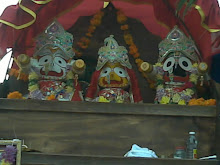-001.jpg)
-001.jpg)

-001.jpg)
-001.jpg)

