By the Mercy of our beloved Srila Gurudeva
we managed to finalise the first preaching
centre/Temple in Pietermaritzburg,this will
be the second Gaudiya Matha Temple in Pietermaritzburg
the first being the Sarasvati Math.
We are planning to open the Temple in November
this will coincide with our Beloved Srila Gurudeva`s
historic visit to South Africa and also our tent
programmes the Festival of Devotion which will
start on the 26th to 28th November 2009.
This preaching centre/Temple is a great
oppurtunity to increase the preaching
under of most merciful Gurudeva Srila
Bhaktivedanta Narayana Gosvami a pure
devotee of Sri Sri Radha and Krsna,and
who is representing our Gaudiya Vaishnava
Sampradaya in its true and purest form.
Yesterday we observed Srila Bhaktivedanta
Swami Maharaj`s and Srila Bhaktivedanta
Vaman and Trivikrama Maharaj`s dissapeareance
day which fell on Wednesday 21st November 2009.
Many devotees attended to honour these great
Vaishnva`s who contributed so much to our
Vaishnava Sampradaya and we now are reading and
learning so much from these Great Vaishnava
saints.
I`ll keep you all informed as to when
our official opening of our Temple/
preaching centre.Jai Srila Gurudeva.
Friday, October 23, 2009


Saturday, October 17, 2009
Srila Gurudeva receives Srimati Radharani`s direct Mercy
KARTIKA NECTAR UPDATE!! This Morning the pujari from Seva Kunj came to Srila Narayana Maharajas Temple with a plate of Maha Prasad. He told Srila Gurudeva that every night they leave a plate of prasad out for Radha Krsna and the sakhis when they get Hungry from dancing and love sports in Seva Kunja. Last night Srimati Radharani came to the head pujari in a dream and said please take the remnants of the Maha Prasad and Garland to my sakhi who is known as Narayana Maharaja. So the pujari did as ordered. Srila Gurudeva took a bite and then the sannyasis distributed the mercy to one and all. This was too much nectar for me, my heart has been pounding all morning.
Monday, October 5, 2009
Diwali celebrations
Hare Krsna to all
All Glories to our most
merciful beloved Srila Gurudeva
Sri Srimad Paramhamsa Bhaktivedanta
Narayana Gosvami Maharaja.
Last weekend the midlands Hindu
society held a pre Diwali celebration
at a local sports ground.In the morning
we participated in a float procession that
they had arranged from the city hall to
the festival site.Our youth group led
Harinam kirtan throughout the procession.
Many onlookers also started participating
in the Harinam and started dancing.
We had a book and food stall at the festival
and distributed prasadam(sanctified food offered
to Lord Sri Krsna)and also many of Srila Gurudeva`s
books.Many people asked many questions about
Krsna Consciousness and many want to attend our Nama
Hatta programmes.Of interest was the Siva Tattva
book written by Srila Gurudeva.
Around 10 000 people attended,we also took this
oppurtunity to advertise Srila Gurudeva`s visit
to South Africa in January 2010 and also our tent
festivals in November with Sripad Ashram and Damodar
Maharaja.All the devotees were actively engaged in
preaching and thus created such a transcendental
atmosphere.
This weekend we have a book stall at the Durban
Diwali festival and we hope to distribute many
more of Srila Gurudeva`s books and invite them
to attend Srila Gurudeva`s programmes in January 2010.
I`ll keep you all informed what happens next.
All Glories to our most
merciful beloved Srila Gurudeva
Sri Srimad Paramhamsa Bhaktivedanta
Narayana Gosvami Maharaja.
Last weekend the midlands Hindu
society held a pre Diwali celebration
at a local sports ground.In the morning
we participated in a float procession that
they had arranged from the city hall to
the festival site.Our youth group led
Harinam kirtan throughout the procession.
Many onlookers also started participating
in the Harinam and started dancing.
We had a book and food stall at the festival
and distributed prasadam(sanctified food offered
to Lord Sri Krsna)and also many of Srila Gurudeva`s
books.Many people asked many questions about
Krsna Consciousness and many want to attend our Nama
Hatta programmes.Of interest was the Siva Tattva
book written by Srila Gurudeva.
Around 10 000 people attended,we also took this
oppurtunity to advertise Srila Gurudeva`s visit
to South Africa in January 2010 and also our tent
festivals in November with Sripad Ashram and Damodar
Maharaja.All the devotees were actively engaged in
preaching and thus created such a transcendental
atmosphere.
This weekend we have a book stall at the Durban
Diwali festival and we hope to distribute many
more of Srila Gurudeva`s books and invite them
to attend Srila Gurudeva`s programmes in January 2010.
I`ll keep you all informed what happens next.
Sunday, October 4, 2009
For the Disappearance Day of Srila Bhakti Prajnana Kesava Gosvami Maharaja
Tridandisvami Sri Srimad Bhaktivedanta Narayana Gosvami Maharaja
For The Disappearance Day Of
Srila Bhakti Prajnana Kesava Gosvami Maharaja
Miami, Florida: May 28, 2008
[Respected Harikatha Readers,
Please accept our humble obeisances. All glories to Sri Sri Guru and Gauranga.
October 4, 2009 is the first day of Kartika. It is also the disappearance day of Sri Srimad Bhakti Prajnana Kesava Gosvami Maharaja, who is the diksa-guru of Srila Bhaktivedanta Narayana Gosvami Maharaja and sannyasa guru of Srila Bhaktivedanta Svami Maharaja Prabhupada. The following is a newly transcribed morning walk in Miami, wherein Srila Narayana Gosvami Maharaja affectionately speaks about his Guru Maharaja on the request of a disciple.
On the order of Srila Narayana Gosvami Maharaja, we are currently working on a book of all his morning walks and darsans. If you have any audio or movie files of his walks and darsans from 1996-2007, please contact Isa dasa at williamglick@gmail.com. If you would like to help transcribe these nectar walks, or edit or proofread them, or help in any other way, please contact Vasanti dasi at vasantidasi@gmail.com. Thank you.
Sincerely, the Harikatha team]
[Devotee:] Is it possible for you to speak something about your spiritual master, Srila Bhakti Prajnana Kesava Gosvami Maharaja?
[Srila Narayana Gosvami Maharaja:] Once, after taking the permission of his Guru Maharaja, Srila Bhaktisiddhanta Sarasvati Thakura, my Gurudeva went to visit Srila Gaura Kisora dasa Babaji Maharaja. At that time, Babaji Maharaja had closed the door of his bhajana kutir, which was a municipal outhouse. He had locked himself inside and refused to meet anyone.
The police superintendent and district magistrate had previously come there and told him, “Babaji Maharaja, why are you sitting in this impure place? We will make you a very beautiful place where you can do bhajana.”
Babaji Maharaja had replied, “I am very weak and cannot open the door.” Why did he say this? He used to tell his own devotees, “The smell of this outhouse is nothing in comparison to the stench of sense enjoyers who come and disturb me, saying, ‘Babaji Maharaja, give me a son, a very qualified wife, and much wealth.’ They used to harass me in this way. Staying in an outhouse is better than having to deal with those people. No one will disturb me while I am here.”
So Gurudeva, along with his paternal aunt, Srimati Saroj Basini, and a brahmacari who later became a very good speaker by the name of Sripad Nemi Maharaja, all went to see Babaji Maharaja. They saw that the door was closed and they called to him, “Babaji Maharaja, please be merciful and open your door. We want to take your darsana.” (meaning, “We beg you to give us your audience.”)
At first, Babaji Maharja gave the same answer he had given the superintendent: “I am very weak, so I cannot open the door.”
My Gurudeva, who was at that time eighteen years old Vinoda-bihari brahmacari, replied, “Babaji Maharaja, we are disciples of Srila Sarasvati Thakura. He has sent us to see you.”
Babaji Maharaja then said, “Oh, you are disciples of Srila Sarasvati Thakura? All right, I will open the door.” He thus allowed the three devotees to enter. They went into the municipal latrine and offered their obeisances.
Babaji Maharaja told my Gurudeva, “You should boldly preach the mission and instructions of Sri Caitanya Mahaprabhu. Do not fear; I will save you from all problems and dangers.”
Guru Maharaja used to tell us this story with tears in his eyes, saying, “This is how I am now able to boldly preach in Bengal and Assam and so many other places.” He told us that this actually took place – Gaura Kisora dasa Babaji Maharaja protected him whenever obstacles came.
For example, Srila Guru Maharaja was once preaching boldly in Assam, and his audience consisted of many persons opposed to Gaudiya Vaisnavism. This group did not accept the worship of Srimati Radhika with Sri Krsna; they worshiped Sri Krsna alone. Guru Maharaja told them, “Krsna-bhakti alone is not perfect. It is like an offense. Also, those who do bhajana but at the same time eat meat, eggs, and fish, and also drink alcohol, are not pure bhaktas. In fact, their mouths are like drains because their mouths are the containers of all kinds of stool, urine, and other wastes.” Hearing this, some of the members of the very large opposition crowd became enraged and shouted, “Caitanya Mahaprabhu is not the Supreme Lord. Do you have any proof that He is?”
In response, our Guru Maharaja requested Srila Vamana Maharaja to stand up and provide sastric evidence that Mahaprabhu is the Supreme Lord, and Srila Vamana Maharaja quoted either 101 or 108 Sanskrit verses. The crowd then began to throw stones and many other things, trying to kill both Guru Maharaja and Srila Vamana Maharaja. However, there were also some devotees present in the audience who began to throw stones back at the attackers, and somehow the conflict subsided.
In this way, he used to preach boldly. If anyone said anything against Srila Prabhupada Bhaktisiddhanta Sarasvati Thakura or our sampradaya, he would become furious. He would at once attack them, like a lion, with so many sastric arguments that no one could defeat him.
Some time in 1956, Srila Gurudeva came to Mathura to visit Sri Kesavaji Gaudiya Matha. At that time followers of the Nimbarka sampradaya in Vrndavana used to publish a spiritual journal called Sri Sudarsana. In one issue they cast aspersions on Sri Caitanya Mahaprabhu, saying that He was a disciple of Kesava Kasmiri. They said that Kesava Kasmiri was not actually defeated by Sri Caitanya Maharprabhu. Rather, he defeated Mahaprabhu and initiated Him into the Gopal Mantra. *[See endnote 1] In other editions they insolently dared to claim that Gaudiya Vaisnava acaryas such as Srila Visvanatha Cakravarti Thakura were in the Nimbarka sampradaya.
When I showed these editions to Srila Gurudeva, he became extremely angry. He told me, “Bring a paper and pen,” and began to dictate. He then immediately published this dictation as a short essay in our Sri Bhagavata Patrika. The headline was ‘Sri Nimbaditya and Nimbarka are not the same person.’ In the essay he said that nowhere in the scriptures is there any mention of a Nimbarka sampradaya. The Puranas mention a Vaisnava acarya named Sri Nimbaditya, and the Four Kumaras have accepted Nimbaditya Acarya as their sampradaya-acarya.
Nimbarka Svami is a completely different person. Nimbaditya was a disciple of Naradaji at the end of Dvapara-yuga, but Nimbarka Acarya appeared much more recently. Great and eminent authors of scripture such as Srila Jiva Gosvami have mentioned the names of the prominent acaryas of all the other sampradayas, but they have not mentioned the name of Nimbarka Acarya anywhere.
The scriptures of the Six Gosvamis mention the names of acaryas such as Sri Ramanuja, Sri Madhva, Sri Visnu Svami, Sri Nimbaditya and Sri Vallabha Acarya. If the Nimbarka sampradaya had existed even to a slight extent at that time, then they would most certainly have mentioned the name of Nimbarka Acarya as well. None of the other sampradaya acaryas, such as Sri Ramanuja, Sri Madhva, Sri Visnu Svami and so on have mentioned Nimbarka Acarya’s name in any of the scriptures that they have written.”
The Nimbarka sampradaya currently uses the Parijata-bhasya which was written, not by Nimbaditya Acarya, but rather by Srinivasa Acarya and Kesava Kasmiri. These two wrote this scripture and then preached that it had been written by their guru.
When this essay was published in Sri Bhagavata Patrika, the office directors of the Sudarsana journal announced that they were making arrangements to prosecute for slander. Srila Gurudeva replied firmly, “We will prove each and every word that we have written on the basis of evidence supported by sastra.” The scholars filed a court case demanding one hundred thousand rupees for defamation. They went to an advocate (lawyer) who told them, “You do not know Sripad Kesava Maharaja. He is a very dangerous person. He knows the law better than we advocates do. Do not put your hands in a snake’s hole, otherwise that snake will come and bite you. Better to leave this alone; better to be silent.”
When the prosecution party heard about Srila Gurudeva’s immense scriptural knowledge and his profound personality, they became absolutely silent, and from that day onwards they did not dare to write any more nonsense. *[see endnote 2]
[Devotee:] You have also described how affectionate your Guru Maharaja was. Can you speak something in this regard?
[Srila Narayana Gosvami Maharaja:] Once, while Pujyapada Vamana Maharaja was doing service at a printing press in Cincurah, his fingers were severely injured. Our Guru Maharaja began to weep and at once took him to a medical hospital in Kolkata, where he arranged treatment for him. Although Srila Vamana Maharaja’s fingers had been crushed under the printing press, after some time they were completely healed with only a scar remaining.
There was a disciple of our Guru Maharaja who joined before me, whose name was Ananga Mohan. He used to play very sweetly on mrdanga and engage in many personal services for our Guru Maharaja, such as cooking, washing clothes, and so on.
He contracted tuberculosis, at which time he was vomiting blood, even on the body of our Guru Maharaja. Guru Maharaja served him with his own hand, cleaning away his stool, feeding him, and nourishing him in every way.
I told Guru Maharaja, “Please feel free to go and preach. I will look after him. Do not worry.” Kindly giving me this ‘love burden’ of caring for Ananga Mohan, he went to preach. I would then clean Ananga Mohan’s vomit and stool, burying it in the earth. Guru Maharaja also sent me with him and Trigunatita brahmacari to Tambaram Hospital in Madras, which was a hospital for tuberculosis patients, and he was there for about three or four months.
Because this hospital was quite expensive, and Guru Maharaja’s god-brothers became upset and told him, “We cannot give you any of the money we have collected. Why are you doing all of this for your disciple?!” In this regard he did not care for the opinion of his opposing god-brothers, and finally they gave up his association. How loving he was.
Although Guru Maharaja spent a great deal of money to save Ananga Mohan, he left his body in Tabaram Hospital. At the time of his departure Guru Maharaja was performing parikrama in Navadvipa with thousands of pilgrims. I wrote him a letter saying, “I could not save Ananga Mohan, so Trigunatita prabhu and I are returning to Siddhabari. Please excuse me.” He read my letter and began to weep loudly.
He loved me so much for this. I had also developed slight symptoms of tuberculosis, and Guru Maharaja took me to a hospital in Calcutta, where I was treated and recovered.
Guru Maharaja gave sannyasa first to Srila Vamana Maharaja, Srila Trivikrama Maharaja and me. We three then began to increase our preaching fields and we performed many other services. Previously, Guru Maharaja’s respectful relationships with the god-brothers obliged him to give scope to their opinions and ideas, but now he was independent.
He would go to various places with thirty or forty brahmacaris and sannyasis and preach. Sometimes he had audiences of 15,000 people. At that time there were no microphones, so his audiences heard him by his loud speaking.
I used to personally go with him, and at those times I would cook for him, massage him, and wash his clothes. When he gave classes I would take notes. On his order I learned Bengali and read the Jaiva Dharma, and then I became a very good speaker. Also, at that time, I was known as the best singer in the Gaudiya Math.
Guru Maharaja also gave sannyasa to Pujyapada Srila Bhaktivedanta Svami Maharaja. The two were bosom friends.
[Mahabhuddi dasa:] How could our Srila Prabhupada have been one of the co-founders of the Gaudiya Vedanta Samiti if they were not friends? How would he have taken sannyasa from him if they were not friends?
[Srila Narayana Gosvami Maharaja:] In fact, Srila Bhaktivedanta Svami Maharaja wrote to me: “Our relationship is certainly based on spontaneous love. That is why there is no chance of us forgetting one another. By the mercy of Guru and Gauranga may everything be auspicious for you. This is my constant prayer. From the first time I saw you I have been your constant well-wisher. At his first sight of me Srila Prabhupada also saw me with such love. It was in my very first darsana of Srila Prabhupada that I learned how to love.”
[Brajanath dasa:] Remembering your Guru Maharaja, you spoke for such a long time.
[Srila Narayana Gosvami Maharaja:] I became unaware of the time.
[*Endnote 1:
“The next morning the poet came to Lord Caitanya and surrendered unto His lotus feet. The Lord bestowed His mercy upon him and cut off all his bondage to material attachment” (Caitanya-caritamrta, Adi-lila, 16.107).]
[*Endnote 2: On Srila Narayana Gosvami’s request, we have added some sentences from his Biography of his Guru Maharaja to his discussion of Nimbaditya Acarya.]
.
--
If you do not want to receive any more newsletters, this link
To update your preferences and to unsubscribe visit this link
Forward a Message to Someone this link
For The Disappearance Day Of
Srila Bhakti Prajnana Kesava Gosvami Maharaja
Miami, Florida: May 28, 2008
[Respected Harikatha Readers,
Please accept our humble obeisances. All glories to Sri Sri Guru and Gauranga.
October 4, 2009 is the first day of Kartika. It is also the disappearance day of Sri Srimad Bhakti Prajnana Kesava Gosvami Maharaja, who is the diksa-guru of Srila Bhaktivedanta Narayana Gosvami Maharaja and sannyasa guru of Srila Bhaktivedanta Svami Maharaja Prabhupada. The following is a newly transcribed morning walk in Miami, wherein Srila Narayana Gosvami Maharaja affectionately speaks about his Guru Maharaja on the request of a disciple.
On the order of Srila Narayana Gosvami Maharaja, we are currently working on a book of all his morning walks and darsans. If you have any audio or movie files of his walks and darsans from 1996-2007, please contact Isa dasa at williamglick@gmail.com. If you would like to help transcribe these nectar walks, or edit or proofread them, or help in any other way, please contact Vasanti dasi at vasantidasi@gmail.com. Thank you.
Sincerely, the Harikatha team]
[Devotee:] Is it possible for you to speak something about your spiritual master, Srila Bhakti Prajnana Kesava Gosvami Maharaja?
[Srila Narayana Gosvami Maharaja:] Once, after taking the permission of his Guru Maharaja, Srila Bhaktisiddhanta Sarasvati Thakura, my Gurudeva went to visit Srila Gaura Kisora dasa Babaji Maharaja. At that time, Babaji Maharaja had closed the door of his bhajana kutir, which was a municipal outhouse. He had locked himself inside and refused to meet anyone.
The police superintendent and district magistrate had previously come there and told him, “Babaji Maharaja, why are you sitting in this impure place? We will make you a very beautiful place where you can do bhajana.”
Babaji Maharaja had replied, “I am very weak and cannot open the door.” Why did he say this? He used to tell his own devotees, “The smell of this outhouse is nothing in comparison to the stench of sense enjoyers who come and disturb me, saying, ‘Babaji Maharaja, give me a son, a very qualified wife, and much wealth.’ They used to harass me in this way. Staying in an outhouse is better than having to deal with those people. No one will disturb me while I am here.”
So Gurudeva, along with his paternal aunt, Srimati Saroj Basini, and a brahmacari who later became a very good speaker by the name of Sripad Nemi Maharaja, all went to see Babaji Maharaja. They saw that the door was closed and they called to him, “Babaji Maharaja, please be merciful and open your door. We want to take your darsana.” (meaning, “We beg you to give us your audience.”)
At first, Babaji Maharja gave the same answer he had given the superintendent: “I am very weak, so I cannot open the door.”
My Gurudeva, who was at that time eighteen years old Vinoda-bihari brahmacari, replied, “Babaji Maharaja, we are disciples of Srila Sarasvati Thakura. He has sent us to see you.”
Babaji Maharaja then said, “Oh, you are disciples of Srila Sarasvati Thakura? All right, I will open the door.” He thus allowed the three devotees to enter. They went into the municipal latrine and offered their obeisances.
Babaji Maharaja told my Gurudeva, “You should boldly preach the mission and instructions of Sri Caitanya Mahaprabhu. Do not fear; I will save you from all problems and dangers.”
Guru Maharaja used to tell us this story with tears in his eyes, saying, “This is how I am now able to boldly preach in Bengal and Assam and so many other places.” He told us that this actually took place – Gaura Kisora dasa Babaji Maharaja protected him whenever obstacles came.
For example, Srila Guru Maharaja was once preaching boldly in Assam, and his audience consisted of many persons opposed to Gaudiya Vaisnavism. This group did not accept the worship of Srimati Radhika with Sri Krsna; they worshiped Sri Krsna alone. Guru Maharaja told them, “Krsna-bhakti alone is not perfect. It is like an offense. Also, those who do bhajana but at the same time eat meat, eggs, and fish, and also drink alcohol, are not pure bhaktas. In fact, their mouths are like drains because their mouths are the containers of all kinds of stool, urine, and other wastes.” Hearing this, some of the members of the very large opposition crowd became enraged and shouted, “Caitanya Mahaprabhu is not the Supreme Lord. Do you have any proof that He is?”
In response, our Guru Maharaja requested Srila Vamana Maharaja to stand up and provide sastric evidence that Mahaprabhu is the Supreme Lord, and Srila Vamana Maharaja quoted either 101 or 108 Sanskrit verses. The crowd then began to throw stones and many other things, trying to kill both Guru Maharaja and Srila Vamana Maharaja. However, there were also some devotees present in the audience who began to throw stones back at the attackers, and somehow the conflict subsided.
In this way, he used to preach boldly. If anyone said anything against Srila Prabhupada Bhaktisiddhanta Sarasvati Thakura or our sampradaya, he would become furious. He would at once attack them, like a lion, with so many sastric arguments that no one could defeat him.
Some time in 1956, Srila Gurudeva came to Mathura to visit Sri Kesavaji Gaudiya Matha. At that time followers of the Nimbarka sampradaya in Vrndavana used to publish a spiritual journal called Sri Sudarsana. In one issue they cast aspersions on Sri Caitanya Mahaprabhu, saying that He was a disciple of Kesava Kasmiri. They said that Kesava Kasmiri was not actually defeated by Sri Caitanya Maharprabhu. Rather, he defeated Mahaprabhu and initiated Him into the Gopal Mantra. *[See endnote 1] In other editions they insolently dared to claim that Gaudiya Vaisnava acaryas such as Srila Visvanatha Cakravarti Thakura were in the Nimbarka sampradaya.
When I showed these editions to Srila Gurudeva, he became extremely angry. He told me, “Bring a paper and pen,” and began to dictate. He then immediately published this dictation as a short essay in our Sri Bhagavata Patrika. The headline was ‘Sri Nimbaditya and Nimbarka are not the same person.’ In the essay he said that nowhere in the scriptures is there any mention of a Nimbarka sampradaya. The Puranas mention a Vaisnava acarya named Sri Nimbaditya, and the Four Kumaras have accepted Nimbaditya Acarya as their sampradaya-acarya.
Nimbarka Svami is a completely different person. Nimbaditya was a disciple of Naradaji at the end of Dvapara-yuga, but Nimbarka Acarya appeared much more recently. Great and eminent authors of scripture such as Srila Jiva Gosvami have mentioned the names of the prominent acaryas of all the other sampradayas, but they have not mentioned the name of Nimbarka Acarya anywhere.
The scriptures of the Six Gosvamis mention the names of acaryas such as Sri Ramanuja, Sri Madhva, Sri Visnu Svami, Sri Nimbaditya and Sri Vallabha Acarya. If the Nimbarka sampradaya had existed even to a slight extent at that time, then they would most certainly have mentioned the name of Nimbarka Acarya as well. None of the other sampradaya acaryas, such as Sri Ramanuja, Sri Madhva, Sri Visnu Svami and so on have mentioned Nimbarka Acarya’s name in any of the scriptures that they have written.”
The Nimbarka sampradaya currently uses the Parijata-bhasya which was written, not by Nimbaditya Acarya, but rather by Srinivasa Acarya and Kesava Kasmiri. These two wrote this scripture and then preached that it had been written by their guru.
When this essay was published in Sri Bhagavata Patrika, the office directors of the Sudarsana journal announced that they were making arrangements to prosecute for slander. Srila Gurudeva replied firmly, “We will prove each and every word that we have written on the basis of evidence supported by sastra.” The scholars filed a court case demanding one hundred thousand rupees for defamation. They went to an advocate (lawyer) who told them, “You do not know Sripad Kesava Maharaja. He is a very dangerous person. He knows the law better than we advocates do. Do not put your hands in a snake’s hole, otherwise that snake will come and bite you. Better to leave this alone; better to be silent.”
When the prosecution party heard about Srila Gurudeva’s immense scriptural knowledge and his profound personality, they became absolutely silent, and from that day onwards they did not dare to write any more nonsense. *[see endnote 2]
[Devotee:] You have also described how affectionate your Guru Maharaja was. Can you speak something in this regard?
[Srila Narayana Gosvami Maharaja:] Once, while Pujyapada Vamana Maharaja was doing service at a printing press in Cincurah, his fingers were severely injured. Our Guru Maharaja began to weep and at once took him to a medical hospital in Kolkata, where he arranged treatment for him. Although Srila Vamana Maharaja’s fingers had been crushed under the printing press, after some time they were completely healed with only a scar remaining.
There was a disciple of our Guru Maharaja who joined before me, whose name was Ananga Mohan. He used to play very sweetly on mrdanga and engage in many personal services for our Guru Maharaja, such as cooking, washing clothes, and so on.
He contracted tuberculosis, at which time he was vomiting blood, even on the body of our Guru Maharaja. Guru Maharaja served him with his own hand, cleaning away his stool, feeding him, and nourishing him in every way.
I told Guru Maharaja, “Please feel free to go and preach. I will look after him. Do not worry.” Kindly giving me this ‘love burden’ of caring for Ananga Mohan, he went to preach. I would then clean Ananga Mohan’s vomit and stool, burying it in the earth. Guru Maharaja also sent me with him and Trigunatita brahmacari to Tambaram Hospital in Madras, which was a hospital for tuberculosis patients, and he was there for about three or four months.
Because this hospital was quite expensive, and Guru Maharaja’s god-brothers became upset and told him, “We cannot give you any of the money we have collected. Why are you doing all of this for your disciple?!” In this regard he did not care for the opinion of his opposing god-brothers, and finally they gave up his association. How loving he was.
Although Guru Maharaja spent a great deal of money to save Ananga Mohan, he left his body in Tabaram Hospital. At the time of his departure Guru Maharaja was performing parikrama in Navadvipa with thousands of pilgrims. I wrote him a letter saying, “I could not save Ananga Mohan, so Trigunatita prabhu and I are returning to Siddhabari. Please excuse me.” He read my letter and began to weep loudly.
He loved me so much for this. I had also developed slight symptoms of tuberculosis, and Guru Maharaja took me to a hospital in Calcutta, where I was treated and recovered.
Guru Maharaja gave sannyasa first to Srila Vamana Maharaja, Srila Trivikrama Maharaja and me. We three then began to increase our preaching fields and we performed many other services. Previously, Guru Maharaja’s respectful relationships with the god-brothers obliged him to give scope to their opinions and ideas, but now he was independent.
He would go to various places with thirty or forty brahmacaris and sannyasis and preach. Sometimes he had audiences of 15,000 people. At that time there were no microphones, so his audiences heard him by his loud speaking.
I used to personally go with him, and at those times I would cook for him, massage him, and wash his clothes. When he gave classes I would take notes. On his order I learned Bengali and read the Jaiva Dharma, and then I became a very good speaker. Also, at that time, I was known as the best singer in the Gaudiya Math.
Guru Maharaja also gave sannyasa to Pujyapada Srila Bhaktivedanta Svami Maharaja. The two were bosom friends.
[Mahabhuddi dasa:] How could our Srila Prabhupada have been one of the co-founders of the Gaudiya Vedanta Samiti if they were not friends? How would he have taken sannyasa from him if they were not friends?
[Srila Narayana Gosvami Maharaja:] In fact, Srila Bhaktivedanta Svami Maharaja wrote to me: “Our relationship is certainly based on spontaneous love. That is why there is no chance of us forgetting one another. By the mercy of Guru and Gauranga may everything be auspicious for you. This is my constant prayer. From the first time I saw you I have been your constant well-wisher. At his first sight of me Srila Prabhupada also saw me with such love. It was in my very first darsana of Srila Prabhupada that I learned how to love.”
[Brajanath dasa:] Remembering your Guru Maharaja, you spoke for such a long time.
[Srila Narayana Gosvami Maharaja:] I became unaware of the time.
[*Endnote 1:
“The next morning the poet came to Lord Caitanya and surrendered unto His lotus feet. The Lord bestowed His mercy upon him and cut off all his bondage to material attachment” (Caitanya-caritamrta, Adi-lila, 16.107).]
[*Endnote 2: On Srila Narayana Gosvami’s request, we have added some sentences from his Biography of his Guru Maharaja to his discussion of Nimbaditya Acarya.]
.
--
If you do not want to receive any more newsletters, this link
To update your preferences and to unsubscribe visit this link
Forward a Message to Someone this link
Tuesday, September 29, 2009
A Trip to Nepal Sita Devi`s Birthplace
HomeMissionAbout UsBhakti is LoveSacred PlacesTeachersBhaktiYogaMastersBhaktiYogaTeachersBhakti DiscoursesSrila GurudevaResourcesAudio & VideoeBooks & MagazinesHarmonist MonthlyKirtansLinksPhoto GalleryPurchase BooksSearchSite MapTraveling to IndiaVaisnava CalendarEventsBhakti NewsTour ReportsUpcoming EventsContact UsCentersTeachersWebsite ContactsHome Events Tour Reports A Trip to Nepal
A Trip to Nepal
Thursday, 24 September 2009
August 17-23, 2009
[Respected Harikatha Readers, Please accept our humble obeisances. All glories to Sri Guru and Gauranga. On August 17, 2009, Srila Bhaktivedanta Narayana Gosvami Maharaja and his party traveled from Delhi to Nepal for a five-day Harikatha festival. The following is a report on the events of that festival, written by Srila Maharaja’s disciple, Sulata dasi of Vrndavana. To view movie clips from Nepal, please visit www.purebhakti.tv]
Since his childhood, Srila Gurudeva had nurtured a strong desire to visit Janakapura (in Nepal), because this is where Sita-devi lived with her father Janaka Maharaja and her mother Queen Sunayana. This is also where Her marriage and other wonderful pastimes took place. Before meeting his Guru Maharaja, Srila Bhakti Prajnana Kesava Gosvami Maharaja, Srila Gurudeva worshiped Sri Sri Sita-Rama with great love and devotion. As you can imagine, this was a very special trip for him.
In the beginning of his first discourse, Srila Gurudeva explained that although he has circled the globe many times preaching Sanatana-dharma in countries like Australia, Brazil, England, America, and all over Europe, he had never been to Janakapura. Now, by the assistance of Somnath prabhu, he would be boarding a plane to go there on the 20th morning.
Left: Katmandu, at the City Cultural Center where the two-day program was held.
During his discourse, Srila Gurudeva explained the perils of living in Kali-yuga and the means to escape them. He said that nowadays most people labor to accumulate wealth and acquire a good position, but these things do not benefit the soul. Monetary earnings cannot help the soul. Everyone is thinking, “I am this body,” but this is a false idea. Our real identity is the soul within the body. Both Paramatma (the Supersoul) and the atma (individual soul) reside together within the body. The atma is like the passenger and the Paramatma is like the charioteer. Most people do not understand these truths because they have forgotten Krsna.
These days, if a wife does not please her husband’s senses or vice versa, they divorce and get a new partner. They do not care how much pain their actions cause their children.
Then Srila Gurudeva posed the question, “How can we solve the problems we face in Kali-yuga?” He then answered that one should take full shelter of Sri Guru, continuously serve him, try to give up all material attachments, and develop love for Krsna. These are our topmost duties, and by carrying out these duties we will receive Krsna’s causeless mercy.
He said that one should understand and have faith that all sastras (Vedic scriptures), including Srimad-Bhagavatam, reside within Sad-Guru, the bona fide Guru.
By serving and associating with that type of Guru, we will get bhakti. What kind of bhakti do we want?
anyabhilasita-sunyam
jnana-karmady-anavitam
anukulyena krsnanu-
silanam bhaktir uttama
["The cultivation of activities that are meant exclusively for the pleasure of Sri Krsna, or in other words the uninterrupted flow of service to Sri Krsna, performed through all endeavours of the body, mind and speech, and through the expression of various spiritual sentiments (bhavas), which is not covered by jnana (knowledge aimed at impersonal liberation) and karma (reward-seeking activity), and which is devoid of all desires other than the aspiration to bring happiness to Sri Krsna, is called uttama-bhakti, pure devotional service." (Sri Bhakti-rasamrta-sindhu 1.1.11)]
He explained in simple words the meaning of this verse. All sastras recommend that one have an uninterrupted devotional mood and that all of one’s activity should be performed with the aim of pleasing Krsna and Sri Guru. To illustrate this point, He very narrated the pastime in which Mother Yasoda threatened to hit Krsna with a stick because she wanted Him to stop stealing butter.
To clear away any confusion in the minds and hearts of the listeners, he explained that although externally Krsna was crying, within Himself He was feeling great pleasure from hearing His mother call Him a thief for stealing the butter. Mother Yasoda was thinking “He is only a small boy. He is not stealing anything more valuable than butter. Still, if I don’t punish Him now, He may become a big dacoit in the future.” This ‘punishment’ was accepted by Krsna as uttama-bhakti, or pure bhakti, because Mother Yasoda’s actions were motivated by the desire to make Krsna’s life successful and happy. Her sweet, loving mood (madhurya) was so strong that it completely covered Krsna’s opulence (aisvarya). She was not thinking that Krsna is God, but that He is only her beloved son.
Srila Gurudeva then described the five types of devotees and devotion. As I looked around at the audience, I could see that everyone present was listening with rapt attention. It was quite amazing to witness how, by his powerful harikatha, he so quickly captured their hearts, which is part of his process for loosening the knot of material attachment.
The next morning, as we were all sitting in the airport waiting to board the plane for Janakapura, torrents of heavy rain began to fall. I began to wonder if the airline staff would allow us to take off in such terrible weather. Miraculously, just before we boarded the plane, the rays of sunshine began to push their way past the dark clouds and the rain stopped. After we were all seated comfortably on the plane, I was surprised to see that the sky had turned pale blue Suryadeva, the Sun-god, was bathing everyone with his warm rays.
When we arrived in Janakapura, Srila Gurudeva told the Mahant at Sri Sri Sita-Rama’s temple complex how he had prayed to Sita-devi to ask Indradeva, the god of the rains, to stop the rain, and by Her mercy he did so. The Mahant, who treated Srila Gurudeva with the utmost respect, replied, “How could Janaki ignore a prayer from you? Your arrival has brought us so much auspiciousness.”
Janaka Pura, The wedding hall next to the Mandir. This is where Lord Ramacandra and Srimati Sita Thakurani's wedding ceremony was performed.
Circumambulating Sri Sri Sita-Rama, along with six sages, in the Lord's wedding hall.
Outside the wedding hall there are four small kutirs, one in every corner. In each one there is one pair - Lord Ramacandra and Srimati Sita Thakurani, then Sri Satrughna and his consort Srimati Srutakirthi, then Sri Laxmana and his consort Srimati Urmila, and finally Sri Bharata and his consort Srimati Mandhati.
Srila Gurudeva then proceeded to the main temple where Sri Sri Sita-Rama were being worshiped. We circumambulated the main temple, stopping at a smaller temple of Janak Maharaja and Queen Sunayana.
Worshipping Lord Ramacandra and Srimati Sita Thakurani
When we finished our parikrama, the Mahant invited us for prasadam. The prasadam hall was up a steep flight of stairs, so Srila Gurudeva stayed outside and sent the rest of us upstairs to take prasadam.
After some moments the Mahant came to Srila Gurudeva and begged him to come upstairs so that he could show him “something very special.” To please the Mahant, who had treated Srila Gurudeva and all the devotees with so much honor, he obliged and was carried by the devotees up the steep stairway.
The Mahant took us to a large room which housed over 125,000 salagram silas, which was really an amazing sight.
The Mahant is showing Srila Gurudeva the 125,000 silas - mostly covered by the white cloth - in the main Mandir in Janakapura.
The Mahant shows Srila Gurudeva the goracana covered with red powder.
Srila Gurudeva was seated in a room next to the prasadam hall, and the Mahant brought what looked like a small pebble covered by red powder. He explained that it was gorocana from the hoof of a cow, and a pearl from the head of an elephant, both of which are produced by rainfall during the auspicious stellar constellation called svati-naksatra. We all gathered around, fascinated.
I cannot speculate on the deep moods in which Srila Gurudeva was immersed in on that day. I do not have the good fortune to understand all these things. I do know that I felt very privileged to accompany him on such a journey. I had the great opportunity that day to observe a very remarkable, humble, merciful, soft personality who was filled with devotion for his worshipful Lord and full of compassion for those souls who are suffering in separation from the Soul of their soul. Although all tattva (established philosophical truth) is manifest in the heart of our beloved Srila Gurudeva, still, he listened to the words of the Mahant with humility and interest, treating him with respect and kindness.
The Mahant was quite moved, and when Srila Gurudeva offered him daksina, he refused to take it. At one point, when some beggars were trying to disturb Srila Gurudeva, he calmly told Sripad Madhava Maharaja to give them some rupees. I never saw him get angry or frustrated.
After taking prasadam, a small group of us accompanied Srila Gurudeva to Dhanush-dharma, where one part of the bow that Lord Rama broke can still be seen in the form of a large stone which grows one mustard seed in size every day.
Darsan of the bow that was broken by Lord Rama
The next day, in his final class, Srila Gurudeva briefly explained the Tenth Canto Srimad-Bhagavatam and ended with narrations of the glories of the Vraja gopis, and especially the glories of Srimati Radhika.
About twenty-five people took initiation, and from the family of Ramacandra Prabhu, the organizer of the festival, another fifteen people. As always, the local devotees were left with a mixture of happiness and sadness when Srila Gurudeva departed, happy that he had blessed them by visiting their country, but also sad to see him leave so soon.
The highlight of this trip for me was to witness Srila Gurudeva’s good qualities, and to see him in such a relaxed atmosphere distributing his smile and mercy to all. The thought came to me that it is not possible for an ordinary person to manifest such exalted behavior. We are all so fortunate to be accepted by such a personality.
Returning to Katmandu
Sri Sri Guru Gauranga Jayatah!
(Pictures courtesy of Savitri dasi)
--
Next >
Last Updated on Thursday, 24 September 2009
© Syamarani dasi
A Trip to Nepal
Thursday, 24 September 2009
August 17-23, 2009
[Respected Harikatha Readers, Please accept our humble obeisances. All glories to Sri Guru and Gauranga. On August 17, 2009, Srila Bhaktivedanta Narayana Gosvami Maharaja and his party traveled from Delhi to Nepal for a five-day Harikatha festival. The following is a report on the events of that festival, written by Srila Maharaja’s disciple, Sulata dasi of Vrndavana. To view movie clips from Nepal, please visit www.purebhakti.tv]
Since his childhood, Srila Gurudeva had nurtured a strong desire to visit Janakapura (in Nepal), because this is where Sita-devi lived with her father Janaka Maharaja and her mother Queen Sunayana. This is also where Her marriage and other wonderful pastimes took place. Before meeting his Guru Maharaja, Srila Bhakti Prajnana Kesava Gosvami Maharaja, Srila Gurudeva worshiped Sri Sri Sita-Rama with great love and devotion. As you can imagine, this was a very special trip for him.
In the beginning of his first discourse, Srila Gurudeva explained that although he has circled the globe many times preaching Sanatana-dharma in countries like Australia, Brazil, England, America, and all over Europe, he had never been to Janakapura. Now, by the assistance of Somnath prabhu, he would be boarding a plane to go there on the 20th morning.
Left: Katmandu, at the City Cultural Center where the two-day program was held.
During his discourse, Srila Gurudeva explained the perils of living in Kali-yuga and the means to escape them. He said that nowadays most people labor to accumulate wealth and acquire a good position, but these things do not benefit the soul. Monetary earnings cannot help the soul. Everyone is thinking, “I am this body,” but this is a false idea. Our real identity is the soul within the body. Both Paramatma (the Supersoul) and the atma (individual soul) reside together within the body. The atma is like the passenger and the Paramatma is like the charioteer. Most people do not understand these truths because they have forgotten Krsna.
These days, if a wife does not please her husband’s senses or vice versa, they divorce and get a new partner. They do not care how much pain their actions cause their children.
Then Srila Gurudeva posed the question, “How can we solve the problems we face in Kali-yuga?” He then answered that one should take full shelter of Sri Guru, continuously serve him, try to give up all material attachments, and develop love for Krsna. These are our topmost duties, and by carrying out these duties we will receive Krsna’s causeless mercy.
He said that one should understand and have faith that all sastras (Vedic scriptures), including Srimad-Bhagavatam, reside within Sad-Guru, the bona fide Guru.
By serving and associating with that type of Guru, we will get bhakti. What kind of bhakti do we want?
anyabhilasita-sunyam
jnana-karmady-anavitam
anukulyena krsnanu-
silanam bhaktir uttama
["The cultivation of activities that are meant exclusively for the pleasure of Sri Krsna, or in other words the uninterrupted flow of service to Sri Krsna, performed through all endeavours of the body, mind and speech, and through the expression of various spiritual sentiments (bhavas), which is not covered by jnana (knowledge aimed at impersonal liberation) and karma (reward-seeking activity), and which is devoid of all desires other than the aspiration to bring happiness to Sri Krsna, is called uttama-bhakti, pure devotional service." (Sri Bhakti-rasamrta-sindhu 1.1.11)]
He explained in simple words the meaning of this verse. All sastras recommend that one have an uninterrupted devotional mood and that all of one’s activity should be performed with the aim of pleasing Krsna and Sri Guru. To illustrate this point, He very narrated the pastime in which Mother Yasoda threatened to hit Krsna with a stick because she wanted Him to stop stealing butter.
To clear away any confusion in the minds and hearts of the listeners, he explained that although externally Krsna was crying, within Himself He was feeling great pleasure from hearing His mother call Him a thief for stealing the butter. Mother Yasoda was thinking “He is only a small boy. He is not stealing anything more valuable than butter. Still, if I don’t punish Him now, He may become a big dacoit in the future.” This ‘punishment’ was accepted by Krsna as uttama-bhakti, or pure bhakti, because Mother Yasoda’s actions were motivated by the desire to make Krsna’s life successful and happy. Her sweet, loving mood (madhurya) was so strong that it completely covered Krsna’s opulence (aisvarya). She was not thinking that Krsna is God, but that He is only her beloved son.
Srila Gurudeva then described the five types of devotees and devotion. As I looked around at the audience, I could see that everyone present was listening with rapt attention. It was quite amazing to witness how, by his powerful harikatha, he so quickly captured their hearts, which is part of his process for loosening the knot of material attachment.
The next morning, as we were all sitting in the airport waiting to board the plane for Janakapura, torrents of heavy rain began to fall. I began to wonder if the airline staff would allow us to take off in such terrible weather. Miraculously, just before we boarded the plane, the rays of sunshine began to push their way past the dark clouds and the rain stopped. After we were all seated comfortably on the plane, I was surprised to see that the sky had turned pale blue Suryadeva, the Sun-god, was bathing everyone with his warm rays.
When we arrived in Janakapura, Srila Gurudeva told the Mahant at Sri Sri Sita-Rama’s temple complex how he had prayed to Sita-devi to ask Indradeva, the god of the rains, to stop the rain, and by Her mercy he did so. The Mahant, who treated Srila Gurudeva with the utmost respect, replied, “How could Janaki ignore a prayer from you? Your arrival has brought us so much auspiciousness.”
Janaka Pura, The wedding hall next to the Mandir. This is where Lord Ramacandra and Srimati Sita Thakurani's wedding ceremony was performed.
Circumambulating Sri Sri Sita-Rama, along with six sages, in the Lord's wedding hall.
Outside the wedding hall there are four small kutirs, one in every corner. In each one there is one pair - Lord Ramacandra and Srimati Sita Thakurani, then Sri Satrughna and his consort Srimati Srutakirthi, then Sri Laxmana and his consort Srimati Urmila, and finally Sri Bharata and his consort Srimati Mandhati.
Srila Gurudeva then proceeded to the main temple where Sri Sri Sita-Rama were being worshiped. We circumambulated the main temple, stopping at a smaller temple of Janak Maharaja and Queen Sunayana.
Worshipping Lord Ramacandra and Srimati Sita Thakurani
When we finished our parikrama, the Mahant invited us for prasadam. The prasadam hall was up a steep flight of stairs, so Srila Gurudeva stayed outside and sent the rest of us upstairs to take prasadam.
After some moments the Mahant came to Srila Gurudeva and begged him to come upstairs so that he could show him “something very special.” To please the Mahant, who had treated Srila Gurudeva and all the devotees with so much honor, he obliged and was carried by the devotees up the steep stairway.
The Mahant took us to a large room which housed over 125,000 salagram silas, which was really an amazing sight.
The Mahant is showing Srila Gurudeva the 125,000 silas - mostly covered by the white cloth - in the main Mandir in Janakapura.
The Mahant shows Srila Gurudeva the goracana covered with red powder.
Srila Gurudeva was seated in a room next to the prasadam hall, and the Mahant brought what looked like a small pebble covered by red powder. He explained that it was gorocana from the hoof of a cow, and a pearl from the head of an elephant, both of which are produced by rainfall during the auspicious stellar constellation called svati-naksatra. We all gathered around, fascinated.
I cannot speculate on the deep moods in which Srila Gurudeva was immersed in on that day. I do not have the good fortune to understand all these things. I do know that I felt very privileged to accompany him on such a journey. I had the great opportunity that day to observe a very remarkable, humble, merciful, soft personality who was filled with devotion for his worshipful Lord and full of compassion for those souls who are suffering in separation from the Soul of their soul. Although all tattva (established philosophical truth) is manifest in the heart of our beloved Srila Gurudeva, still, he listened to the words of the Mahant with humility and interest, treating him with respect and kindness.
The Mahant was quite moved, and when Srila Gurudeva offered him daksina, he refused to take it. At one point, when some beggars were trying to disturb Srila Gurudeva, he calmly told Sripad Madhava Maharaja to give them some rupees. I never saw him get angry or frustrated.
After taking prasadam, a small group of us accompanied Srila Gurudeva to Dhanush-dharma, where one part of the bow that Lord Rama broke can still be seen in the form of a large stone which grows one mustard seed in size every day.
Darsan of the bow that was broken by Lord Rama
The next day, in his final class, Srila Gurudeva briefly explained the Tenth Canto Srimad-Bhagavatam and ended with narrations of the glories of the Vraja gopis, and especially the glories of Srimati Radhika.
About twenty-five people took initiation, and from the family of Ramacandra Prabhu, the organizer of the festival, another fifteen people. As always, the local devotees were left with a mixture of happiness and sadness when Srila Gurudeva departed, happy that he had blessed them by visiting their country, but also sad to see him leave so soon.
The highlight of this trip for me was to witness Srila Gurudeva’s good qualities, and to see him in such a relaxed atmosphere distributing his smile and mercy to all. The thought came to me that it is not possible for an ordinary person to manifest such exalted behavior. We are all so fortunate to be accepted by such a personality.
Returning to Katmandu
Sri Sri Guru Gauranga Jayatah!
(Pictures courtesy of Savitri dasi)
--
Next >
Last Updated on Thursday, 24 September 2009
© Syamarani dasi
A Trip to Nepal Sita Devi`s Birthplace
HomeMissionAbout UsBhakti is LoveSacred PlacesTeachersBhaktiYogaMastersBhaktiYogaTeachersBhakti DiscoursesSrila GurudevaResourcesAudio & VideoeBooks & MagazinesHarmonist MonthlyKirtansLinksPhoto GalleryPurchase BooksSearchSite MapTraveling to IndiaVaisnava CalendarEventsBhakti NewsTour ReportsUpcoming EventsContact UsCentersTeachersWebsite ContactsHome Events Tour Reports A Trip to Nepal
A Trip to Nepal
Thursday, 24 September 2009
August 17-23, 2009
[Respected Harikatha Readers, Please accept our humble obeisances. All glories to Sri Guru and Gauranga. On August 17, 2009, Srila Bhaktivedanta Narayana Gosvami Maharaja and his party traveled from Delhi to Nepal for a five-day Harikatha festival. The following is a report on the events of that festival, written by Srila Maharaja’s disciple, Sulata dasi of Vrndavana. To view movie clips from Nepal, please visit www.purebhakti.tv]
Since his childhood, Srila Gurudeva had nurtured a strong desire to visit Janakapura (in Nepal), because this is where Sita-devi lived with her father Janaka Maharaja and her mother Queen Sunayana. This is also where Her marriage and other wonderful pastimes took place. Before meeting his Guru Maharaja, Srila Bhakti Prajnana Kesava Gosvami Maharaja, Srila Gurudeva worshiped Sri Sri Sita-Rama with great love and devotion. As you can imagine, this was a very special trip for him.
In the beginning of his first discourse, Srila Gurudeva explained that although he has circled the globe many times preaching Sanatana-dharma in countries like Australia, Brazil, England, America, and all over Europe, he had never been to Janakapura. Now, by the assistance of Somnath prabhu, he would be boarding a plane to go there on the 20th morning.
Left: Katmandu, at the City Cultural Center where the two-day program was held.
During his discourse, Srila Gurudeva explained the perils of living in Kali-yuga and the means to escape them. He said that nowadays most people labor to accumulate wealth and acquire a good position, but these things do not benefit the soul. Monetary earnings cannot help the soul. Everyone is thinking, “I am this body,” but this is a false idea. Our real identity is the soul within the body. Both Paramatma (the Supersoul) and the atma (individual soul) reside together within the body. The atma is like the passenger and the Paramatma is like the charioteer. Most people do not understand these truths because they have forgotten Krsna.
These days, if a wife does not please her husband’s senses or vice versa, they divorce and get a new partner. They do not care how much pain their actions cause their children.
Then Srila Gurudeva posed the question, “How can we solve the problems we face in Kali-yuga?” He then answered that one should take full shelter of Sri Guru, continuously serve him, try to give up all material attachments, and develop love for Krsna. These are our topmost duties, and by carrying out these duties we will receive Krsna’s causeless mercy.
He said that one should understand and have faith that all sastras (Vedic scriptures), including Srimad-Bhagavatam, reside within Sad-Guru, the bona fide Guru.
By serving and associating with that type of Guru, we will get bhakti. What kind of bhakti do we want?
anyabhilasita-sunyam
jnana-karmady-anavitam
anukulyena krsnanu-
silanam bhaktir uttama
["The cultivation of activities that are meant exclusively for the pleasure of Sri Krsna, or in other words the uninterrupted flow of service to Sri Krsna, performed through all endeavours of the body, mind and speech, and through the expression of various spiritual sentiments (bhavas), which is not covered by jnana (knowledge aimed at impersonal liberation) and karma (reward-seeking activity), and which is devoid of all desires other than the aspiration to bring happiness to Sri Krsna, is called uttama-bhakti, pure devotional service." (Sri Bhakti-rasamrta-sindhu 1.1.11)]
He explained in simple words the meaning of this verse. All sastras recommend that one have an uninterrupted devotional mood and that all of one’s activity should be performed with the aim of pleasing Krsna and Sri Guru. To illustrate this point, He very narrated the pastime in which Mother Yasoda threatened to hit Krsna with a stick because she wanted Him to stop stealing butter.
To clear away any confusion in the minds and hearts of the listeners, he explained that although externally Krsna was crying, within Himself He was feeling great pleasure from hearing His mother call Him a thief for stealing the butter. Mother Yasoda was thinking “He is only a small boy. He is not stealing anything more valuable than butter. Still, if I don’t punish Him now, He may become a big dacoit in the future.” This ‘punishment’ was accepted by Krsna as uttama-bhakti, or pure bhakti, because Mother Yasoda’s actions were motivated by the desire to make Krsna’s life successful and happy. Her sweet, loving mood (madhurya) was so strong that it completely covered Krsna’s opulence (aisvarya). She was not thinking that Krsna is God, but that He is only her beloved son.
Srila Gurudeva then described the five types of devotees and devotion. As I looked around at the audience, I could see that everyone present was listening with rapt attention. It was quite amazing to witness how, by his powerful harikatha, he so quickly captured their hearts, which is part of his process for loosening the knot of material attachment.
The next morning, as we were all sitting in the airport waiting to board the plane for Janakapura, torrents of heavy rain began to fall. I began to wonder if the airline staff would allow us to take off in such terrible weather. Miraculously, just before we boarded the plane, the rays of sunshine began to push their way past the dark clouds and the rain stopped. After we were all seated comfortably on the plane, I was surprised to see that the sky had turned pale blue Suryadeva, the Sun-god, was bathing everyone with his warm rays.
When we arrived in Janakapura, Srila Gurudeva told the Mahant at Sri Sri Sita-Rama’s temple complex how he had prayed to Sita-devi to ask Indradeva, the god of the rains, to stop the rain, and by Her mercy he did so. The Mahant, who treated Srila Gurudeva with the utmost respect, replied, “How could Janaki ignore a prayer from you? Your arrival has brought us so much auspiciousness.”
Janaka Pura, The wedding hall next to the Mandir. This is where Lord Ramacandra and Srimati Sita Thakurani's wedding ceremony was performed.
Circumambulating Sri Sri Sita-Rama, along with six sages, in the Lord's wedding hall.
Outside the wedding hall there are four small kutirs, one in every corner. In each one there is one pair - Lord Ramacandra and Srimati Sita Thakurani, then Sri Satrughna and his consort Srimati Srutakirthi, then Sri Laxmana and his consort Srimati Urmila, and finally Sri Bharata and his consort Srimati Mandhati.
Srila Gurudeva then proceeded to the main temple where Sri Sri Sita-Rama were being worshiped. We circumambulated the main temple, stopping at a smaller temple of Janak Maharaja and Queen Sunayana.
Worshipping Lord Ramacandra and Srimati Sita Thakurani
When we finished our parikrama, the Mahant invited us for prasadam. The prasadam hall was up a steep flight of stairs, so Srila Gurudeva stayed outside and sent the rest of us upstairs to take prasadam.
After some moments the Mahant came to Srila Gurudeva and begged him to come upstairs so that he could show him “something very special.” To please the Mahant, who had treated Srila Gurudeva and all the devotees with so much honor, he obliged and was carried by the devotees up the steep stairway.
The Mahant took us to a large room which housed over 125,000 salagram silas, which was really an amazing sight.
The Mahant is showing Srila Gurudeva the 125,000 silas - mostly covered by the white cloth - in the main Mandir in Janakapura.
The Mahant shows Srila Gurudeva the goracana covered with red powder.
Srila Gurudeva was seated in a room next to the prasadam hall, and the Mahant brought what looked like a small pebble covered by red powder. He explained that it was gorocana from the hoof of a cow, and a pearl from the head of an elephant, both of which are produced by rainfall during the auspicious stellar constellation called svati-naksatra. We all gathered around, fascinated.
I cannot speculate on the deep moods in which Srila Gurudeva was immersed in on that day. I do not have the good fortune to understand all these things. I do know that I felt very privileged to accompany him on such a journey. I had the great opportunity that day to observe a very remarkable, humble, merciful, soft personality who was filled with devotion for his worshipful Lord and full of compassion for those souls who are suffering in separation from the Soul of their soul. Although all tattva (established philosophical truth) is manifest in the heart of our beloved Srila Gurudeva, still, he listened to the words of the Mahant with humility and interest, treating him with respect and kindness.
The Mahant was quite moved, and when Srila Gurudeva offered him daksina, he refused to take it. At one point, when some beggars were trying to disturb Srila Gurudeva, he calmly told Sripad Madhava Maharaja to give them some rupees. I never saw him get angry or frustrated.
After taking prasadam, a small group of us accompanied Srila Gurudeva to Dhanush-dharma, where one part of the bow that Lord Rama broke can still be seen in the form of a large stone which grows one mustard seed in size every day.
Darsan of the bow that was broken by Lord Rama
The next day, in his final class, Srila Gurudeva briefly explained the Tenth Canto Srimad-Bhagavatam and ended with narrations of the glories of the Vraja gopis, and especially the glories of Srimati Radhika.
About twenty-five people took initiation, and from the family of Ramacandra Prabhu, the organizer of the festival, another fifteen people. As always, the local devotees were left with a mixture of happiness and sadness when Srila Gurudeva departed, happy that he had blessed them by visiting their country, but also sad to see him leave so soon.
The highlight of this trip for me was to witness Srila Gurudeva’s good qualities, and to see him in such a relaxed atmosphere distributing his smile and mercy to all. The thought came to me that it is not possible for an ordinary person to manifest such exalted behavior. We are all so fortunate to be accepted by such a personality.
Returning to Katmandu
Sri Sri Guru Gauranga Jayatah!
(Pictures courtesy of Savitri dasi)
--
Next >
Last Updated on Thursday, 24 September 2009
© Syamarani dasi
A Trip to Nepal
Thursday, 24 September 2009
August 17-23, 2009
[Respected Harikatha Readers, Please accept our humble obeisances. All glories to Sri Guru and Gauranga. On August 17, 2009, Srila Bhaktivedanta Narayana Gosvami Maharaja and his party traveled from Delhi to Nepal for a five-day Harikatha festival. The following is a report on the events of that festival, written by Srila Maharaja’s disciple, Sulata dasi of Vrndavana. To view movie clips from Nepal, please visit www.purebhakti.tv]
Since his childhood, Srila Gurudeva had nurtured a strong desire to visit Janakapura (in Nepal), because this is where Sita-devi lived with her father Janaka Maharaja and her mother Queen Sunayana. This is also where Her marriage and other wonderful pastimes took place. Before meeting his Guru Maharaja, Srila Bhakti Prajnana Kesava Gosvami Maharaja, Srila Gurudeva worshiped Sri Sri Sita-Rama with great love and devotion. As you can imagine, this was a very special trip for him.
In the beginning of his first discourse, Srila Gurudeva explained that although he has circled the globe many times preaching Sanatana-dharma in countries like Australia, Brazil, England, America, and all over Europe, he had never been to Janakapura. Now, by the assistance of Somnath prabhu, he would be boarding a plane to go there on the 20th morning.
Left: Katmandu, at the City Cultural Center where the two-day program was held.
During his discourse, Srila Gurudeva explained the perils of living in Kali-yuga and the means to escape them. He said that nowadays most people labor to accumulate wealth and acquire a good position, but these things do not benefit the soul. Monetary earnings cannot help the soul. Everyone is thinking, “I am this body,” but this is a false idea. Our real identity is the soul within the body. Both Paramatma (the Supersoul) and the atma (individual soul) reside together within the body. The atma is like the passenger and the Paramatma is like the charioteer. Most people do not understand these truths because they have forgotten Krsna.
These days, if a wife does not please her husband’s senses or vice versa, they divorce and get a new partner. They do not care how much pain their actions cause their children.
Then Srila Gurudeva posed the question, “How can we solve the problems we face in Kali-yuga?” He then answered that one should take full shelter of Sri Guru, continuously serve him, try to give up all material attachments, and develop love for Krsna. These are our topmost duties, and by carrying out these duties we will receive Krsna’s causeless mercy.
He said that one should understand and have faith that all sastras (Vedic scriptures), including Srimad-Bhagavatam, reside within Sad-Guru, the bona fide Guru.
By serving and associating with that type of Guru, we will get bhakti. What kind of bhakti do we want?
anyabhilasita-sunyam
jnana-karmady-anavitam
anukulyena krsnanu-
silanam bhaktir uttama
["The cultivation of activities that are meant exclusively for the pleasure of Sri Krsna, or in other words the uninterrupted flow of service to Sri Krsna, performed through all endeavours of the body, mind and speech, and through the expression of various spiritual sentiments (bhavas), which is not covered by jnana (knowledge aimed at impersonal liberation) and karma (reward-seeking activity), and which is devoid of all desires other than the aspiration to bring happiness to Sri Krsna, is called uttama-bhakti, pure devotional service." (Sri Bhakti-rasamrta-sindhu 1.1.11)]
He explained in simple words the meaning of this verse. All sastras recommend that one have an uninterrupted devotional mood and that all of one’s activity should be performed with the aim of pleasing Krsna and Sri Guru. To illustrate this point, He very narrated the pastime in which Mother Yasoda threatened to hit Krsna with a stick because she wanted Him to stop stealing butter.
To clear away any confusion in the minds and hearts of the listeners, he explained that although externally Krsna was crying, within Himself He was feeling great pleasure from hearing His mother call Him a thief for stealing the butter. Mother Yasoda was thinking “He is only a small boy. He is not stealing anything more valuable than butter. Still, if I don’t punish Him now, He may become a big dacoit in the future.” This ‘punishment’ was accepted by Krsna as uttama-bhakti, or pure bhakti, because Mother Yasoda’s actions were motivated by the desire to make Krsna’s life successful and happy. Her sweet, loving mood (madhurya) was so strong that it completely covered Krsna’s opulence (aisvarya). She was not thinking that Krsna is God, but that He is only her beloved son.
Srila Gurudeva then described the five types of devotees and devotion. As I looked around at the audience, I could see that everyone present was listening with rapt attention. It was quite amazing to witness how, by his powerful harikatha, he so quickly captured their hearts, which is part of his process for loosening the knot of material attachment.
The next morning, as we were all sitting in the airport waiting to board the plane for Janakapura, torrents of heavy rain began to fall. I began to wonder if the airline staff would allow us to take off in such terrible weather. Miraculously, just before we boarded the plane, the rays of sunshine began to push their way past the dark clouds and the rain stopped. After we were all seated comfortably on the plane, I was surprised to see that the sky had turned pale blue Suryadeva, the Sun-god, was bathing everyone with his warm rays.
When we arrived in Janakapura, Srila Gurudeva told the Mahant at Sri Sri Sita-Rama’s temple complex how he had prayed to Sita-devi to ask Indradeva, the god of the rains, to stop the rain, and by Her mercy he did so. The Mahant, who treated Srila Gurudeva with the utmost respect, replied, “How could Janaki ignore a prayer from you? Your arrival has brought us so much auspiciousness.”
Janaka Pura, The wedding hall next to the Mandir. This is where Lord Ramacandra and Srimati Sita Thakurani's wedding ceremony was performed.
Circumambulating Sri Sri Sita-Rama, along with six sages, in the Lord's wedding hall.
Outside the wedding hall there are four small kutirs, one in every corner. In each one there is one pair - Lord Ramacandra and Srimati Sita Thakurani, then Sri Satrughna and his consort Srimati Srutakirthi, then Sri Laxmana and his consort Srimati Urmila, and finally Sri Bharata and his consort Srimati Mandhati.
Srila Gurudeva then proceeded to the main temple where Sri Sri Sita-Rama were being worshiped. We circumambulated the main temple, stopping at a smaller temple of Janak Maharaja and Queen Sunayana.
Worshipping Lord Ramacandra and Srimati Sita Thakurani
When we finished our parikrama, the Mahant invited us for prasadam. The prasadam hall was up a steep flight of stairs, so Srila Gurudeva stayed outside and sent the rest of us upstairs to take prasadam.
After some moments the Mahant came to Srila Gurudeva and begged him to come upstairs so that he could show him “something very special.” To please the Mahant, who had treated Srila Gurudeva and all the devotees with so much honor, he obliged and was carried by the devotees up the steep stairway.
The Mahant took us to a large room which housed over 125,000 salagram silas, which was really an amazing sight.
The Mahant is showing Srila Gurudeva the 125,000 silas - mostly covered by the white cloth - in the main Mandir in Janakapura.
The Mahant shows Srila Gurudeva the goracana covered with red powder.
Srila Gurudeva was seated in a room next to the prasadam hall, and the Mahant brought what looked like a small pebble covered by red powder. He explained that it was gorocana from the hoof of a cow, and a pearl from the head of an elephant, both of which are produced by rainfall during the auspicious stellar constellation called svati-naksatra. We all gathered around, fascinated.
I cannot speculate on the deep moods in which Srila Gurudeva was immersed in on that day. I do not have the good fortune to understand all these things. I do know that I felt very privileged to accompany him on such a journey. I had the great opportunity that day to observe a very remarkable, humble, merciful, soft personality who was filled with devotion for his worshipful Lord and full of compassion for those souls who are suffering in separation from the Soul of their soul. Although all tattva (established philosophical truth) is manifest in the heart of our beloved Srila Gurudeva, still, he listened to the words of the Mahant with humility and interest, treating him with respect and kindness.
The Mahant was quite moved, and when Srila Gurudeva offered him daksina, he refused to take it. At one point, when some beggars were trying to disturb Srila Gurudeva, he calmly told Sripad Madhava Maharaja to give them some rupees. I never saw him get angry or frustrated.
After taking prasadam, a small group of us accompanied Srila Gurudeva to Dhanush-dharma, where one part of the bow that Lord Rama broke can still be seen in the form of a large stone which grows one mustard seed in size every day.
Darsan of the bow that was broken by Lord Rama
The next day, in his final class, Srila Gurudeva briefly explained the Tenth Canto Srimad-Bhagavatam and ended with narrations of the glories of the Vraja gopis, and especially the glories of Srimati Radhika.
About twenty-five people took initiation, and from the family of Ramacandra Prabhu, the organizer of the festival, another fifteen people. As always, the local devotees were left with a mixture of happiness and sadness when Srila Gurudeva departed, happy that he had blessed them by visiting their country, but also sad to see him leave so soon.
The highlight of this trip for me was to witness Srila Gurudeva’s good qualities, and to see him in such a relaxed atmosphere distributing his smile and mercy to all. The thought came to me that it is not possible for an ordinary person to manifest such exalted behavior. We are all so fortunate to be accepted by such a personality.
Returning to Katmandu
Sri Sri Guru Gauranga Jayatah!
(Pictures courtesy of Savitri dasi)
--
Next >
Last Updated on Thursday, 24 September 2009
© Syamarani dasi
Glorification of SRI SITA-RAMA
Tridandisvami Sri Srimad Bhaktivedanta Narayana Gosvami Maharaja
GLORIFICATION OF SRI SITA-RAMA
Mathura, April 13, 2000
[This year, 2009, September 28th is Rama Vijayotsava. which is the day commemorating Lord Rama’s killing Ravana. In honor of this day, we are sending out Srila Narayana Gosvami Maharaja’s lecture in glorification of Sri Sri Sita-Rama:]
After Ravana was killed, Sita devi had to undergo the agni pariksa, fire test. Of course, Maya-Sita entered the fire, and the real Sita devi remained unharmed – proving that she was completely pure and chaste. Rama then gave the kingdom of Ravana to Vivisana, Ravana's brother, and after that he took Sita devi and all their associates to Ayodhya on a mystic airplane. There were millions and billions of associates, but this airplane was able to expand so that they could all fit on it.
On their journey, Rama pointed out to Sita all the places where they had enjoyed pastimes together, or where He and Laksmana had killed various demons. For example, Rama would say, "Oh look, here is where we built the bridge to Lanka. Do you remember?" When they reached Kishkinda, where all of Rama's monkey associates lived, they stopped. Sita devi then invited all the wives of the monkeys to come aboard the airplane, as they were also very interested to see Rama's coronation.
The party stayed one night and then went to Citrakut. Hanuman took the form of a brahmana and went to the place where Bharata was staying in Nandigram. Bharata was living the life of a renunciate, wearing simple cloth, with matted hair and living on fruits and roots; and all of his ministers lived in the same way. In the guise of a brahmana, Hanuman approached Bharata and said, "Oh Bharata Maharaja, Rama has come. Prepare to welcome him!" Upon hearing that his dear brother had finally returned, he was overjoyed and fainted. When he came to consciousness he said, "I want to give you many gifts. So please accept 18,000 cows, as many beautiful women as you desire, horses and other wealth. Still I cannot give you anything equal in value to the news you have given me." Hanuman then returned to his original form, and Bharata said, "Oh, you are Hanuman!"
After Rama’s abhiseka ceremony, he wanted to give many gifts to everyone. Sita devi thought of a very nice gift to give Hanuman, so she gave him her most beautiful pearl necklace. Hanuman took it, examined it and broke it, and the pearls scattered all over the floor. Sita devi was surprised and asked, "What are you doing?" Hanuman replied, "Oh, I was just seeing if 'Rama' is written anywhere here." "But don't you know Rama is in your heart?" she said. Then Hanuman tore open his chest. In this way, Rama’s associates teach us that whatever is given to others should be in connection with Krsna.
Lord Rama and Sita devi stayed together for many years, and everyone was very happy within their kingdom. Some people, however, criticized Rama for accepting Sita back after she had been in the palace of Ravana. According to Vedic principles, it is unacceptable to accept one's wife after her being away for one night – what to speak of one year. One evening, the wife of a washer-man came home late. Her husband immediately told her that she could not enter the house. He threw her out saying, "I am not like Rama, who accepted his wife back after she'd been with another man."
This news spread and the story got back to Rama. He was most disturbed, and realized that he had to do something. How could he rule a kingdom in which some of the people did not have faith in him? He called a meeting, asking all his brothers to come; but none of them could give him any advice. He himself then realized what to do. He remembered that Sita had desired to visit all the sages in the forest and shower them with gifts. He asked Laksmana to take her to the asrama of those sages, deliver his sorrowful message to her, and then leave her in the forest. Laksmana was devastated that he was called upon to do this, but he could not say anything, as he was Rama's younger brother. He therefore had to accept that responsibility.
Sumanta was Laksmana's chariot driver, and moreover a very great minister of Rama. Laksmana told everything about Rama's order to Sumanta and said, "My life is full of miseries. Now, today is the biggest misery of my life!" They passed Prayag and went across a river. "Valmiki's asrama is here," Laksmana told Sita. Then, with a heavy heart he told her, "Everyone is accusing Rama of accepting an unchaste wife. Many people don't have full faith in him now; so how is it possible for him to rule the kingdom and guide the citizens properly?"
When Sita devi heard this she fainted, and when she revived she said, "I don't want to create any difficulties for him. I do not want him to be disturbed by the public. Please pay my obeisances to all. Laksmana, I want to pray at your lotus feet, as I have offended you twice. The first night in Ayodhya, after our marriage ceremony, I stopped you from massaging Rama's lotus feet. Though this had been your cherished duty for many years, I took this away from you. When you asked Rama about this, he could not answer. Then we asked the great sage Vasistha and he said, 'The duties now have to be divided. So Laksmana, all the duties outside of the house should be taken by you. Sita devi should now perform all the duties inside of the house.' In this way it was decided.
"Secondly, I was once allured by a deer in the forest when we were in exile. I heard Marici call out, 'Alas, Laksmana!' Assuming it was Rama's voice, I told you to go immediately to help Him. You said, 'No Sita, it is an illusion created by a demon.' I insisted and told you, 'I know. You are a spy of Bharata, and you have lusty feelings for me. That is why you don't want to save your brother!' These words pierced your heart. You replied that you always saw me as your mother and had never even seen my face; you had only seen my feet. You could not bear these harsh words. Then, when you went to see Rama, he chastised you saying, 'Why did you take heed of the words of that woman?' Then Ravana came here and begged, 'biksana dehi' three times. When I did not want to come outside of your circle of protection he threatened me, 'I curse you that your husband will die if you do not give anything to me here!' So please forgive me for these offenses."
After leaving Sita devi in the forest Laksmana lamented, "Oh, alas! I will surely give up my life!" Sumanta tried to pacify him, and told him the truth of the matter. "Once I was with Dasaratha Maharaja, and at that time two sages, Vasistha Rsi and Durvasa Muni, came to visit him. Maharaja Dasaratha served them very nicely and then asked them to kindly tell him about the future of his four children. Vasistha Rsi remained silent and Durvasa Muni responded by saying, ‘Oh, you have four sons. Very good." Dasaratha Maharaja said, "Yes, first tell me about Rama's future." Durvasa said, "Rama's future will undoubtedly be full of miseries. He will have to leave Ayodhya, and everyone there will feel unbearable separation from Him. You will not be able to bear His absence, and you will die in separation. Rama will later have to be separated from his wife, and after suffering immensely they will become reunited. Then again they will have to be apart; and Rama will rule the kingdom alone without his wife. Do not tell this to anyone." Dasaratha Maharaja was in complete shock, but he promised that he would not speak what he had heard to anyone. He said, "From today, I am your disciple."
Having heard this from Sumanta, Laksmana realized that his brother Rama is in fact the Supreme Lord Visnu. Sumanta continued telling Laksmana the story that Durvasa Muni had told to Dasaratha Maharaja: "Once, a very big battle ensued between the demigods and the demons. The demons were defeated and went to the wife of Brghu Maharaja to take shelter; and, being very merciful, she gave them shelter. The demigods went to Lord Vamanadeva and told him the situation. He then took His cakra and beheaded Brghu Maharaja's wife. Brghu Maharaja was very upset and cursed Vamanadeva saying, "You are responsible for my wife's death. I loved her very much. Now I will have to suffer so much in separation from her. For this I curse you that you will have to suffer in the same way in the future. You will have a very beautiful wife who will serve you in every way. You will be fully satisfied and completely enamored with her feminine grace and charm, and her saintly qualities. You will then be separated from her, and you will always suffer immensely from that pain of separation." Hearing this, Vamanadeva happily accepted the curse. He knew that in the future the whole world would be benefited by this. Also, this was but a pretext, as separation naturally increases the happiness of meeting.
Sita devi was walking towards the asrama of Valmiki Rsi, when some of his brahmacaris spotted her. They informed Valmiki that a lady looking like a demigoddess was coming. Valmiki came out to greet her, and immediately recognized who she was. He said, "Oh, you are Sita devi, the wife of Lord Rama. I know this because I have written the Ramayana. Please come in." The ladies there were very pleased to see Sita devi and said, "Oh, please allow us to serve you." Valmiki instructed them how to serve her in every way.
When Rama sent Satrughna to Mathura, he happened to come near to Valmiki's asrama on the way. He paid obeisance to Sita devi and her sons, Luv and Kush, from a distance. Luv and Kush were very intelligent children. Valmiki was very expert in archery, singing and music, and he taught Luv and Kush these arts. They could thus sing in all ragas very sweetly. Valmiki also taught them the Ramayana.
No one in the entire kingdom was there to console Rama. However, the ladies were there to console Sita devi in the asrama of Valmiki. One day Rama turned to Vasistha Rsi and said, "Will you please perform a sacrifice?" Vasistha replied, "Then you must call your wife back." "Oh, I cannot do that." "Then you must remarry," he insisted. Rama said, "It is not possible." "Then you will have to make a golden deity of Sita devi." Vasistha then performed the sacrifice. In fact, every year he performed a very big sacrificial ceremony for Rama, near Naimisaranya on the bank of Gomati, with a new golden deity of Sita devi each year.
One year many kings and sages were called, and Valmiki came with Luv and Kush. The boys were extremely beautiful, with very broad chests and slender waists. During a rest period, Valmiki asked them to sing Ramayana. They had melodious voices, and they sang in such a heart-rendering way that they captured everyone's hearts. Rama was especially touched, and tears came to His eyes. Valmiki had previously warned the boys, “If anyone asks you who you are, tell them, 'I am a disciple of Valmiki'”. Rama ordered Laksmana, "Go and give them eighteen thousand gold coins and many, many beautiful clothes and gifts. Then ask them who they are."
When they were presented with these gold coins, clothes, and gifts, they said, "What will we do with all these things? We are brahmacaris." Then Laksmana asked which dynasty they belonged to, and they replied, "You seem very learned. Why ask this? Why not ask who is our Gurudeva? We are disciples of Valmiki Rsi." For five or seven days they came and recited the Ramayana, and after many days Rama and others came to know who they were.
Rama then called Valmiki and requested that Sita devi come and prove Her chastity so that he could call her back. Valmiki said, "I have never spoken a lie in my life. I can assure you that Sita is completely pure and chaste." Rama said, "I know that. I'm quite confident of this, but I want proof for my citizens. So please bring Her here. Then we'll see what we can do."
At this time Brahma, Sankara, and many demigods and goddesses came, curious to see this event. Sita devi sent Luv and Kusa ahead to their father. She arrived thereafter, and Valmiki spoke gently to her, "O daughter, Sita devi. Come forward and prove your chastity." Sita devi said, "Mother, please prove this to one and all, that I have never served any other man. I have never even had thoughts of any man other than Rama in my whole life. Please accept me, mother." Pritivi-devi appeared from the earth and Sita sat on her lap on a golden throne. In a moment, Prthivi-devi completely covered Her. In other words, she took Sita devi with her, back under the Earth. Rama couldn't bear to see Sita leave him like this, and he fainted. Then, when he returned to consciousness, he prayed to Prthivi-devi, requesting her to bring back Sita. He told her, "One time I went with a bow to the ocean and he was very much afraid. So I can turn you into dust in a moment." Just then Brahma came and told Rama, "No. Don't do it! This is the last time. Sitaji has gone to your own abode, so you should very quickly wind up your pastimes and go there."
Gaura premanande!
.
--
If you do not want to receive any more newsletters, this link
To update your preferences and to unsubscribe visit this link
Forward a Message to Someone this link
__________ Information from ESET NOD32 Antivirus, version of virus signature database 4463 (20090928) __________
The message was checked by ESET NOD32 Antivirus.
http://www.eset.com
GLORIFICATION OF SRI SITA-RAMA
Mathura, April 13, 2000
[This year, 2009, September 28th is Rama Vijayotsava. which is the day commemorating Lord Rama’s killing Ravana. In honor of this day, we are sending out Srila Narayana Gosvami Maharaja’s lecture in glorification of Sri Sri Sita-Rama:]
After Ravana was killed, Sita devi had to undergo the agni pariksa, fire test. Of course, Maya-Sita entered the fire, and the real Sita devi remained unharmed – proving that she was completely pure and chaste. Rama then gave the kingdom of Ravana to Vivisana, Ravana's brother, and after that he took Sita devi and all their associates to Ayodhya on a mystic airplane. There were millions and billions of associates, but this airplane was able to expand so that they could all fit on it.
On their journey, Rama pointed out to Sita all the places where they had enjoyed pastimes together, or where He and Laksmana had killed various demons. For example, Rama would say, "Oh look, here is where we built the bridge to Lanka. Do you remember?" When they reached Kishkinda, where all of Rama's monkey associates lived, they stopped. Sita devi then invited all the wives of the monkeys to come aboard the airplane, as they were also very interested to see Rama's coronation.
The party stayed one night and then went to Citrakut. Hanuman took the form of a brahmana and went to the place where Bharata was staying in Nandigram. Bharata was living the life of a renunciate, wearing simple cloth, with matted hair and living on fruits and roots; and all of his ministers lived in the same way. In the guise of a brahmana, Hanuman approached Bharata and said, "Oh Bharata Maharaja, Rama has come. Prepare to welcome him!" Upon hearing that his dear brother had finally returned, he was overjoyed and fainted. When he came to consciousness he said, "I want to give you many gifts. So please accept 18,000 cows, as many beautiful women as you desire, horses and other wealth. Still I cannot give you anything equal in value to the news you have given me." Hanuman then returned to his original form, and Bharata said, "Oh, you are Hanuman!"
After Rama’s abhiseka ceremony, he wanted to give many gifts to everyone. Sita devi thought of a very nice gift to give Hanuman, so she gave him her most beautiful pearl necklace. Hanuman took it, examined it and broke it, and the pearls scattered all over the floor. Sita devi was surprised and asked, "What are you doing?" Hanuman replied, "Oh, I was just seeing if 'Rama' is written anywhere here." "But don't you know Rama is in your heart?" she said. Then Hanuman tore open his chest. In this way, Rama’s associates teach us that whatever is given to others should be in connection with Krsna.
Lord Rama and Sita devi stayed together for many years, and everyone was very happy within their kingdom. Some people, however, criticized Rama for accepting Sita back after she had been in the palace of Ravana. According to Vedic principles, it is unacceptable to accept one's wife after her being away for one night – what to speak of one year. One evening, the wife of a washer-man came home late. Her husband immediately told her that she could not enter the house. He threw her out saying, "I am not like Rama, who accepted his wife back after she'd been with another man."
This news spread and the story got back to Rama. He was most disturbed, and realized that he had to do something. How could he rule a kingdom in which some of the people did not have faith in him? He called a meeting, asking all his brothers to come; but none of them could give him any advice. He himself then realized what to do. He remembered that Sita had desired to visit all the sages in the forest and shower them with gifts. He asked Laksmana to take her to the asrama of those sages, deliver his sorrowful message to her, and then leave her in the forest. Laksmana was devastated that he was called upon to do this, but he could not say anything, as he was Rama's younger brother. He therefore had to accept that responsibility.
Sumanta was Laksmana's chariot driver, and moreover a very great minister of Rama. Laksmana told everything about Rama's order to Sumanta and said, "My life is full of miseries. Now, today is the biggest misery of my life!" They passed Prayag and went across a river. "Valmiki's asrama is here," Laksmana told Sita. Then, with a heavy heart he told her, "Everyone is accusing Rama of accepting an unchaste wife. Many people don't have full faith in him now; so how is it possible for him to rule the kingdom and guide the citizens properly?"
When Sita devi heard this she fainted, and when she revived she said, "I don't want to create any difficulties for him. I do not want him to be disturbed by the public. Please pay my obeisances to all. Laksmana, I want to pray at your lotus feet, as I have offended you twice. The first night in Ayodhya, after our marriage ceremony, I stopped you from massaging Rama's lotus feet. Though this had been your cherished duty for many years, I took this away from you. When you asked Rama about this, he could not answer. Then we asked the great sage Vasistha and he said, 'The duties now have to be divided. So Laksmana, all the duties outside of the house should be taken by you. Sita devi should now perform all the duties inside of the house.' In this way it was decided.
"Secondly, I was once allured by a deer in the forest when we were in exile. I heard Marici call out, 'Alas, Laksmana!' Assuming it was Rama's voice, I told you to go immediately to help Him. You said, 'No Sita, it is an illusion created by a demon.' I insisted and told you, 'I know. You are a spy of Bharata, and you have lusty feelings for me. That is why you don't want to save your brother!' These words pierced your heart. You replied that you always saw me as your mother and had never even seen my face; you had only seen my feet. You could not bear these harsh words. Then, when you went to see Rama, he chastised you saying, 'Why did you take heed of the words of that woman?' Then Ravana came here and begged, 'biksana dehi' three times. When I did not want to come outside of your circle of protection he threatened me, 'I curse you that your husband will die if you do not give anything to me here!' So please forgive me for these offenses."
After leaving Sita devi in the forest Laksmana lamented, "Oh, alas! I will surely give up my life!" Sumanta tried to pacify him, and told him the truth of the matter. "Once I was with Dasaratha Maharaja, and at that time two sages, Vasistha Rsi and Durvasa Muni, came to visit him. Maharaja Dasaratha served them very nicely and then asked them to kindly tell him about the future of his four children. Vasistha Rsi remained silent and Durvasa Muni responded by saying, ‘Oh, you have four sons. Very good." Dasaratha Maharaja said, "Yes, first tell me about Rama's future." Durvasa said, "Rama's future will undoubtedly be full of miseries. He will have to leave Ayodhya, and everyone there will feel unbearable separation from Him. You will not be able to bear His absence, and you will die in separation. Rama will later have to be separated from his wife, and after suffering immensely they will become reunited. Then again they will have to be apart; and Rama will rule the kingdom alone without his wife. Do not tell this to anyone." Dasaratha Maharaja was in complete shock, but he promised that he would not speak what he had heard to anyone. He said, "From today, I am your disciple."
Having heard this from Sumanta, Laksmana realized that his brother Rama is in fact the Supreme Lord Visnu. Sumanta continued telling Laksmana the story that Durvasa Muni had told to Dasaratha Maharaja: "Once, a very big battle ensued between the demigods and the demons. The demons were defeated and went to the wife of Brghu Maharaja to take shelter; and, being very merciful, she gave them shelter. The demigods went to Lord Vamanadeva and told him the situation. He then took His cakra and beheaded Brghu Maharaja's wife. Brghu Maharaja was very upset and cursed Vamanadeva saying, "You are responsible for my wife's death. I loved her very much. Now I will have to suffer so much in separation from her. For this I curse you that you will have to suffer in the same way in the future. You will have a very beautiful wife who will serve you in every way. You will be fully satisfied and completely enamored with her feminine grace and charm, and her saintly qualities. You will then be separated from her, and you will always suffer immensely from that pain of separation." Hearing this, Vamanadeva happily accepted the curse. He knew that in the future the whole world would be benefited by this. Also, this was but a pretext, as separation naturally increases the happiness of meeting.
Sita devi was walking towards the asrama of Valmiki Rsi, when some of his brahmacaris spotted her. They informed Valmiki that a lady looking like a demigoddess was coming. Valmiki came out to greet her, and immediately recognized who she was. He said, "Oh, you are Sita devi, the wife of Lord Rama. I know this because I have written the Ramayana. Please come in." The ladies there were very pleased to see Sita devi and said, "Oh, please allow us to serve you." Valmiki instructed them how to serve her in every way.
When Rama sent Satrughna to Mathura, he happened to come near to Valmiki's asrama on the way. He paid obeisance to Sita devi and her sons, Luv and Kush, from a distance. Luv and Kush were very intelligent children. Valmiki was very expert in archery, singing and music, and he taught Luv and Kush these arts. They could thus sing in all ragas very sweetly. Valmiki also taught them the Ramayana.
No one in the entire kingdom was there to console Rama. However, the ladies were there to console Sita devi in the asrama of Valmiki. One day Rama turned to Vasistha Rsi and said, "Will you please perform a sacrifice?" Vasistha replied, "Then you must call your wife back." "Oh, I cannot do that." "Then you must remarry," he insisted. Rama said, "It is not possible." "Then you will have to make a golden deity of Sita devi." Vasistha then performed the sacrifice. In fact, every year he performed a very big sacrificial ceremony for Rama, near Naimisaranya on the bank of Gomati, with a new golden deity of Sita devi each year.
One year many kings and sages were called, and Valmiki came with Luv and Kush. The boys were extremely beautiful, with very broad chests and slender waists. During a rest period, Valmiki asked them to sing Ramayana. They had melodious voices, and they sang in such a heart-rendering way that they captured everyone's hearts. Rama was especially touched, and tears came to His eyes. Valmiki had previously warned the boys, “If anyone asks you who you are, tell them, 'I am a disciple of Valmiki'”. Rama ordered Laksmana, "Go and give them eighteen thousand gold coins and many, many beautiful clothes and gifts. Then ask them who they are."
When they were presented with these gold coins, clothes, and gifts, they said, "What will we do with all these things? We are brahmacaris." Then Laksmana asked which dynasty they belonged to, and they replied, "You seem very learned. Why ask this? Why not ask who is our Gurudeva? We are disciples of Valmiki Rsi." For five or seven days they came and recited the Ramayana, and after many days Rama and others came to know who they were.
Rama then called Valmiki and requested that Sita devi come and prove Her chastity so that he could call her back. Valmiki said, "I have never spoken a lie in my life. I can assure you that Sita is completely pure and chaste." Rama said, "I know that. I'm quite confident of this, but I want proof for my citizens. So please bring Her here. Then we'll see what we can do."
At this time Brahma, Sankara, and many demigods and goddesses came, curious to see this event. Sita devi sent Luv and Kusa ahead to their father. She arrived thereafter, and Valmiki spoke gently to her, "O daughter, Sita devi. Come forward and prove your chastity." Sita devi said, "Mother, please prove this to one and all, that I have never served any other man. I have never even had thoughts of any man other than Rama in my whole life. Please accept me, mother." Pritivi-devi appeared from the earth and Sita sat on her lap on a golden throne. In a moment, Prthivi-devi completely covered Her. In other words, she took Sita devi with her, back under the Earth. Rama couldn't bear to see Sita leave him like this, and he fainted. Then, when he returned to consciousness, he prayed to Prthivi-devi, requesting her to bring back Sita. He told her, "One time I went with a bow to the ocean and he was very much afraid. So I can turn you into dust in a moment." Just then Brahma came and told Rama, "No. Don't do it! This is the last time. Sitaji has gone to your own abode, so you should very quickly wind up your pastimes and go there."
Gaura premanande!
.
--
If you do not want to receive any more newsletters, this link
To update your preferences and to unsubscribe visit this link
Forward a Message to Someone this link
__________ Information from ESET NOD32 Antivirus, version of virus signature database 4463 (20090928) __________
The message was checked by ESET NOD32 Antivirus.
http://www.eset.com
Subscribe to:
Posts (Atom)

 Posts
Posts


-001.jpg)
-001.jpg)
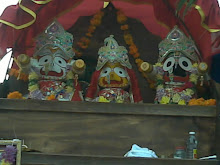-001.jpg)
-001.jpg)

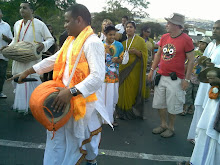-001.jpg)
-001.jpg)

